Households focused on long-term use
You want to compare durability ratings, repair options and service terms before choosing between machines that meet the same laundry needs.


If you’re replacing a washing machine you expect to use for several years, start by choosing a format that fits the available space and a capacity suited to your usual laundry loads. Then compare models with similar capacities for energy and water use, noise, spin performance and their durability rating in France. This rating is no substitute for checking the warranty terms, spare parts and after-sales service for the model you’re considering.
You want to compare durability ratings, repair options and service terms before choosing between machines that meet the same laundry needs.
You’re looking for a capacity that suits your usual loads, without choosing a drum that’s too large for most cycles. The available space and door-opening direction matter too.
You run the machine near living areas or often dry laundry on an airer. In that case, it’s worth considering the noise and spin performance alongside energy and water use.
Start with your usual laundry loads and the space available: these two factors determine which machines are worth comparing. Then check the energy labels and repair terms for the exact model.
Worth considering: if you have space in front of the door and want to use the top of the appliance, particularly for compatible stacking.
Allow for: enough room to open the door and load the laundry.
Worth considering: if space is limited widthways or you prefer loading from the top.
Allow for: enough clearance above the machine to open it; this format can’t be stacked with a tumble dryer.
| Criteria | What to check | Relevant to |
|---|---|---|
| Durability and repairs | Compare the durability ratings of the models you’re considering, then check the spare parts, commercial warranty and after-sales service available for each one. | If I want to keep the machine for several years, I want to know which repairs will still be possible and under what terms. Around 36% of consumers might make this their top priority. |
| Capacity and format | Assess your usual laundry loads and measure the space, including the clearance needed to open the door. | For my regular laundry, I’m looking for a drum that’s the right size without compromising on fitting the machine in the room. This could be the top priority for around 29% of consumers. |
| Water and electricity | On the energy label, compare the energy rating with the kWh per 100 cycles and litres per cycle for machines with similar capacities. | When I do laundry often, I want to take account of the water and electricity used over time. Around 21% of consumers might put these running costs first. |
| Noise and spin performance | Check the noise level during the spin cycle and the spin-drying efficiency class; don’t rely on the maximum spin speed alone. | If the machine runs near occupied rooms or my laundry dries on an airer, noise and how damp the laundry is after washing matter more to me. This could be the top priority for around 14% of consumers. |
ADEME recommends choosing a capacity to suit your household’s needs and says that 7 kg is enough most of the time. The European Commission explains that washing machine energy labels show information including energy use per 100 cycles, water use per cycle, programme duration and noise. In France, the durability rating helps you compare the models it covers, but it doesn’t guarantee that a particular machine won’t break down.
A drum that’s often underfilled won’t be well suited to your everyday laundry. ADEME recommends choosing a capacity to match your needs and gives 7 kg as a suitable guide for most households.
Start with the loads you wash regularly, then think separately about how you’ll wash duvets and other bulky items.
Two machines with the same energy rating may differ in how well they meet your needs for capacity, programme duration, water use, noise and spin performance.
Compare the figures on the labels of models with similar capacities. You can scan the QR code on the label to find the model’s product information.
The rating helps you compare models; on its own, it doesn’t tell you what’s covered if something breaks. For example, a warranty covering the motor doesn’t automatically cover other components.
Read the terms for the model you’re considering: which components are covered, labour, call-out charges, how to activate the cover and how repairs are carried out in your area.
A front-loading model needs space in front of the door, while a top-loading model needs enough clearance above it to open fully.
Measure the width, depth and height, then check delivery access and door clearance before choosing a model.
A brand to consider if warranty documents and service terms are important to your comparison.
Worth considering if motor cover is one of your criteria and you can check the terms that apply to the appliance.
Worth considering if you want to check the parts and repair instructions for a specific model.
These front-loading models offer a range of capacities, making it easier to compare them with your usual laundry loads. Before choosing a model to keep for several years, also check its energy label, durability rating and service terms against your needs.
 Image unavailable
Worth considering if 7 kg suits your usual laundry loads and you have enough space in front of the door.
The product title lists 1,400 tr/min and an energy rating of A. Check the durability rating and the warranty and service terms that apply to this model.
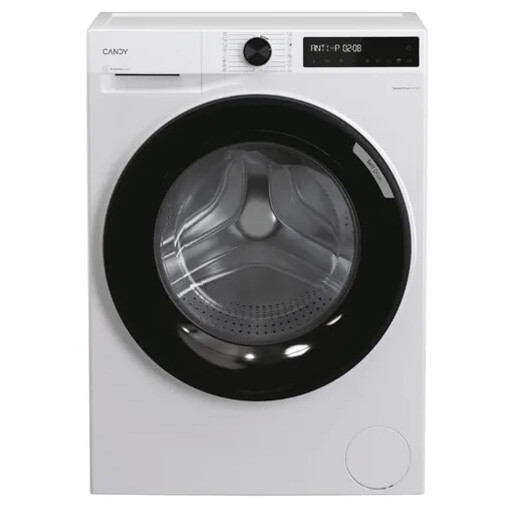 Image unavailable
This capacity is worth considering if your usual loads call for 11 kg; if you tend to wash smaller loads, compare models with smaller drums too.
The product title lists an energy rating of A. Check the label figures and repair terms for this model before comparing it with machines of other capacities.
 Image unavailable
Worth considering if 9 kg suits your regular laundry loads and a front-loading model fits the space you have.
The product title lists a spin speed of 1,600 tr/min and a connected feature. To assess drying performance and noise levels, also check this model’s spin and noise figures, along with its service cover.
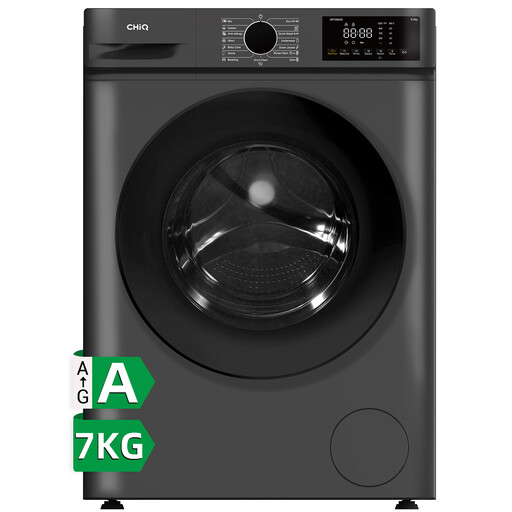 Image unavailable
A capacity to compare with your usual laundry loads and the space available for a front-loading model.
The product title lists 1,200 tr/min, an energy rating of A and 16 programmes. Check the label and the information for this model to compare energy and water use, noise and durability.
Use this score out of 10 to compare washing machines with similar capacities and formats, but don’t treat it as a promise that the machine won’t break down. According to ADEME, the rating has been required in shops for the washing machines it covers since early 2025. Also look into repair options and the service terms for the specific model.
ADEME says that 7 kg is enough most of the time, but your regular laundry loads should guide your choice. Consider how often you do laundry and which bulky items you actually wash, rather than sizing the machine for an occasional load.
For machines with similar capacities, compare the kWh per 100 cycles, litres of water per cycle, stated programme duration and noise level. The European Commission lists these as energy-label information; for spin performance, also check the efficiency class that applies to the model.
Search for parts that match the exact model and ask how to arrange a repair in your area. The European Commission requires certain parts to be available for 10 years for washing machines covered by its requirements, but this doesn’t mean every part or repair will be covered by a warranty.
No. In France, the Ministry of the Economy distinguishes between the legal guarantee of conformity, which applies to goods sold by a business to an individual, and additional commercial warranties. For the latter, read the terms covering components, parts, labour, call-out charges and any activation requirements.