Households that do laundry regularly
You want to get back to doing laundry with a capacity that suits the loads you actually wash, without running extra cycles or choosing a drum that’s too large for your needs.


If the fault hasn’t yet been confirmed as beyond repair, compare the cost of a repair with the price of a replacement first. Otherwise, choose a capacity that suits your loads and a format that fits your space. A front-loading machine needs room in front for the door to open, while a top-loading model may be a better fit if space is tight or you prefer loading from above. In France, since 8 April 2025, the durability index has applied to new washing machines covered by the scheme. It provides information about reliability and repairability, but doesn’t guarantee that a machine won’t break down.
You want to get back to doing laundry with a capacity that suits the loads you actually wash, without running extra cycles or choosing a drum that’s too large for your needs.
You need to consider the dimensions of the space, the route to get the machine there and the room needed to open the door or lid.
After a breakdown, you want to compare information about durability, repair options and the guarantees available for the machine you’re considering.
After a breakdown, check your loads and available space first, then compare the specifications of models that could suit you.
Consider this if: you have enough room in front of the machine and its capacity suits your usual laundry loads.
Check: the dimensions, access route and clearance needed to open the door once the machine is in place.
Consider this if: the available width or your preference for loading from above makes this format more practical.
Check: the clearance needed to open the lid. Choosing a top-loading model doesn’t, in itself, mean it will be quieter or more efficient.
Consider this if: the fault hasn’t yet been assessed, or a refurbished machine meets your needs and condition requirements.
Check: France’s Ministry of the Economy advises that the statutory conformity guarantee applies to refurbished machines sold by a professional retailer. The durability index doesn’t apply to refurbished appliances.
| Criterion | What to check before buying | Who considers this most important |
|---|---|---|
| Capacity and wash quality | ADEME says that 7 kg is usually enough. Compare this guideline with your loads and, where available, check the washing and rinsing results for the specific model. | If I’m replacing my machine, I want a drum that suits my usual laundry loads and washing and rinsing results that meet my needs. Around 26% of consumers prioritise capacity and wash quality. |
| Positioning and opening clearance | Measure the space and delivery route, then check the clearance needed for the door or lid to open, as well as the connections specified in the model’s instructions. | When space is tight, I need to know whether the machine can be brought in, connected and opened without getting in the way. Around 21% of consumers put whether a machine fits their available space first. |
| Durability and repairability | For a new washing machine covered by the scheme, check the model’s durability index and the details behind its score. This rating doesn’t predict whether a machine will break down; check the applicable guarantees separately. | After a breakdown, I want to be able to assess reliability and future repair criteria without treating a rating as a promise of a long lifespan. Around 21% of consumers prioritise durability and repairability. |
| Noise at home | Compare the spin-cycle noise emissions shown on the labels of the models you’re considering, and follow the instructions for levelling the machine. | If the machine is close to a living area, noise during the spin cycle can influence my choice. Around 16% of consumers prioritise noise levels. |
| Water, electricity and spin performance | Compare kWh per 100 cycles, litres per reference cycle, programme duration and spin efficiency on the same basis. The EU energy label uses the eco 40-60 programme. | To compare how models perform in use, I want to consider water, electricity and spin performance together, rather than focusing on just one energy class. Around 16% of consumers prioritise energy and water use and spin performance. |
ADEME says that a 7 kg capacity is usually enough. A drum that’s too large for your regular laundry could mean running more cycles with smaller loads.
Think about the loads you wash regularly, and separately check the bulky items you genuinely want to wash.
The index provides information about reliability and repairability, but it doesn’t predict the lifespan of an individual machine.
For a new washing machine covered by the scheme, check the score and its breakdown for the exact model, then look separately at the guarantees that apply.
Additional services, such as installation or removal of your old machine, may depend on the offer you choose.
Before ordering, check what’s included and whether the planned connections are suitable for your home.
Que Choisir’s tests cover both formats and find differences between models. It’s also worth checking the spin-cycle noise level for each model.
Choose a format that suits your space, then compare the specifications and, where available, the test results for the specific models.
The range includes top-loading washing machines to consider when width is an important factor.
Beko offers both top-loading and front-loading formats to consider depending on your room layout.
LG front-loading washing machines are worth considering if their capacity and format suit your household’s laundry loads and available space.
The WEA125 WCS 8kg Active is a front-loading model to consider if an 8 kg capacity suits your household’s needs.
This selection on Joybuy includes front-loading and top-loading washing machines, with a range of capacities listed in their product details. Compare their formats and specifications with the space in your home and your usual laundry loads.
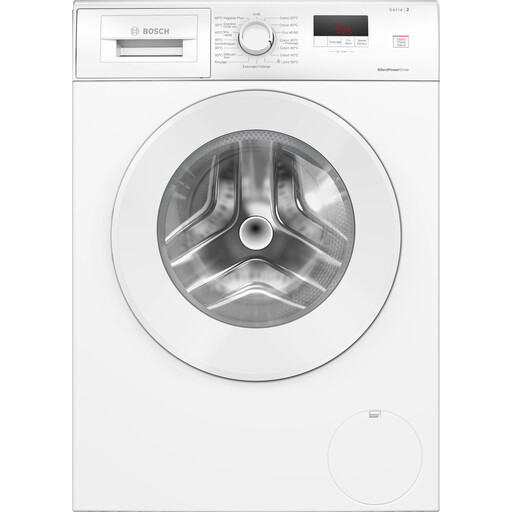 Image unavailable
Worth considering if a 7 kg capacity and front-loading format suit your laundry loads and the space in front of the machine.
Energy class A; maximum spin speed of 1 400 rpm; 72 dB during the spin cycle; 40 kWh per 100 cycles and 44 L per cycle.
 Image unavailable
Worth considering if you’re looking for a 6 kg top-loading washing machine and this format suits your available space.
Maximum spin speed of 1 400 rpm; energy class B; Inverter motor, Wi-Fi and 17 programmes, as listed in the product name.
 Image unavailable
Worth considering if a 7 kg capacity and top-loading format suit your laundry loads and available space.
Energy class A; maximum spin speed of 1 200 rpm; stated width of 405 mm; 40 kWh per 100 cycles, 42 L per cycle and 77 dB during the spin cycle.
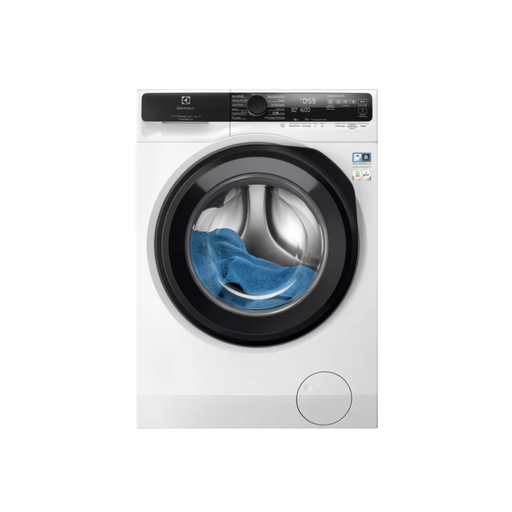 Image unavailable
Worth considering if a 9 kg capacity and front-loading format suit your needs and available space.
Maximum spin speed of 1 600 rpm; energy class A; 72 dB during the spin cycle; 44 kWh per 100 cycles and 48 L per cycle.
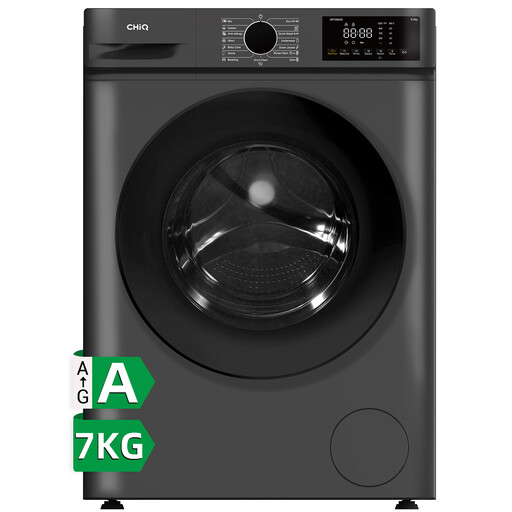 Image unavailable
Worth considering if a 7 kg capacity and stated depth of 47 cm suit your laundry loads and available space.
Energy class A; maximum spin speed of 1 200 rpm; 16 programmes, as listed in the product name. The description says to remove the four transit bolts before first use and place the machine on a level floor.
Yes, if it hasn’t been established that the fault can’t reasonably be repaired: ask for a quote based on your machine. For eligible repairs carried out outside the guarantee by a QualiRépar professional, ecosystem says a Repair Bonus may be available subject to conditions. Some repairs, particularly purely cosmetic work, are excluded.
Measure the machine and the route to its final position, then check that there’s enough room to open it. Consult the instructions for your model for the water inlet and waste connections, as well as levelling: the steps can vary by model.
The EU energy label shows electricity use in kWh per 100 cycles and water use in litres per reference cycle. These figures are based on the eco 40-60 programme, allowing you to compare models on the same basis, but they don’t guarantee your actual consumption.
Yes. France’s Ministry of the Economy says this guarantee applies to new, second-hand and refurbished goods sold by a professional to a private customer, with two years from delivery to make a claim. The requirement to display the durability index doesn’t apply to refurbished appliances.
The ‘one-for-one’ take-back scheme covers a used household appliance of the same type when you buy a new appliance. The FAQ from France’s Ministry for Ecological Transition says this take-back applies to this category regardless of the sales area; check the collection options available for your order.