You have an alcove or a narrow access route
Measure the route to the room, then the space where the machine will go. Width alone won’t tell you whether a front-loader or top-loader is right: depth and the space needed to open it matter too.


Keep your washing machine if it can get through the access points at your new home, fit in its space and be transported and recommissioned in line with its manual. If it won’t fit, compare a front-loading model with a top-loader based on the available width, depth and opening space. In either case, check the connections too.
Measure the route to the room, then the space where the machine will go. Width alone won’t tell you whether a front-loader or top-loader is right: depth and the space needed to open it matter too.
Find its model number and manual before organising the move. Bosch, for example, advises keeping the transit bolts so they can be reused for a future move. Always follow the instructions for your specific model.
Stairs, tight turns and narrow doorways can make moving a machine difficult, even if it fits in its new space. Assess the route before deciding to keep it; Electrolux recommends that two people move a heavy appliance.
Start with the route and the space. If your current washing machine can get through and fit, check its manual and the requirements for reinstalling it. If not, choose a replacement format, while also checking the connections and any handling challenges.
| Consideration | What to check | Who it matters to |
|---|---|---|
| Access and space | Measure doorways, turns and stairs, then the space where the machine will go. Compare these measurements with the model’s overall dimensions and the room needed to open its door or lid. | If I can’t get the machine to where it needs to go, its size becomes my first priority. Around 36% of consumers would put this compatibility first. |
| Connections and installation | Locate the water inlet, drain and power socket. Check the requirements and clearances specified in the model’s manual. | I want to install and recommission my washing machine in my new home without finding out too late that the connections aren’t suitable. This would be the top consideration for around 29% of consumers. |
| Keep or replace | Find the model number, manual and transit bolts for your current machine. If you’re replacing it, check the arrangements for taking away the old one. | I’m still happy with my current washing machine, so I’d rather check whether I can move and reinstall it than replace it straight away. Around 21% of consumers would prioritise this decision. |
| Moving and handling | Assess the stairs, floor, lift and any awkward access points before planning to move the machine or arranging a suitable service. | If there are difficult stairs, I want to avoid a risky move, even if the machine fits in its space. Moving and handling would be the main concern for around 14% of consumers. |
A washing machine might fit in the room but still not get through a doorway, across a landing or around a corner. Electrolux asks customers to mention any difficult access points before delivery.
Measure the narrowest points along the entire route before choosing a machine or booking a moving service.
A top-loader can work well when width is limited, but its lid needs room to open and you’ll still need to check the depth. For example, Whirlpool states that the TDLR6247FR/N is 40 cm wide and 60 cm deep.
Compare the depth of your chosen model and the clearance above it with the measurements of your new home.
Instructions for transit bolts and recommissioning vary by model. Bosch advises keeping its transit bolts for a future move.
Find your machine’s model number and check its manual before deciding how to move and reinstall it. If any required parts are missing, don’t assume it’s safe to transport.
An installation service won’t necessarily include changes to your home. Electrolux explains that its installers don’t carry out plumbing, electrical or carpentry work.
Check the connections and the terms of your chosen service before arranging delivery.
The examples below relate to specific models. Their dimensions and features don’t apply to every model from the same brand.
A front-loading model to compare if your space can accommodate a machine around 60 cm wide.
A top-loader to consider when limited width affects your choice.
A front-loader to consider if you’re looking for a 9 kg capacity and have a suitable space.
These models offer two replacement formats to compare with your new home: two front-loaders and one top-loader. If you’re thinking of keeping your current machine, start by checking its dimensions and manual.
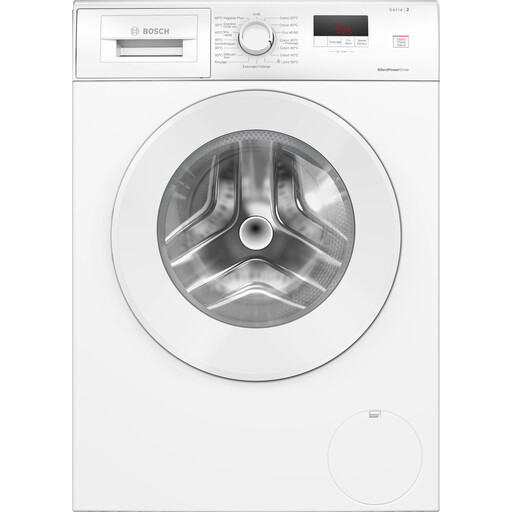 Image unavailable
Worth considering if you’re replacing your machine with a front-loader and its size suits your access route and available space.
Stated capacity: 7 kg; spin speed: 1,400 rpm; stated energy rating: A.
Before choosing, compare the model’s dimensions, door clearance and connection requirements in its manual with your new home.
 Image unavailable
Worth considering if the limited width of your new space makes a top-loader a suitable option.
Stated capacity: 6 kg; spin speed: 1,400 rpm; stated energy rating: B.
Also measure the available depth and the overhead space needed to open the lid. Check the manual for connection requirements.
 Image unavailable
Worth comparing if you’re looking for a 9 kg front-loader to replace your machine and have a suitable space.
Stated capacity: 9 kg; spin speed: 1,600 rpm. The model name includes SteamCare and SmartSelect.
Check the route to the room, the depth and the clearance needed to open the door, then review the installation requirements in the manual.
Measure every access point on the way to the room, then the width, height and depth of the space where the machine will go. Allow for the door or lid to open and for the clearances specified in the model’s manual. Electrolux recommends mentioning any difficult access points before delivery.
No. A top-loader can work well when width is limited, but it still needs enough depth and overhead clearance. To compare specific models, Whirlpool lists the TDLR6247FR/N as 40 cm wide, while Bosch states that the front-loading WUU28T18FR is 598 mm wide. Compare the full dimensions of the model you’re considering with your room and access route.
Follow your model’s manual before using it again, especially for instructions on the transit bolts, their removal and installation. Find the machine’s exact model number to check the manufacturer’s instructions, including any guidance about transporting it.