People with space for just one appliance
If the space has the necessary connections but can’t accommodate two appliances, check the installed dimensions, clearance for opening the door and the model’s drying capacity.


A washer-dryer can be a good choice when you genuinely only have room for one appliance, provided the loads you want to dry are within its drying capacity, which is generally lower than its washing capacity, according to UFC-Que Choisir. Before choosing, measure the space needed for connections and to open the door, then consider whether the full cycle fits in with your household’s laundry routine. If larger loads regularly need more than one drying cycle, consider air-drying or using two appliances, but only if your home has room for them.
The amount of space available isn’t the only thing to consider: how much laundry you need to dry and how easy it is to access the appliance also matter.
If the space has the necessary connections but can’t accommodate two appliances, check the installed dimensions, clearance for opening the door and the model’s drying capacity.
If your loads are within the drying limit for a continuous wash-and-dry programme, a washer-dryer lets you wash and dry your clothes in one go, without transferring them to another appliance.
Compare the amount of laundry you need to dry with the drying capacity, not the washing capacity. According to UFC-Que Choisir, a full wash load can exceed the drying capacity, meaning you may need to remove some items or split the load across multiple drying cycles.
Consider this if: you can only install one appliance and the loads you want to dry are within the limit for the programme you choose.
Bear in mind: the drying capacity is lower than the washing capacity and, according to UFC-Que Choisir, drying generally takes longer than with a separate tumble dryer.
Consider this if: you have a suitable place to hang your laundry and can wait for it to dry.
Bear in mind: your laundry will take up this space while it dries. This option may not suit you if you need to get fully dry loads quickly.
Consider this if: you have the space and installation facilities for two appliances, either side by side or stacked using a compatible stacking kit.
Limitation: this option won’t work if you only have space for one appliance and stacking isn’t possible.
| Criteria | What to check | What you need |
|---|---|---|
| Drying capacity | Compare the capacity in kg for washing, drying and the continuous programme. The European Commission defines rated washing and drying capacities separately. | I want to know whether my usual laundry load can be washed and then dried without removing any items. |
| Dimensions | Measure the width, height and depth, then check there’s room for connections, protruding parts and the door to open. | Once installed in my space, the machine must be easy to connect, open and load. |
| Full cycle | Compare the duration and water and electricity consumption of the wash-and-dry cycle on a like-for-like basis, separately from the figures for washing alone. UFC-Que Choisir tests these cycles separately. | I need to get my laundry back dry at a pace that works with my regular washing routine. |
| Installation | Check access to the water supply, drain and electricity supply. For a bathroom installation, Promotelec recommends, among other things, an earth connection, 30 mA residual-current protection and positioning beyond zone 2. | Before delivery, I want to make sure the intended space allows for a safe installation. |
According to UFC-Que Choisir, a washer-dryer’s drying capacity is lower than its washing capacity. A full wash load may therefore need to be dried in two batches.
Start with the amount of laundry you need to have dry and check the limit for the continuous wash-and-dry programme.
An appliance may fit in the space but still leave too little room for connections or for the door to open. For example, the LG F852SV52IRS specifications list a cabinet depth of 475 mm and a depth of 1,015 mm with the door open at 90°.
Check the dimensions that apply to your installation and leave enough room to load your laundry and access the connections.
Washing and wash-and-dry figures relate to different uses. For example, Electrolux gives its EW9W1166RB an A rating for washing and a C rating for wash-and-dry.
When comparing washer-dryers, check the electricity, water and duration figures for the cycle you’ll actually use.
Having a shower or bath nearby means you need to check the appliance’s location and electrical circuit carefully. Promotelec recommends, among other things, an earth connection, 30 mA residual-current protection and positioning beyond zone 2.
If you’re unsure, ask a qualified professional to check the setup before arranging installation.
These range and model examples can help you compare specific features, but they don’t take into account the space available in your home.
LG offers washer-dryers in a range of capacities, including a slim model worth considering if depth is a key concern.
Bosch’s UK range offers several washing and drying capacity combinations to compare.
Electrolux offers a heat pump washer-dryer, with separate figures for washing and the combined cycle.
Both appliances combine washing and drying in one machine, but their stated capacities suit very different laundry loads. Compare their drying capacity with your usual loads before checking the installed dimensions and full-cycle details.
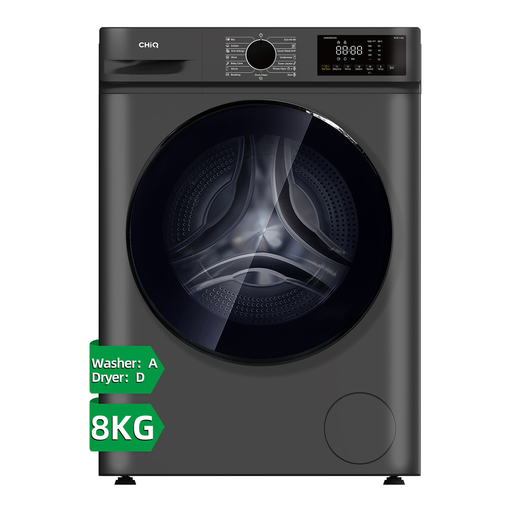 Image unavailable
Wash and dry in one appliance if the loads you want to dry are within the stated 5 kg limit. The model has an 8 kg washing capacity, so a full load will need to be reduced or dried in batches. Check the dimensions for your installation, clearance for the door and the duration and consumption figures for the wash-and-dry cycle.
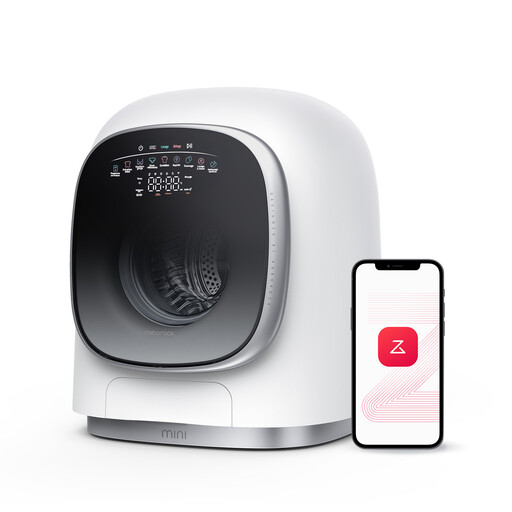 Image unavailable
This washer-dryer is designed for very small loads, with a washing capacity of 1 kg and a drying capacity of 0.5 kg. Check this drying limit against the amount of laundry you want to dry in each cycle. Also check the installed dimensions, door clearance, and the duration and consumption figures for a full cycle.
Not if the load exceeds the drying capacity of the programme you’ve selected. UFC-Que Choisir points out that the two capacities are different: for example, on a model rated at 8.5/5 kg, the drying limit is 5 kg. For a larger load, remove some items after washing or plan to dry the laundry in batches.
Measure the available width, height and depth, then check there’s enough room for the connections and for the door to open. For the LG F852SV52IRS specifically, LG lists a cabinet depth of 475 mm and a depth of 1,015 mm with the door open at 90°.
Compare the figures for the wash-and-dry cycle, including its energy rating, electricity and water consumption, and duration. Don’t confuse these with the figures for washing alone. Also check the programme’s drying capacity, as this determines the load that can go through the full cycle.
Check the exact location and electrical circuit before installation. Promotelec recommends, among other things, an earth connection, 30 mA residual-current protection and positioning beyond zone 2. If you’re unsure about the setup near a shower or bath, ask a qualified professional to assess it.
Yes, if you have a suitable place to hang your laundry and the drying time works with your routine. This means you’re not limited by a washer-dryer’s drying capacity, but it won’t suit you if you need to get a dry load quickly.