People in small homes with nowhere to dry clothes
You have just one floor space for both washing and drying. A washer-dryer could work for you if the amount of laundry you dry in each cycle is within its drying capacity.


If you can only install one appliance and want to wash and dry your clothes in one go, a washer-dryer could be the answer. Just make sure the load is within its drying capacity, which is lower than its washing capacity. If you have a suitable space to air-dry clothes, keep that option open. And if you have enough headroom and the appliances are compatible, it’s also worth considering a stacked washer and separate tumble dryer if you dry clothes frequently. UFC-Que Choisir points out that while a washer-dryer saves space, drying cycles take longer and water consumption is something to consider.
You have just one floor space for both washing and drying. A washer-dryer could work for you if the amount of laundry you dry in each cycle is within its drying capacity.
For large or back-to-back loads, compare a washer-dryer’s capacity and cycle times with those of a setup that includes a separate tumble dryer. UFC-Que Choisir notes that a washer-dryer takes longer to dry clothes than a conventional tumble dryer.
Air-drying is still an option if you have the right space. ADEME recommends drying clothes indoors in a large, well-ventilated room or one fitted with mechanical ventilation extraction.
Consider this if: you can install just one appliance and want to run both stages in sequence without transferring the laundry.
Bear in mind: the load is limited by the drying capacity and, according to UFC-Que Choisir, drying takes longer than with a conventional tumble dryer.
Consider this if: you can leave your laundry to dry in a suitable room and wait for it to dry.
Bear in mind: your laundry will take up space while it dries. ADEME recommends using a large, well-ventilated room or one with mechanical ventilation extraction.
Consider this if: you have enough headroom to stack a tumble dryer on top of a washing machine using a compatible stacking kit.
Bear in mind: you’ll need to install two appliances and choose a kit that’s compatible with their exact model numbers. The floor space alone doesn’t tell you whether they can be stacked.
Once you’ve worked out which setup will fit in your home, compare the load capacities, cycles and installation requirements of the model you’re considering.
| Factor | What to check | Consider your needs |
|---|---|---|
| Load to dry | Check the washing and drying capacities separately, in kg. Make sure the combined wash-and-dry programme is suitable for the load and fabrics you’ll be washing. | I want to take out a whole load of dry laundry without removing anything between cycles: my load must be within the drying capacity. |
| Water, energy and cycle time | The European Commission says a washer-dryer’s label shows separate details for washing alone and the wash-and-dry cycle, including energy, water per cycle and cycle time. Compare the cycles you plan to use. | If I often use the machine to dry clothes, the washing-only energy class won’t tell me enough about the full cycle. Cycle time also matters if I need to run several loads one after another. |
| Dimensions | Measure the width, depth and height of the space, as well as the room needed to open the doors. For a stacked setup, check the kit and its compatibility requirements for both model numbers. | I may have enough floor space for one appliance, but not necessarily enough height or depth to stack two. |
| Air-drying | Check the room’s size and ventilation. ADEME recommends drying clothes indoors in a large, well-ventilated room or one fitted with a mechanical ventilation extract vent. | I can keep using an airer if I have a suitable room and I’m happy with how long the clothes take to dry. |
| Maintenance | Check the model’s manual for details of filters and other parts that need maintaining. UFC-Que Choisir also notes that the condenser needs maintenance on some heat pump tumble dryers it has assessed. | If I dry clothes regularly, I want to know what maintenance is still required, even if an automatic cleaning system is advertised. |
A washer-dryer can take a larger load for washing than for drying. So if you wash a full load at the appliance’s maximum capacity, it may not all fit in one continuous wash-and-dry cycle.
Compare your usual load with both capacities in kg. If you want to run one cycle without removing any laundry, use the drying capacity as your guide.
Removing some of the laundry or running an extra drying cycle takes time.
The European Commission’s label shows separate information for washing alone and for the wash-and-dry cycle. The washing-only class doesn’t tell you everything about using the appliance to dry clothes.
Check the energy, water per cycle and cycle time for the programme you’ll use, then compare models on the same basis.
Compatibility depends on the kit and the specific appliances. For example, Bosch says its WTZ2741X kit requires a washing machine that’s more than 55 cm deep and isn’t compatible with Series 2 washing machines.
Before installation, check both model numbers, the manufacturer’s recommended kit, the available dimensions and whether the doors can open fully.
ADEME highlights the moisture released by clothes drying indoors. UFC-Que Choisir also found that, on some heat pump tumble dryers, failing to maintain the filters and condenser can affect performance.
Make sure you have a suitable room if you use an airer, and follow the manual for maintenance on any drying appliance.
These model and accessory examples highlight features worth checking; they don’t represent every product in each brand’s range.
The WDU8H500FF is an example of a washer-dryer, while the WTZ2741X kit shows what to check when choosing a stacked setup.
The F164HP2WST is an example of a heat pump washer-dryer featured by LG France.
The LWR98B166X lets you explore a heat pump washer-dryer with separate energy ratings for washing and washing-and-drying.
The WD10T754DBH is another example to compare washing capacity, drying capacity and depth.
These three washer-dryers let you wash and dry clothes in one appliance. To choose between them, start with the load you need to dry, then check the dimensions and full-cycle details of the model you’re considering.
 Image unavailable
To run washing and drying in one appliance, keep the load for the full cycle within the stated drying capacity of 6 kg, rather than the 11 kg washing capacity.
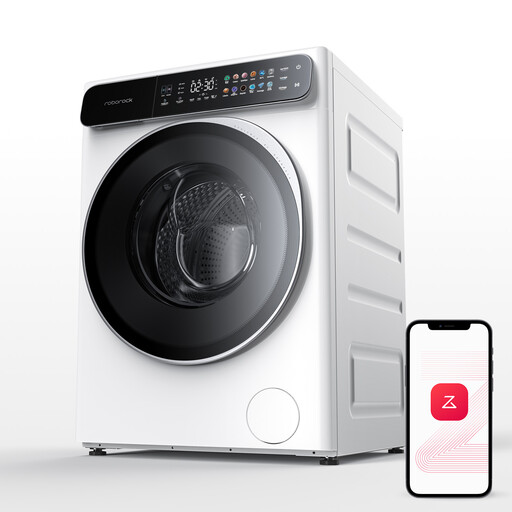 Image unavailable
This washer-dryer combines both stages in one appliance, with a stated capacity of 10 kg for washing and 6 kg for drying. The product title mentions Zeo-Cycle, automatic dosing and the LintClear system; check the manual for details on how to use and maintain them.
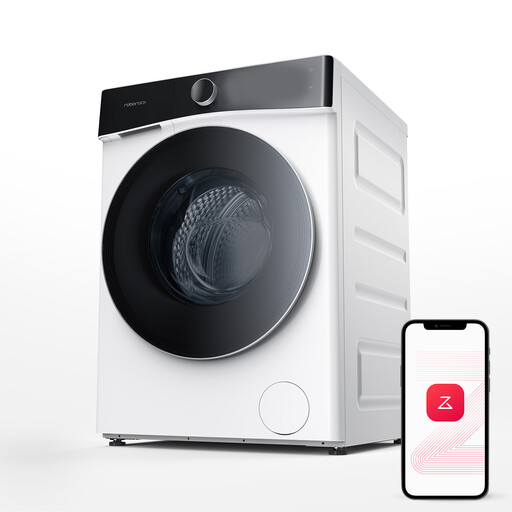 Image unavailable
For a full wash-and-dry cycle in one appliance, bear in mind the stated drying capacity of 6 kg rather than the 10 kg washing capacity. The product title mentions Zeo-Cycle, app control and LintClear; check the model documentation for details on how to use these features.
Not necessarily: as UFC-Que Choisir points out, its drying capacity is lower than its washing capacity. If you want to run both stages in sequence without removing any laundry, check your load against the drying capacity in kg, not just the washing capacity.
Look at the figures for the wash-and-dry cycle, not just those for washing alone. The European Commission says the label includes the energy class, energy consumption, water per cycle and cycle time. Its QR code gives you access to more detailed information in EPREL.
No. You need to check that the stacking kit is compatible with the exact model numbers and dimensions of both appliances. For example, Bosch’s WTZ2741X kit requires a washing machine that’s more than 55 cm deep and isn’t compatible with Series 2 washing machines.
Yes, if you have the time and a suitable room. Because drying clothes releases moisture, ADEME recommends using a large, well-ventilated room or one fitted with a mechanical ventilation extract vent.
Yes. UFC-Que Choisir has found that clogged filters and condensers can affect a tumble dryer’s performance. Check your model’s manual to find out which parts need maintaining, even if an automatic cleaning feature is advertised.