If you dry laundry often and have room for a separate appliance, a heat pump tumble dryer is worth considering: according to UFC-Que Choisir, it uses less electricity than a standard condenser tumble dryer. If there isn’t room for two appliances, a washer-dryer combines both functions, but its drying capacity is lower than its washing capacity. Check how much laundry you’ll actually be able to dry.
Who are these options suitable for?
Households that dry laundry several times a week
If you have room for a separate appliance, compare heat pump tumble dryers by the capacity you need, the energy consumption shown on the label, cycle length and maintenance requirements. UFC-Que Choisir says this technology uses less electricity than a standard condenser tumble dryer, but it’s still important to compare individual models.
People without room for two appliances
A washer-dryer combines both functions in one appliance. However, check its drying capacity: UFC-Que Choisir notes that this is lower than its washing capacity, so you may need to remove some laundry before running a combined cycle.
Households that dry laundry indoors
If you have to dry laundry indoors because outdoor drying isn’t practical, consider which room you’ll use and how well it’s ventilated. ADEME notes that air-drying laundry releases a lot of moisture into the air indoors. This may also be a reason to compare tumble dryers.
What should you check before choosing?
Start by considering how much space you have and how much laundry you need to dry. Then look at energy consumption, cycle length and the maintenance tasks you’ll be able to keep up with.
Heat pump tumble dryer
Consider this if: you dry laundry regularly and can install a separate appliance without an air exhaust hose to the outside.
The trade-off: check how long the cycle takes for the loads you do and what cleaning the manual recommends.
Standard condenser tumble dryer
Worth considering: particularly when comparing an existing or second-hand appliance. Check its exact model and status.
The trade-off: according to UFC-Que Choisir, this technology uses more electricity than a heat pump tumble dryer.
Washer-dryer
Consider this if: there isn’t room for two appliances and your laundry loads are within the stated drying capacity.
The trade-off: according to UFC-Que Choisir, drying capacity is lower than washing capacity, so a full wash load may need to be split before drying.
| Factor |
What to check |
Your needs |
| Space and indoor drying |
Measure the space and check the model’s installation instructions. If you’ll still dry laundry indoors, consider the room’s ventilation too. |
I can’t dry laundry outdoors easily, so I need an option that suits the space I have. |
| Energy consumption |
Compare the energy label and consumption in kWh/100 cycles for similar appliances and cycles. UFC-Que Choisir distinguishes the energy consumption of heat pump models from that of standard condenser tumble dryers. |
I’ll be drying laundry often, so I want to compare the stated energy consumption before choosing an appliance. |
| Drying capacity |
Check the drying capacity in kg against your usual loads. For a washer-dryer, look at the washing and drying capacities separately. |
Does a full wash load need to dry in one go, or can I remove some of the laundry? This is particularly important with a combined appliance. |
| Cycle length |
Check the duration of the programme that suits your load, including the Eco programme, and its stated energy consumption. A quick programme designed for a small load doesn’t tell you how long all cycles take. |
I need to know how long it will take to dry the loads I actually wash. |
| Maintenance and water collection |
Check the manual for details on the filter and condenser, and how easy they are to access. Find out whether water collects in a tank that needs emptying or whether the appliance can be connected to a drain. |
I’d like to know what I’ll need to do after each cycle and whether the space allows for my preferred drainage set-up. |
What mistakes should you avoid?
-
Looking only at a washer-dryer’s washing capacity
UFC-Que Choisir points out that the load capacity for drying is lower than for washing. A full wash load may therefore not be able to go straight into a drying cycle.
Compare both capacities in the model specifications and size a combined cycle’s load according to its drying limit.
If the load is over that limit, you’ll need to remove some laundry or split the drying across several loads.
-
Forgetting about maintenance
The filter and, depending on the model, the condenser need to be looked after as described in the manual. Electrolux, for example, advises cleaning the filter at the end of every cycle as part of its maintenance procedure.
Before choosing, check how easy it is to access the parts that need cleaning and how often the appliance you’re considering needs maintenance.
-
Choosing an appliance based solely on a quick programme
A time quoted for a small load doesn’t tell you how long your usual cycles will take or how much energy they’ll use. UFC-Que Choisir also notes that tumble dryer technologies don’t all use the same amount of electricity.
Consider the capacity, the cycle time for a programme suited to your laundry, and the stated consumption for a comparable cycle together.
Which brands are useful points of comparison?
These examples highlight features to compare on specific models; they don’t represent every range from each brand.
Bosch
Bosch product specifications let you compare a separate tumble dryer with a washer-dryer, starting with their capacities.
- Bosch lists the WQA23300FR heat pump tumble dryer with an 8 kg capacity.
- Bosch lists the WNC254A0FR washer-dryer with a 10.5 kg washing capacity and a 6 kg drying capacity: these aren’t interchangeable.
Electrolux
The EW6HI5829SB specifications provide useful figures for comparing an 8 kg heat pump tumble dryer with models of a similar capacity.
- Electrolux lists this model as energy rating C, with consumption of 97 kWh/100 cycles.
- Check Electrolux’s cleaning guidance against the manual for the model you choose.
Miele
Miele offers tumble dryers with maximum capacities of 7, 8 and 9 kg: a useful starting point for matching drying capacity to your usual laundry loads.
- Comparing these capacities helps you focus on the amount of laundry you need to dry, rather than just the space the appliance takes up.
- A model’s capacity alone doesn’t tell you its energy consumption, cycle length or maintenance requirements, so compare its own specifications.
Which appliances can you compare on Joybuy?
This selection includes heat pump tumble dryers for drying laundry separately and washer-dryers that combine both functions. Compare each appliance with the option that suits your home, and don’t confuse washing capacity with drying capacity.
 Image unavailable
Hotpoint CHD84MWBSEE, 8 kg heat pump tumble dryer
This separate appliance is suited to households that dry laundry regularly when outdoor drying isn’t practical.
Its name indicates an 8 kg capacity and energy rating C. Before choosing, compare its consumption in kWh/100 cycles, the duration of a programme suited to your loads and the maintenance instructions.
View on Joybuy
 Image unavailable
Samsung WD10HG6U34BEU3, 10 kg/6 kg washer-dryer
This combined appliance is worth considering if your home doesn’t have room for a separate washing machine and tumble dryer.
Its name indicates a 10 kg washing capacity, a 6 kg drying capacity and energy rating D. To wash and dry without removing any laundry, keep within the drying capacity. Also check the duration and energy consumption of a combined cycle.
View on Joybuy
 Image unavailable
Comfee CD08EHP05W-HR, 8 kg heat pump tumble dryer
This separate 8 kg tumble dryer can be compared with other models of the same capacity if you dry laundry regularly.
Its name indicates energy rating D. Check the consumption in kWh/100 cycles, programme durations, dimensions and maintenance instructions to see whether it suits your needs.
View on Joybuy
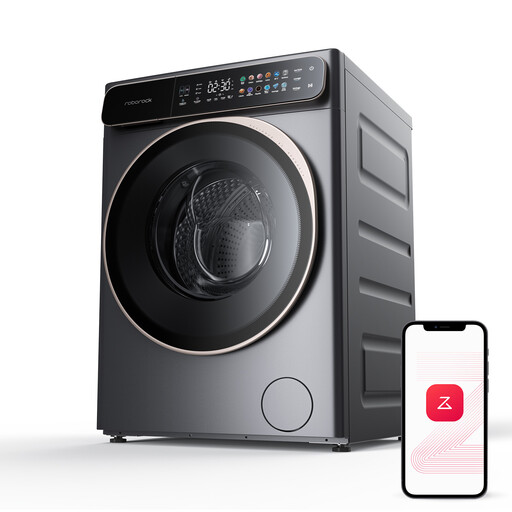 Image unavailable
Grey Roborock Zeo One, 10 kg/6 kg washer-dryer
This combined model is worth comparing with other appliances that wash and dry in one.
Its name indicates a 10 kg washing capacity and a 6 kg drying capacity, as well as a LintClear system. Keep combined cycles within the drying capacity and check the model’s specifications for cycle length, energy consumption, dimensions and maintenance.
View on Joybuy
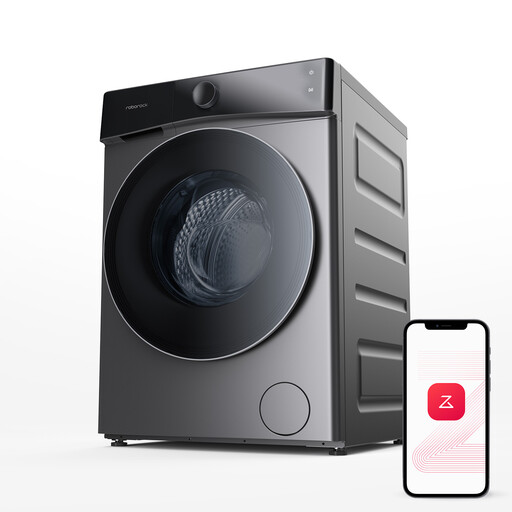 Image unavailable
Grey Roborock Zeo Lite, 10 kg/6 kg washer-dryer
This alternative combined appliance is worth considering if limited space makes a single appliance the best option.
Its name indicates a 10 kg washing capacity, a 6 kg drying capacity and a LintClear system described as self-cleaning. Check the manual to see what maintenance is still required, along with the appliance’s dimensions, energy consumption and cycle durations.
View on Joybuy
Frequently asked questions
Can I install a tumble dryer without an exhaust hose to the outside?
A tumble dryer that collects water through condensation doesn’t need an air exhaust hose to the outside. Depending on the model, water collects in a tank or drains away. Check the dimensions and installation instructions, and make sure you can empty the tank or connect the drain.
Why can’t a washer-dryer always dry a whole load of laundry?
As UFC-Que Choisir explains, its drying capacity is lower than its washing capacity. For example, Bosch lists the WNC254A0FR with a 10.5 kg washing capacity but a 6 kg drying capacity. Any load going through a combined cycle must stay within the model’s drying limit.
What maintenance does a heat pump tumble dryer need?
Follow the appliance manual for instructions on the filter, condenser and water collection. In its maintenance guidance, Electrolux advises cleaning the filter at the end of every cycle. Other tasks depend on the model’s design.
What should I consider if I still dry laundry indoors?
ADEME notes that air-drying laundry releases a lot of moisture into the air indoors. If you’ll continue drying laundry this way, consider the room and its ventilation. Then weigh up whether an appliance would be useful, based on how often you do laundry and how much space you have.


