Who are these options for?
Available space isn’t the only thing to consider: how much laundry you need to dry and what your home can accommodate also affect your choice.
People with space for just one appliance
If there’s no room for a second appliance, a washer-dryer lets you occasionally wash and dry your laundry in one machine. However, you’ll need to keep loads within its drying capacity, as UFC-Que Choisir points out.
Households that often dry large loads
If you need to dry almost every load, the difference between washing and drying capacity may mean taking some laundry out before starting the drying cycle. Check whether two appliances can be stacked before deciding on an all-in-one model.
Tenants who need to plan the installation
Measure the delivery route and the space for the appliance, then check the existing connections against the instructions for your chosen model. If any changes to the property or rented fixtures are needed, discuss the work with your landlord before going ahead.
How do the options compare?
Start by working out where your laundry can dry, then compare the load size, wash-and-dry cycle information and installation requirements.
Washer-dryer
Worth considering : you only have space for one appliance and sometimes want to wash and dry your laundry in one go.
Bear in mind : UFC-Que Choisir notes that drying capacity is lower than washing capacity, and that the integrated drying cycle takes longer than a conventional tumble dryer.
Two stacked appliances
Worth considering : you regularly dry loads that you’d have to split to fit the drying capacity of an all-in-one machine.
You’ll need : enough height and a suitable installation for both appliances. If you rent, check in advance whether you’re allowed to make any changes to the property.
Washing machine and airer
Worth considering : you have somewhere to air-dry your laundry and don’t need it to be dry as soon as the wash finishes.
Bear in mind : an airer takes up drying space and won’t help if you need your laundry dry straight after a back-to-back wash-and-dry cycle.
| What matters to you |
What to check |
Who it matters to |
| Space for just one appliance |
Measure the space and delivery route, then compare them with the appliance dimensions and, if listed, its packaging dimensions. |
If there’s no room for a second appliance on the floor, fitting both functions into one machine becomes the main priority. Around 36% of consumers would put this space-saving requirement first. |
| Back-to-back washing and drying |
Compare the washing and drying capacities separately, then check the duration of the programme suited to your load. |
If you want a dry load without regularly taking laundry out between cycles, drying capacity is what counts. This would be the priority for around 29% of consumers. |
| Water, energy and cycle time |
Check the water and energy use, and the duration of the wash-and-dry cycle, rather than looking at washing figures alone. |
If you’ll use the combined cycle often, its consumption and running time will affect your decision. Around 21% of consumers would make these their priority. |
| Installation in a challenging space |
Check access, connections and the model instructions. If you’re renting, discuss any proposed alterations before work begins. |
In a rented home or one with difficult access, making sure the machine can actually be installed comes before choosing programmes. Around 14% of consumers would put this first. |
Brands to consider
These models offer examples of capacities and features to compare. A feature listed for one model won’t necessarily apply to every model in a brand’s range.
Bosch
The WNG24402FR is a useful point of comparison if you’re looking for a front-loading washer-dryer with clearly stated, separate capacities.
- Bosch lists a 9 kg washing capacity, a 6 kg wash-and-dry capacity and a depth of 590 mm for this model.
- A short cycle listed for a small load won’t tell you how long a combined cycle takes at maximum capacity, so check the programme conditions.
LG
The F964R76WRST is worth a look if you’re comparing models listed with a 9 kg washing capacity and a 6 kg drying capacity.
- LG lists a 68 L drum and highlights the TurboWash 360° and Steam features for this model.
- Results from the brand’s features depend on factors such as the programme, fabric and load. They don’t change the 6 kg drying capacity.
Samsung
The WD90DG5B15BE lets you compare a listed 9 kg washing capacity and 6 kg drying capacity with the space available.
- Samsung France lists a depth of 600 mm for this model.
- The energy savings listed for AI Energy are based on specific usage conditions and internal tests. Compare the figures for the combined cycle that matches how you’ll use the appliance.
Washer-dryers available from Joybuy
These models combine washing and drying in one appliance. Their listed capacities range from very small loads to larger washing loads. First, choose based on how much laundry you actually need to dry, then check the dimensions and combined cycle details for the exact model.
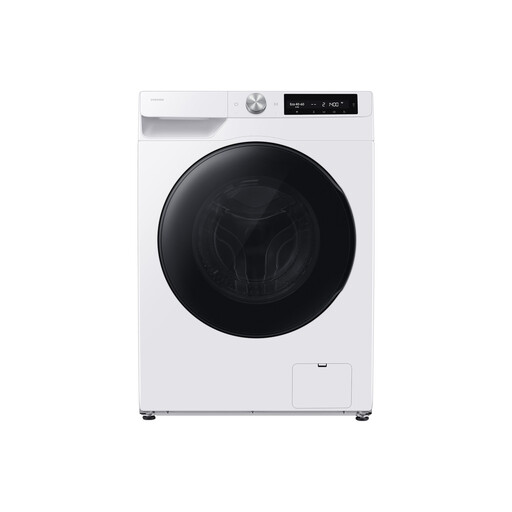 Image unavailable
Samsung WD10HG6U34BEU3, 10 kg / 6 kg washer-dryer
Worth considering if you want to wash and dry in one machine, as long as you keep back-to-back loads within the 6 kg drying capacity, compared with 10 kg for washing. The product information lists an energy rating of D. Also check the installation instructions, and the duration and consumption of the combined cycle, to see if it suits your space and needs.
View on Joybuy
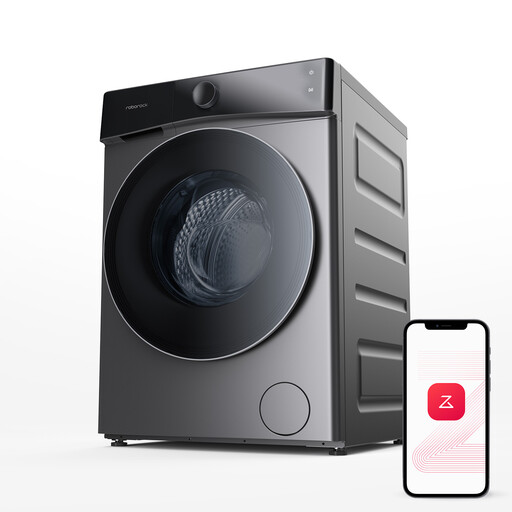 Image unavailable
Roborock Zeo Lite Gray washer-dryer
Worth a look if you’re after a single appliance and want to compare filter maintenance requirements. The product information features an automatic LintClear cleaning system, so check the care instructions. Before deciding whether this model suits your home, check its dimensions, instructions and wash-and-dry cycle information.
View on Joybuy
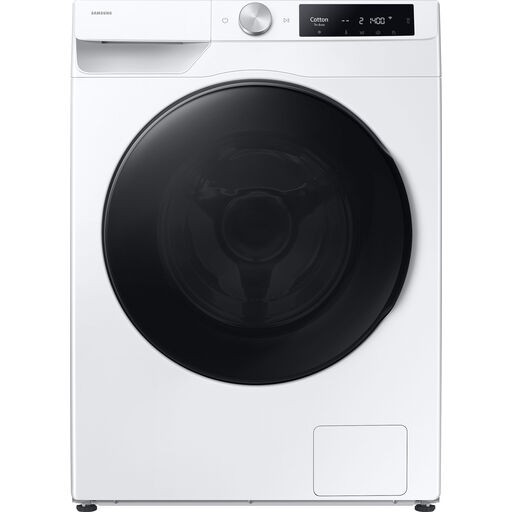 Image unavailable
Samsung WD11DG6B85BEU3, 11 kg / 6 kg washer-dryer
This freestanding model is for anyone looking to wash up to 11 kg while bearing in mind that its listed drying capacity is 6 kg. To check whether it will fit and how its combined cycle performs, ask for information specific to the WD11DG6B85BEU3 variant. Details for a model listed without the EU3 suffix aren’t enough to confirm its exact dimensions.
View on Joybuy
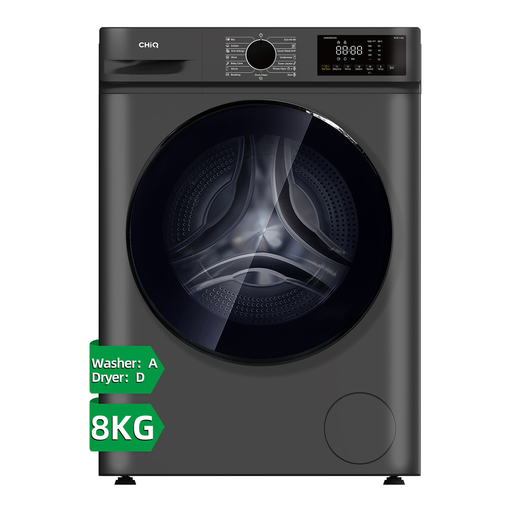 Image unavailable
CHiQ JW85882HG, 8 kg / 5 kg washer-dryer
Worth comparing if a listed drying capacity of 5 kg suits your usual laundry loads, against a listed washing capacity of 8 kg. Don’t rely on the 465 mm width shown in the title without confirmation: other dimensions listed for this product are 600 × 520 × 847 mm, but the order isn’t clearly explained. Ask for the exact measurements and packaging dimensions before checking access.
View on Joybuy
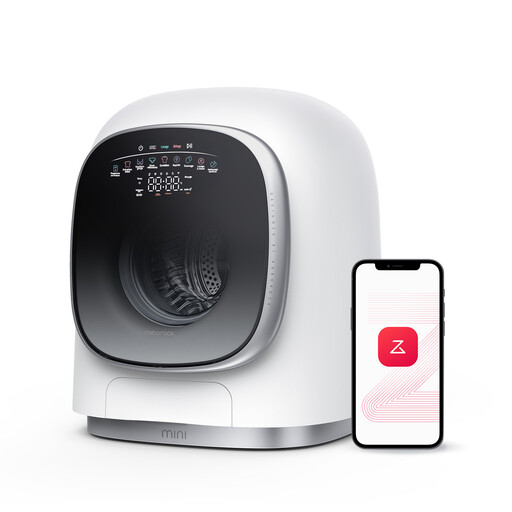 Image unavailable
Roborock Marshmallow Zeo Mini White, 1 kg / 0.5 kg
This mini washer-dryer is only suitable for very small loads: its title lists a 1 kg washing capacity and a 0.5 kg drying capacity, not the size of a typical laundry load. Check its dimensions, installation requirements and combined cycle information before setting aside space for it.
View on Joybuy
Frequently asked questions
Can I wash 9 kg and dry it all straight afterwards?
Not with a model that has a drying capacity of 6 kg. For example, Bosch lists a 9 kg washing capacity but a 6 kg wash-and-dry capacity for the WNG24402FR. If you want to run both stages without taking any laundry out, stick to the combined capacity listed for your model.
Do I need to vent it outside?
Check the requirements in the installation instructions for the exact model before choosing where to put it. Don’t assume that every washer-dryer has the same requirements. Also check the water supply, drainage, power supply and required clearances.
What should I measure before delivery?
Measure the space, clearances and the whole delivery route, including doors, hallways and the lift, if there is one. Compare these measurements with the dimensions of the appliance and its packaging. Samsung also recommends checking access before delivery.
What if installation involves work in my rented home?
If the plan involves altering the property or rented fixtures, first clarify what work is needed and get your landlord’s written permission before starting. In France, Article 7 of the law of 6 July 1989, as in force since 15 June 2025 and published on Légifrance, sets out tenants’ obligations. How it applies depends on the proposed work and the circumstances of the property.
Which consumption figures should I compare?
Compare the figures for the wash-and-dry cycle for each model, including the corresponding load and cycle duration, rather than looking at washing figures alone. Regulation (EU) 2019/2014, published in the Official Journal of the European Union, covers the energy labelling of washer-dryers. UFC-Que Choisir also notes that most models in its test protocol use water during drying.


