In a home where there’s no room for two machines and drying clothes on a rack is difficult, a washer-dryer could be a good option if your usual load fits within its drying capacity, which is often lower than its washing capacity, as UFC-Que Choisir points out. If you have space for two appliances and often wash large loads, consider a separate washer and dryer. If you rarely use a tumble dryer, an airer is another option, provided you have a well-ventilated space. Compare the installation dimensions, as well as the duration, water use and energy consumption of each model’s wash-and-dry cycle.
Who are these options for?
People living in smaller homes
If you can’t fit two machines, check that a washer-dryer will fit in the space available, allowing for the hoses and room to open the door. Its drying capacity should also be enough for the loads you want to dry without putting them on an airer.
Households looking to wash and dry in one go
A washer-dryer saves you from transferring laundry between two appliances for a suitably sized load. According to UFC-Que Choisir, its drying capacity is lower than its washing capacity, so start by comparing the drying limit with the size of your usual loads.
People unsure about drying clothes indoors
If an airer is your only other option, consider how much space you have and whether it’s well ventilated. ADEME points out that drying clothes indoors releases a lot of moisture into the air.
What should you consider before choosing?
Washer-dryer
Consider this if: you don’t have room for two appliances and want to finish a load without moving the laundry.
The trade-off: the drying capacity is lower than the washing capacity. UFC-Que Choisir also recommends checking the duration and consumption of the complete cycle.
Separate washer and dryer
Consider this if: you have enough space and often dry large loads, or want to wash one load while another is drying.
The trade-off: you’ll need space and connections for both appliances, and you’ll have to transfer the laundry between them.
Washing machine and airer
Consider this if: you rarely use a tumble dryer and have a room where you can hang clothes to dry with good ventilation.
The trade-off: an airer takes up space and, according to ADEME, clothes drying indoors release a lot of moisture.
| Criterion | What to check | For my needs |
|---|
| Space required |
Measure the total width, height and depth. Allow room for the hoses and enough clearance to open the door. |
The machine needs to fit in the space without blocking the way or making it difficult to load. |
| Drying capacity |
Compare the capacities in kg for washing alone and for the wash-and-dry cycle. Check the limits for the programme and fabric you plan to use. |
I want to finish my usual load without having to take some of it out before drying. |
| Complete cycle |
Check the figures for washing alone and for washing and drying separately: capacity, duration, water and energy, using the same basis for comparison. The European Commission provides separate labelling information for these two cycles. |
If I use the dryer regularly, the duration and consumption of the complete cycle matter more to me than the washing cycle’s energy class alone. |
| Drying indoors |
Check how much space an airer will take up and how well ventilated the room is. ADEME highlights the moisture released by clothes drying indoors. |
An airer could work for me if I have a suitable space. In a small, poorly ventilated room, I should consider another way to dry my clothes. |
What mistakes should you avoid?
-
Choosing based on washing capacity alone
You can’t always dry the whole load you’ve washed in one go. If it exceeds the drying capacity, you’ll need to remove some clothes before continuing.
Compare the size of your usual load with the capacity in kg for the wash-and-dry cycle on the programme you plan to use.
-
Measuring only the width of the space
A machine might fit between two cupboards but still stick out too far or leave too little room to open the door.
Measure the space and check the chosen model’s installation dimensions, hoses and clearance with the door open.
-
Confusing washing-only and wash-and-dry figures on the energy label
The European Commission lists figures for these two cycles separately. The energy class shown for washing alone doesn’t describe the complete cycle.
Compare capacity, duration, water and energy figures across models for the same type of use.
-
Choosing an airer without checking ventilation
ADEME identifies drying clothes as a major source of moisture in indoor air.
Before choosing this option, check where the airer will go and how you’ll ventilate the room.
Which branded models offer useful points of comparison?
These specifications apply to the models mentioned, not to the entire range, and don’t necessarily reflect the products featured below.
Bosch
The WNG24402FR is an example of a front-loading washer-dryer to compare if you usually dry smaller loads.
- Bosch states a capacity of up to 9 kg for washing alone and 6 kg for washing and drying.
- To finish the cycle without removing any laundry, your load must stay within the wash-and-dry capacity.
LG
The F164R51WRS shows the difference to look out for between washing and drying capacities.
- LG states a capacity of 11 kg for washing and 6 kg for drying for this model.
- A load sized to the washing capacity may not be dryable in a single cycle.
Miele
The WTI370 WPM PWash 8/5 kg gives you another point of comparison for loads you want to handle in a single appliance.
- Miele states a capacity of 8 kg for washing and 5 kg for drying for this model.
- Check that the 5 kg limit is enough for the loads you want to dry without interruption.
Washer-dryers to consider on Joybuy
These four appliances combine washing and drying in a single machine. Compare their drying capacity with the size of your usual loads, then check the installation requirements and complete-cycle figures for each model.
 Image unavailable
Samsung WD11DG6B85BEU3, 11 kg washing / 6 kg drying
To wash and dry without transferring the laundry, keep the load to be dried within the 6 kg limit, even though the stated washing capacity is 11 kg. Check the clearance in front of the door, then compare the complete-cycle figures with how often you’ll use it.
View on Joybuy
 Image unavailable
Samsung WD10HG6U34BEU3, 10 kg washing / 6 kg drying
This model combines both functions in one appliance. To dry a load without removing any laundry, use its stated drying capacity of 6 kg as your guide, rather than its 10 kg washing capacity. Check the dimensions with the door open, as well as the water, energy and duration figures for the wash-and-dry cycle, before comparing it with another model.
View on Joybuy
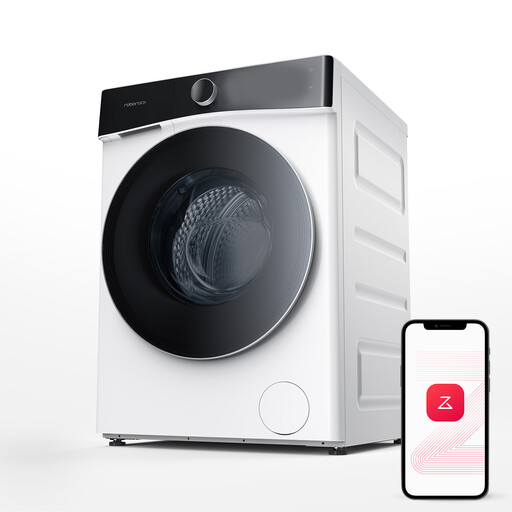 Image unavailable
Roborock Zeo Lite, 10 kg washing / 6 kg drying
This all-in-one design is ideal if you want to avoid moving laundry between two machines, subject to its stated drying capacity of 6 kg. Measure the space and check the dimensions, consumption and duration of the complete cycle for the model on sale.
View on Joybuy
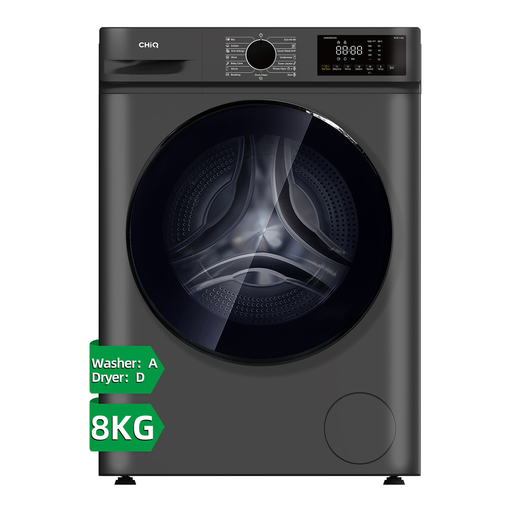 Image unavailable
CHiQ JW85882HG, 8 kg washing / 5 kg drying
The stated capacities are 8 kg for washing and 5 kg for drying. If you want to finish the cycle without removing any laundry, size your load according to the lower figure. The title and description give conflicting dimensions, so confirm the installation measurements and door clearance before choosing this model for a narrow space. Also compare the complete-cycle figures.
View on Joybuy
Frequently asked questions
Can I wash 9 or 11 kg and then dry the whole load in a washer-dryer?
Not necessarily: the drying capacity may be lower. Bosch states a capacity of 9 kg for washing and 6 kg for the wash-and-dry cycle on the WNG24402FR; LG lists 11 kg for washing and 6 kg for drying on the F164R51WRS. For a continuous cycle, stay within the capacity for the programme you’ve chosen.
Which figures on the energy label should I compare?
Start by comparing the figures for the cycle you plan to use. The European Commission distinguishes between washing alone and the complete wash-and-dry cycle. For each, check the capacity, water and energy consumption, and duration. Don’t apply the washing-only energy class to the drying cycle.
Does a washer-dryer mean I don’t need to ventilate my home?
No. It can save you from hanging out the load you’ve dried, but it doesn’t replace ventilation in your home. If you choose to use an indoor airer instead, bear in mind the moisture released as clothes dry, as highlighted by ADEME, and make sure the room can be properly ventilated.
Is the ECO programme suitable for every load?
No: you should also choose a programme based on the fabrics and their condition. ADEME says the ECO programme reduces electricity consumption by using a longer wash at a lower temperature. Check how long it takes and follow the garment care instructions before starting the cycle.


