A washer-dryer makes sense if you only have room for one machine and can keep consecutive loads within its drying capacity, which is lower than its washing capacity according to UFC-Que Choisir. If you often dry large loads, compare the duration and energy and water use of the combined cycle. If you have room for two appliances, consider a separate washing machine and tumble dryer too.
Who is this option suitable for?
People with space for just one appliance
If you can’t fit two machines in your home, a washer-dryer is worth considering. Also measure the available depth and the space needed to open the door: the space-saving benefits aren’t determined by width alone.
Households looking to wash and dry in one go
A continuous wash-and-dry cycle means you don’t have to transfer laundry between two appliances. To dry the entire load without removing anything partway through, check the model’s stated drying capacity, as UFC-Que Choisir advises.
People who dry their laundry frequently
If drying is part of your routine, look at the figures for the wash-and-dry cycle rather than washing alone. The European Commission says the label provides information including energy and water use, as well as cycle duration.
What should you look for?
Your choice depends first on how much space you really have, then on how much laundry you want to dry without having to intervene.
A washer-dryer
Worth considering : if you only have space for one appliance and want to wash and dry without transferring laundry.
The trade-off : drying capacity is lower than washing capacity, according to UFC-Que Choisir. A full wash load may therefore mean removing some laundry before drying.
Two separate appliances
Worth considering : if your space allows for two appliances and you want to wash one load while another is drying.
The trade-off : you’ll need to allow space and make sure each appliance can be installed properly, even if you have room to stack them.
| Criteria |
What to check |
Who is this important for? |
| Dimensions |
Measure the overall width, height and depth, as well as the space needed to open the door. |
When I only have room for one appliance, I want to be sure I can install and use the machine without blocking the way; around 33% of consumers say its size is their top priority. |
| Drying capacity |
Compare the capacity in kg for washing alone with the drying capacity of the specific model. |
If I want to run both stages without removing laundry, I need to be able to dry my usual load in one go. This is a priority for around 27% of consumers. |
| Combined cycle |
Check the energy, water and duration figures for washing and drying together, not just the washing-only rating. |
If I dry laundry regularly, the cycle duration and its energy and water use matter to my daily routine; around 20% of consumers say this is their main concern. |
| Drying and maintenance |
Look at the programmes suited to your laundry and check the manual for access to the parts that need cleaning. |
In a tight space, I want to be able to maintain the machine and choose a programme suited to the fabrics I dry; around 20% of consumers put these considerations ahead of others. |
Mistakes to avoid
-
Choosing based on washing capacity alone
A machine may be able to wash more laundry than it can dry. With a full wash load, you may need to remove some items or spread the drying across several cycles.
If you want to run both stages in one go, base your load size on the drying capacity in kg for the programme you’re using.
-
Comparing only the washing rating
Information for washing alone doesn’t tell you about the combined cycle. The European Commission distinguishes between the energy, water and duration information that’s useful when comparing washer-dryers.
Compare the wash-and-dry figures on the energy labels of the models you’re interested in, then check the model details in EPREL if needed.
-
Measuring only the available width
The depth and access to the door can make an appliance difficult to install or maintain, even if the width is suitable.
Check the model’s overall dimensions and allow enough access to the parts that need maintenance, as specified in its manual.
-
Expecting it to work just like two separate appliances
A two-in-one saves space, but its lower drying capacity may change how you divide up your laundry. UFC-Que Choisir also points out that its drying performance can’t automatically be compared with that of a separate tumble dryer.
If you often dry large loads and have space for two appliances, compare both setups against your usual loads and the cycle information for each option.
Brands to compare
The details below apply to the models listed, not to each brand’s entire range.
Electrolux
Two freestanding models let you compare different washing capacities without assuming that drying capacity increases in the same way.
- Electrolux France lists a 9 kg washing capacity and 6 kg drying capacity for the EW7IW4966BG, compared with 10 kg and 6 kg for the EW9W1166RA.
- For both models, a load at the maximum washing capacity exceeds the stated drying capacity.
Haier
The models listed show why it’s worth comparing capacity and depth when you need a machine to fit a specific space.
- Haier France lists a 9/6 kg capacity and dimensions of 600 × 525 × 820 mm for the built-in BHA6SD696M6DB9-S.
- The X5 HWD120-BP14357U1 is listed at 12/8 kg and 595 × 666 × 850 mm: check that its depth of 666 mm will fit your space.
Bosch
Bosch Home Appliances France explains the difference between washing capacity, drying capacity and the figures for the two types of cycle.
- For the WKD28542FF, Bosch lists a 7 kg capacity for washing alone and 4 kg for the wash-and-dry cycle.
- This model is listed as unavailable; its capacities don’t apply to other models from the brand.
Washer-dryers on Joybuy
These four appliances combine washing and drying in a single machine. For a small home, first compare their drying capacity with your usual laundry loads, then check the dimensions and combined-cycle figures for the model you choose.
 Image unavailable
Samsung WD11DG6B85BEU3, freestanding washer-dryer, 11/6 kg
Worth a look if you want to wash and dry with one appliance: the product title lists an 11 kg washing capacity and 6 kg drying capacity. For a continuous cycle, keep the load within the drying capacity. Also check the energy label for the exact model to compare the combined-cycle figures.
View on Joybuy
 Image unavailable
Samsung WD10HG6U34BEU3, washer-dryer, 10/6 kg
For washing and drying in one machine, compare your usual loads with its 6 kg drying capacity, against 10 kg for washing. Also check the overall dimensions, door clearance and combined-cycle figures to make sure it suits your space and how you plan to use it.
View on Joybuy
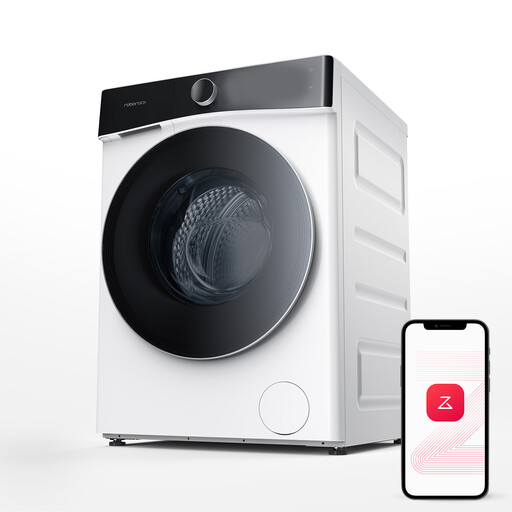 Image unavailable
Roborock Zeo Lite, white washer-dryer, 10/6 kg
This model combines washing and drying in one appliance, with a stated capacity of 10 kg for washing and 6 kg for drying. If you plan to run both stages in one go, keep the load within the 6 kg drying capacity. Check the model’s dimensions and maintenance instructions before choosing.
View on Joybuy
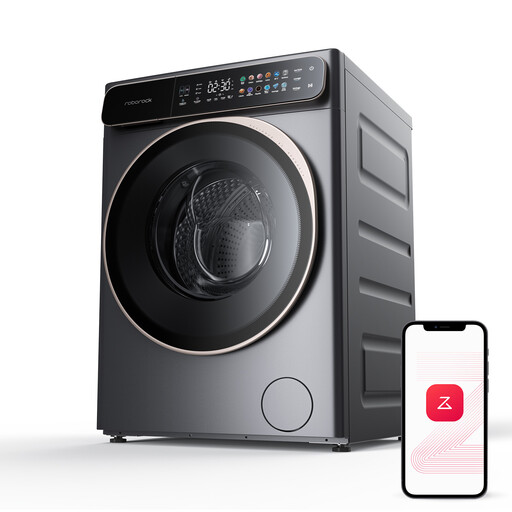 Image unavailable
Roborock Zeo One, grey washer-dryer, 10/6 kg
Worth considering if you need one machine to do both jobs: the product title lists a 10 kg washing capacity and 6 kg drying capacity. A 10 kg wash load won’t necessarily fit in one drying cycle, so check the dimensions, combined cycle and maintenance instructions for the exact model.
View on Joybuy
Frequently asked questions
Why is drying capacity lower than washing capacity?
A washer-dryer may not be able to dry a full load of everything it can wash: laundry needs room to move while drying. UFC-Que Choisir says capacities vary between models, so for a continuous cycle, use your model’s drying capacity as the limit.
Which energy label figures should I compare?
Compare the figures for the wash-and-dry cycle if you plan to use both functions regularly. The European Commission says the label includes information such as energy and water use, and cycle duration. Don’t rely on the washing rating alone.
What maintenance does a washer-dryer need?
Follow your model’s manual to find out how to access the parts that need cleaning and which procedure to use. In its guidance for its washer-dryers, Electrolux Support advises switching off and unplugging the appliance before cleaning. Also make sure your installation leaves convenient access to the parts concerned.


