Which criteria matter most?
Washer-dryer
Choose this if: you can’t fit two appliances and want to run a wash and dry cycle without transferring the laundry.
Bear in mind: the load for a combined cycle must not exceed the drying capacity, which is lower than the washing capacity according to UFC-Que Choisir.
Two separate appliances
Consider this if: you often dry several loads and genuinely have room for a washing machine and a tumble dryer.
Allow for: two suitable spaces or, if stacking the appliances, a stacking kit compatible with the models in question.
Washing machine and air-drying
Consider this if: you can use an airer in a sufficiently well-ventilated room.
Keep in mind: according to ADEME, clothes drying naturally release a lot of moisture into the air indoors.
If it’s difficult to dry clothes in a small home, start by working out how much laundry you need to dry, then compare this with the space you have and the figures for the full cycle.
| Criterion |
What to check |
Consumers concerned |
| Dry clothes without an airer |
Capacity of the wash-and-dry cycle and the space needed for installation. |
If an airer would take up too much room, I want to run both stages without moving the laundry. Around 42% of consumers would prioritise this above all else. |
| Large loads and waiting time |
Drying capacity and the stated duration of the full programme for the load in question. |
If I often fill the drum, splitting the load for drying or having my only machine tied up for a long time makes laundry more difficult. This would be the top priority for around 33% of consumers. |
| Energy and water use, and humidity |
Water and electricity figures for the wash-and-dry cycle; ventilation if clothes are dried indoors. |
I want to make drying less of a hassle without making my home damp. Around 25% of consumers would put this trade-off first. |
Washer-dryers on Joybuy
These appliances combine washing and drying for homes where it’s difficult to fit two machines or an airer. Focus on comparing their drying capacity with your usual loads, then check their dimensions and the figures for the full cycle.
 Image unavailable
Samsung WD11DG6B85BEU3 — 11 kg / 6 kg
Run a wash and dry cycle in one appliance when space is limited.
Listed capacity: 11 kg for washing and 6 kg for drying. A full washing load will need to be reduced before drying. Also check the space required for the door and connections.
View on Joybuy
 Image unavailable
Samsung WD10HG6U34BEU3 — 10 kg / 6 kg
An option to consider if you want to dry your laundry without making room for a second machine.
Listed capacity: 10 kg for washing and 6 kg for drying. For a combined cycle, stick to the 6 kg limit. Check the duration, energy and water use, and the clearance needed for installation.
View on Joybuy
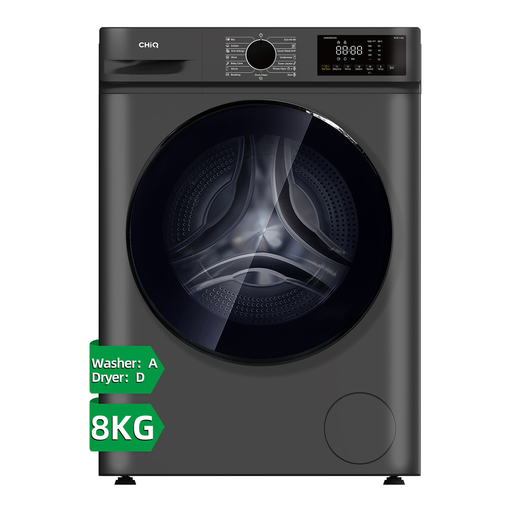 Image unavailable
CHiQ JW85882HG — 8 kg / 5 kg
Consider combining washing and drying in one appliance if a drying capacity of 5 kg suits your needs.
Listed capacity: 8 kg for washing and 5 kg for drying. The width measurements given for this model don’t match, so confirm its exact dimensions before deciding where to put it.
View on Joybuy
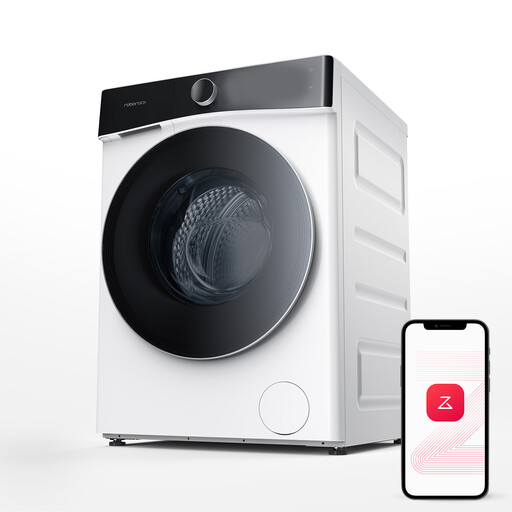 Image unavailable
Roborock Zeo Lite — 10 kg / 6 kg
Wash and dry your laundry in the same appliance, as long as you keep the combined load within the drying capacity.
Listed capacity: 10 kg for washing and 6 kg for drying. Before choosing a location, confirm the dimensions, required clearance and duration and energy-use figures for the full cycle.
View on Joybuy
Frequently asked questions
Can a 10.5/6 kg washer-dryer automatically dry 10.5 kg of washed laundry?
No. For the Bosch WNG254AQFR and Electrolux EW7IW416DAV, the manufacturers list a washing capacity of 10.5 kg, but a drying capacity of 6 kg. To run both stages without intervention, limit the load to 6 kg; otherwise, take some of the laundry out after washing.
Which measurements should I take before buying a washer-dryer?
Measure the available width, height and depth, then allow room for the door to open and for the connections. For the F964V51WRSA specifically, LG lists an appliance depth of 565 mm, an overall depth of 620 mm and a depth of 1 100 mm with the door open.
How should I compare energy and water use if I plan to machine-dry my laundry?
Compare the figures for the wash-and-dry cycle, not just the washing energy rating. The labelling presented by the European Commission lets you check energy use per 100 cycles and water use per cycle, among other things. Compare appliances with a similar capacity that suits your usual loads.
Can you install a washer-dryer in a bathroom?
This depends on the bathroom layout and its electrical installation. Promotelec states that a washing machine must be installed outside zones 0, 1 and 2, and outside the hidden zone. Before installation, ask a suitably qualified professional to check the location and connections.


