People with no space to dry clothes
If you can’t fit a separate tumble dryer or clothes airer, check the actual drying capacity and cycle duration. UFC-Que Choisir points out that a washer-dryer’s drying capacity is lower than its washing capacity.


Start by identifying the constraint you can’t work around: the depth and clearance needed in front of a door, the available width, or having nowhere to dry your laundry. A top-loading machine can work well where width is limited, as long as its lid can open; a slim front-loader takes up less depth but needs space in front. A washer-dryer combines both functions in one place, provided you’re happy with a lower drying capacity than washing capacity and compare the duration and energy and water use of the complete cycle.
If you can’t fit a separate tumble dryer or clothes airer, check the actual drying capacity and cycle duration. UFC-Que Choisir points out that a washer-dryer’s drying capacity is lower than its washing capacity.
Limited width or depth, or not enough clearance in front of a door, can rule out appliances that would otherwise fit the space. Top-loading and front-loading machines need different amounts of room to access your laundry.
The capacity should suit your usual loads, including bulky items. A drum that’s too small can mean more cycles, while an oversized machine that’s often underfilled may not be a better fit either.
In a small home, first make sure the appliance will fit and that you can open it. Then check that its capacity suits the way you wash and dry your laundry.
Consider it if: you’re short on depth but have enough width and clearance in front of the door.
Bear in mind: capacity may be limited, which could mean more cycles if your usual loads are bulky.
Consider it if: width and clearance in front of the appliance are limited, but the lid can open freely.
Bear in mind: you’ll need access to the top, and you’ll still need another way to dry your laundry.
Consider it if: you only have room for one appliance and nowhere to dry your laundry.
Bear in mind: its drying capacity is lower than its washing capacity, and drying takes longer than with a separate tumble dryer, according to UFC-Que Choisir.
| Your priority | What to check | Who it matters to |
|---|---|---|
| Dry laundry without a second appliance | Compare washing and drying capacities in kg, then check the duration and energy and water use of the complete cycle. | I don’t have room for a clothes airer, so I want to dry my laundry in the only appliance without having to stop each cycle to remove some of the load. Around 40% of consumers would prioritise this need for drying. |
| Fit and open the appliance | Measure the width, depth and height, as well as the clearance needed for the door or lid and the delivery route. | In a narrow bathroom, I need to reach the drum without blocking the passageway or bumping into furniture. This need for a suitable fit would come first for around 30% of consumers. |
| Avoid extra cycles | Check the capacity in kg against your usual loads and bulky items; also consider the spin speed if you dry laundry indoors. | If I regularly wash sheets and towels, a drum that’s too small could mean splitting loads. Around 30% of consumers would put choosing a capacity suited to their household first. |
As a general guide, UFC-Que Choisir gives a width of 40 to 46 cm for top-loading washing machines and a depth of 33 to 45 cm for slim front-loaders. These ranges don’t replace checking all the dimensions of the model you’re considering or measuring the space needed to open it.
A washer-dryer can wash more laundry than it can dry. If you fill it to its maximum washing capacity, you may need to remove some items before drying.
Check both capacities in kg for the model. If you want to run both functions one after the other without stopping, keep the load within its drying capacity.
A front-loader needs room for its door to open; a top-loader needs clear space above it. So, matching the appliance’s external dimensions to your available space doesn’t necessarily mean you’ll be able to access your laundry easily.
As well as checking the appliance’s dimensions, make sure there’s room for the door or lid when open, check for nearby furniture and consider the delivery route.
UFC-Que Choisir warns that insufficient capacity can mean more cycles. On the other hand, a large capacity that isn’t used properly can lead to unnecessary consumption.
Think about your usual laundry loads and bulky items. UFC-Que Choisir suggests 5 to 7 kg as a guide for one or two people, depending on how you use the machine.
With a washer-dryer, the figures that matter depend on which function you use. The wash-only figures don’t tell you about a complete wash-and-dry cycle.
If you regularly use the machine to dry your laundry, compare the duration, water use and energy use for the wash-and-dry cycle shown on the label and in the model information.
This selection includes two washer-dryers that combine washing and drying in one appliance, as well as a front-loading washing machine. Before considering the latter for a small space, check its depth and make sure you have a separate solution for drying your laundry.
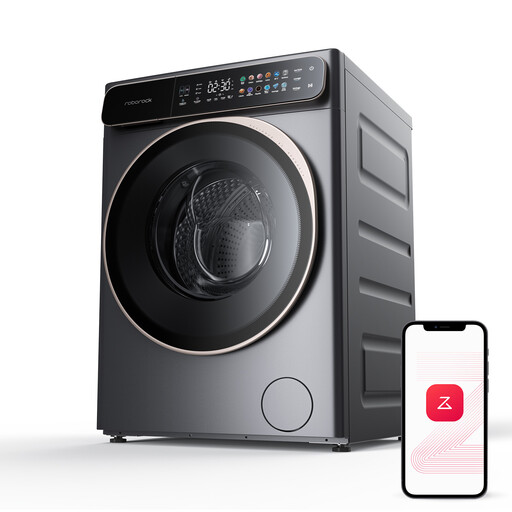 Image unavailable
Wash and dry in one appliance when you don’t have enough space to dry clothes.
Stated capacities: 10 kg for washing and 6 kg for drying. To run both functions one after the other without removing laundry, stick to the 6 kg limit.
Before buying, check the dimensions and clearance required, as well as the duration and energy and water use of the complete cycle.
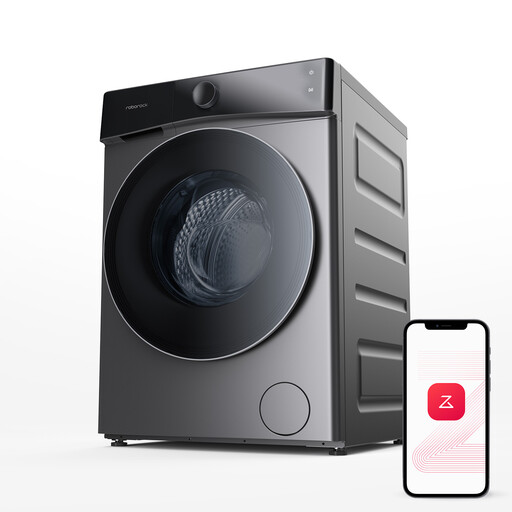 Image unavailable
Combine washing and drying in one place instead of installing two appliances.
Stated capacities: 10 kg for washing and 6 kg for drying. A load over 6 kg can’t be fully dried in one continuous cycle.
Check the dimensions, opening clearance and wash-and-dry cycle information to make sure they suit your space and how you use the appliance.
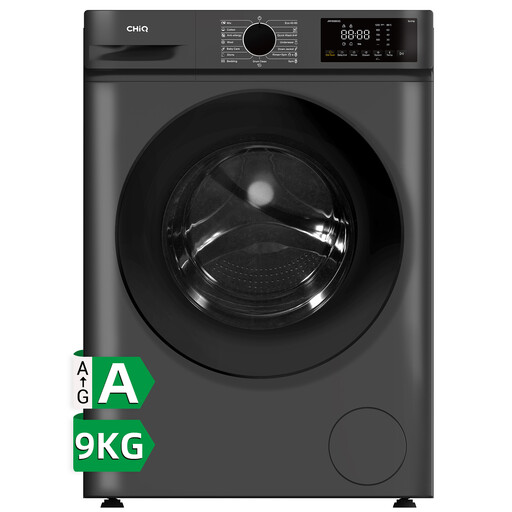 Image unavailable
A front-loading washing machine for a household whose usual loads make a 9 kg capacity a good fit.
The product details state a spin speed of 1 400 tr/min. Before choosing it for a narrow space, check its dimensions, especially its depth, and the clearance needed in front of the door.
If you can’t dry laundry on a clothes airer, also consider how you’ll dry it. Front-loading doesn’t mean the machine has a built-in drying function.
UFC-Que Choisir suggests 5 to 7 kg as a guide for the everyday laundry needs of one or two people. Choose a capacity to suit your usual loads, especially if you often wash sheets or bulky towels.
Not if the washing load exceeds the model’s drying capacity. UFC-Que Choisir says drying capacity is lower than washing capacity. To run both functions one after the other without removing laundry, stick to the drying capacity in kg.
Compare the figures for the complete wash-and-dry cycle, not just those for washing. For washer-dryers, information provided by the European Commission distinguishes energy use, water use and cycle duration, depending on the programme.
It may be suitable if width is your main constraint and the lid can open fully. UFC-Que Choisir gives a width of 40 to 46 cm for top-loading models; also check the available height and any furniture above the appliance.