Homes with space for just one appliance
If you have the space and connections for a washing machine but not a separate tumble dryer, compare washer-dryers based on the amount of laundry you want to dry and their overall dimensions.


A washer-dryer can be a good fit for a home with space for just one appliance, provided the load you want to dry is within its drying capacity, which is separate from its washing capacity. If you can dry your clothes on a clothes airer in a well-ventilated space, a washing machine paired with an airer is another option. If you have room for two appliances, compare that set-up too. Whichever option you choose, check the appliance’s actual dimensions, as well as the time and energy and water use for a complete cycle.
If you have the space and connections for a washing machine but not a separate tumble dryer, compare washer-dryers based on the amount of laundry you want to dry and their overall dimensions.
A washer-dryer could be a good fit if the amount of laundry you dry in each cycle is within the limit stated for the model and programme. This limit is different from the maximum washing capacity.
A washing machine without a built-in dryer is worth considering if you have the time and a suitable space to dry your laundry. Ventilation matters when drying clothes indoors: ADEME highlights the moisture released into the air.
Your choice depends first on the space available and how much laundry needs to come out dry without you having to intervene between the two stages.
Consider this if: you only have space for one appliance and want to wash and dry your clothes in the same drum.
The trade-off: the maximum drying load is lower than the washing capacity on the models cited by UFC-Que Choisir and manufacturers. With a full wash load, you may need to remove some laundry before drying.
Consider this if: you can wait for your laundry to air-dry and have a suitable place to hang it.
The trade-off: your laundry won’t be dry when the wash ends and, according to ADEME, drying it indoors releases a lot of moisture.
Consider this if: your space allows for two appliances and you often dry large or consecutive loads.
The trade-off: unlike a washer-dryer, this option needs space for a second appliance.
| Priority | What to check | Your needs |
|---|---|---|
| Drying load | Compare the washing and drying capacities in kg, then check the load allowed for the combined programme. LG France and Bosch Electroménager France product details give examples of 8.5/5 kg and 9/6 kg. | I want to know whether all my laundry can stay in the drum or whether I’ll need to take some out before drying. |
| Complete cycle | Check the duration, water use and electricity consumption for the wash-and-dry cycle separately from the figures for washing alone. Compare equivalent programmes and loads. | My laundry needs to be ready on time, and I don’t want to mistake a quick programme for a small load for the cycle I’ll usually use. |
| Space required | Measure the overall width, height and depth, including connections. Also check how much space is needed in front of the open door and whether the appliance will fit through the route to its intended position. | I need to be able to install the appliance, open its door and move around the room. |
| Air-drying | Check where you can put the airer, how long your laundry can stay on it and how you’ll ventilate the room. ADEME highlights the moisture released by laundry drying indoors. | I can wait for my laundry to dry, but I don’t want to choose an airer without considering space and ventilation. |
In the 8.5/5 kg and 9/6 kg examples listed by LG France and Bosch Electroménager France, a maximum washing load exceeds the stated drying capacity.
Estimate how much laundry you want to dry in one go and compare it with the limit for the wash-and-dry programme.
An appliance might fit into an alcove but still not have enough room for its connections or to open the door.
Compare your measurements with the overall dimensions and clearance needed with the door open for the specific model.
The duration of a programme for a small load won’t necessarily tell you how long it takes to wash and dry the amount of laundry you normally do.
Check the permitted load, duration and energy and water use for the programme you plan to use.
A longer complete cycle can also delay your next load when the same drum is used for both stages.
According to ADEME, air-drying laundry releases a lot of moisture into the air indoors.
Before choosing this option, make sure you have a suitable place for an airer and adequate ventilation.
These examples from different ranges can help you compare specific features. They don’t represent the performance of every model from a brand or the products available below.
LG France features washer-dryers including the F852SV52IRS, listed with an 8.5 kg washing capacity and 5 kg drying capacity, and the F964V50WRS, listed at 9/6 kg.
Bosch Electroménager France states that the WNG24402FR can wash and dry up to 6 kg in a continuous cycle, or wash up to 9 kg on its own.
Electrolux France features SteamCare 700 washer-dryers in 9/6 kg and 10.5/6 kg versions.
Samsung France lists the WD90DG5B15BHEF as a washer-dryer with a 9 kg washing capacity and 6 kg drying capacity.
These three washer-dryers are options if you’re looking for one appliance to wash and then dry your laundry. Compare their drying capacity with your usual load, then check the installation dimensions and complete-cycle details for each model.
 Image unavailable
If you want to wash and then dry your laundry in one appliance, note the stated drying capacity of 6 kg, compared with 11 kg for washing. Before planning its installation or your laundry routine, check the overall dimensions, door clearance and complete-cycle details for the WD11DG6B85BEU3 variant.
 Image unavailable
This model is listed with a washing capacity of 10 kg and a drying capacity of 6 kg, so a maximum wash load exceeds its stated drying capacity. If you have a small room, check the overall depth, the space in front of the door, and the duration and energy and water use of a complete cycle.
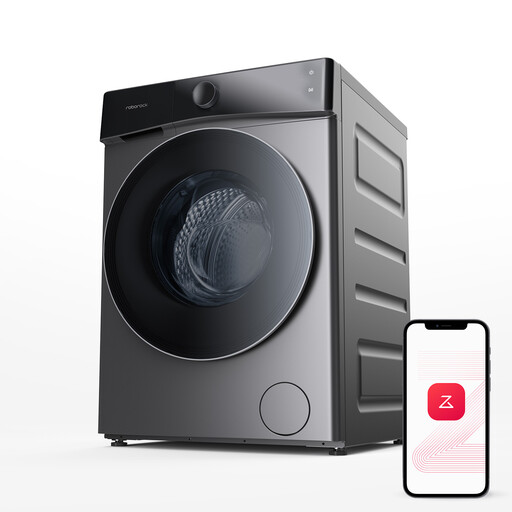 Image unavailable
The stated capacity is 10 kg for washing and 6 kg for drying, so plan the load for a combined cycle accordingly. The product name mentions 27 wash programmes, app control and the LintClear system. Check the installation dimensions and details for the wash-and-dry cycle you’re interested in separately.
Not in a machine listed at 9/6 kg: the 9 kg refers to washing, while drying is limited to 6 kg, according to model details from LG France, Bosch Electroménager France and Electrolux France. Check the maximum load allowed for a combined programme before starting a full wash load.
Measure the alcove, the route to it and the space in front of the door. Then compare the width, height, overall depth and door-open clearance for the model you’ve chosen. The casing depth alone isn’t enough to confirm that it will be practical to use.
Compare the complete wash-and-dry cycle for each appliance, rather than confusing it with washing alone, and take account of the load and programme used for the figures. The European energy label presented by the European Commission is a good starting point. Also check the model’s detailed information on water use and cycle duration.
No: you need to have space for it and manage the moisture released as your laundry dries. ADEME says that air-drying releases a lot of moisture into the air indoors, so check the room’s ventilation before choosing this option.