A household with space for just one appliance
In a narrow kitchen or bathroom, a washer-dryer combines both functions in one appliance. Check the installed depth and the space needed to open the door, not just the width.


A washer-dryer is a good choice when you only have space for one appliance and your usual loads fit within its drying capacity, which is generally lower than its washing capacity. If you can install a compatible stacking set, two separate appliances offer another way to organise your laundry. An airer avoids mechanical drying, but takes up space and, indoors, needs a well-aired room or mechanical ventilation. Whatever you choose, check the installation dimensions and how long each option will take to fit in with your laundry routine.
In a narrow kitchen or bathroom, a washer-dryer combines both functions in one appliance. Check the installed depth and the space needed to open the door, not just the width.
A combined cycle means you don’t have to transfer your laundry to a second appliance. According to UFC-Que Choisir, a washer-dryer’s drying capacity is lower than its washing capacity, and its programmes can take longer. Compare these limitations with the size of your usual loads.
A washing machine paired with an airer is another option if you’re happy to set aside space while your laundry dries. For indoor drying, ADEME recommends using a large, well-aired room or one with mechanical ventilation.
Start by checking where each option can be installed, then see how its capacity and drying time fit in with your laundry routine.
Worth considering if: you only have space for one appliance and your loads fit within the chosen model’s drying capacity.
The trade-off: UFC-Que Choisir highlights that drying capacity is lower than washing capacity and that programmes can take longer.
Worth considering if: you have space for two appliances or can install a compatible stacking set.
The trade-off: stacking means checking the model numbers of both appliances, the stacking kit and the available height. Bosch notes that its kits have compatibility restrictions.
Worth considering if: you can set aside space for your laundry while it dries, either outdoors or in a suitable room.
The trade-off: indoors, moisture means you’ll need to pay attention to ventilation, as ADEME recommends.
| Criterion | What to check | Your needs |
|---|---|---|
| Space and access | Measure the alcove, connections, delivery route and space in front of the door. Compare these measurements with the full dimensions of each appliance. For a stacked set, also check the available height and compatible stacking kit. | I need to be able to install the appliance and open its door without blocking the way. |
| Capacity and cycle time | For a washer-dryer, compare the washing and drying capacities separately in kg, then check the combined cycle time for the stated load. A quick programme for a small load doesn’t tell you how long a full load will take. | If I do several loads of laundry, I want to know whether drying will delay the next load or whether I’ll need to remove some laundry after washing. |
| Water and electricity | If you use mechanical drying, check the figures for the wash-and-dry cycle rather than washing alone: energy class, kWh per 100 cycles and litres per cycle, using the same basis for comparison. | I plan to use the machine’s drying function regularly and want to compare the consumption of the programme I’ll use. |
| Maintenance and moisture | Check that you can access the filter, door seal and detergent drawer after installation. For indoor air-drying, allow for a large, well-aired room or mechanical ventilation, in line with ADEME’s recommendations. | I need to be able to maintain the appliance in a confined space, or dry laundry without leaving it in a poorly ventilated room. In a UFC-Que Choisir survey of 4,350 newsletter readers, conducted from 15 to 24 May 2025, 19% of respondents reported persistent unpleasant smells in their washing machine. This result is not specific to washer-dryers. |
A machine may fit into the alcove but leave too little room for connections or to open the door. For example, LG lists an open-door depth of 1 100 mm for its F864V31WR, so width alone isn’t enough to determine whether it will fit.
Measure the usable depth, the space in front of the door and the whole delivery route, then check the installation diagram for your chosen model.
UFC-Que Choisir notes that a washer-dryer’s drying capacity is lower than its washing capacity. For example, the LG F864V31WR has a stated capacity of 8 kg for washing and 6 kg for drying.
Choose a model based on the amount you want to dry in one cycle, and check the combined programme duration for that load.
An energy class shown for washing alone doesn’t describe the combined cycle. Electrolux, for example, lists separate classes for washing and for washing and drying on its EW9W1166RB.
If you regularly use the drying function, compare the classes and consumption figures specifically for washing and drying.
A stacked set must use appliances and a kit designed to work together. Bosch lists depth requirements and model exclusions for one of its kits.
Check the exact model numbers of the washing machine, tumble dryer and stacking kit, then follow their installation instructions.
Remember to include a compatible stacking kit and the space needed to fit it in your installation plans.
These model examples show which details are useful to compare. The features listed don’t apply to every model in each brand’s range.
The F864V31WR shows why it’s worth checking door-clearance measurements as well as the appliance dimensions.
The EW9W1166RB is a heat pump washer-dryer with separate stated capacities for washing and drying.
The B3D596441M is an example of a water-condensing washer-dryer whose individual product specifications are worth checking.
The brand offers useful points of comparison for both washer-dryers and stacking two separate appliances.
These three appliances combine washing and drying in one machine. First, compare their drying capacity with the size of your usual loads, then check the installation dimensions and combined-cycle details for the model you’re interested in.
 Image unavailable
For washing and drying in one appliance, take account of the separate capacities: 11 kg for washing and 6 kg for drying. Before choosing where to put it, check the space needed for connections and to open the door.
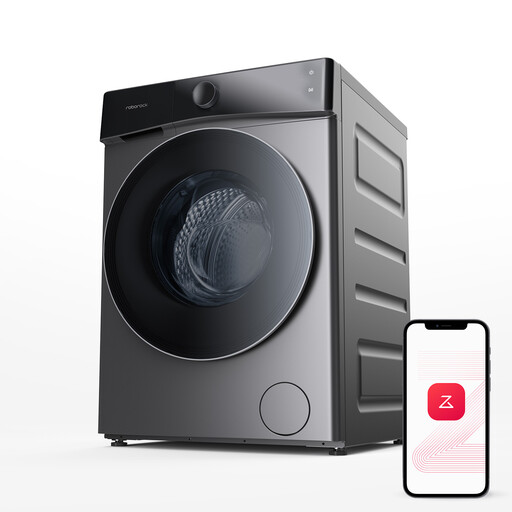 Image unavailable
This washer-dryer has a stated capacity of 10 kg for washing and 6 kg for drying, so adjust the load if you want to run both stages consecutively. Its listing mentions 27 wash programmes, app control and the LintClear filter-cleaning system. Also check the installation dimensions and details of the combined cycle.
 Image unavailable
This model combines washing and drying, with a stated capacity of 10 kg for washing and 6 kg for drying. To see whether it’s right for a small home, check the dimensions including protruding parts, the door clearance and the figures for the wash-and-dry programme.
Measure the usable width, height and depth of the space, the room needed for connections, the delivery route and the space in front of the door. Then check the model’s full dimensions. For example, LG lists an open-door depth of 1 100 mm at 90° for its F864V31WR.
Yes, as long as the load is within the drying capacity of both the model and the programme you’ve chosen. UFC-Que Choisir highlights that a washer-dryer’s drying capacity is lower than its washing capacity. So, with a stated capacity of 8/6 kg, you may need to remove some of an 8 kg wash load before drying.
If you plan to use the drying function, compare the details for the wash-and-dry cycle, which are separate from those for washing alone. Check the energy class and consumption figures on the same cycle basis for the models you’re considering. The European Commission distinguishes between this information for washer-dryers.
No. Check that the models can be stacked and use the compatible kit designed for them. Bosch, for example, specifies depth requirements and model exclusions for one of its kits. Two appliances aren’t automatically compatible just because they fit within the same width.
It can be, if you have space for your laundry while it dries and a suitable room to put it in. To reduce moisture when drying laundry indoors, ADEME recommends using a large, well-aired room or one with mechanical ventilation.