People with space for just one appliance
A washer-dryer lets you wash and then dry clothes in the same appliance. Check its depth and the route to its final position, too: measuring the width alone won’t confirm that it can be installed.


A washer-dryer is a good option if you only have space for one appliance and want to wash and dry clothes in one go, without transferring them, provided you keep the load within its drying capacity. If you often dry large loads and have the space, it’s worth considering two separate appliances. An indoor clothes airer, meanwhile, requires a well-ventilated room or one with an extractor fan.
A washer-dryer lets you wash and then dry clothes in the same appliance. Check its depth and the route to its final position, too: measuring the width alone won’t confirm that it can be installed.
Automatic wash-and-dry cycles are a good fit if your wash load stays within the model’s drying capacity. UFC-Que Choisir points out that washer-dryers have a lower drying capacity than washing capacity.
You’ll need to think about where the moisture from your laundry will go. ADEME recommends drying clothes in a large, well-ventilated room or one fitted with a mechanical ventilation extractor vent.
Start by considering how much space you have and how much laundry you need to dry in one go. Then compare the practical requirements of each option in the context of your home.
Consider one if: you can only fit one appliance and your usual loads are within its drying capacity.
The trade-off: you may need to remove some clothes from a full wash load before drying.
Consider them if: you have the space and regularly need to dry large loads.
The trade-off: you’ll need space for two appliances and have to transfer laundry between them.
Consider one if: you have room for your laundry in a large, well-ventilated room or one with an extractor fan.
The trade-off: according to ADEME, air-drying releases a lot of moisture into the air indoors.
| What to consider | What to check | What you need |
|---|---|---|
| Drying capacity | Compare the washing and drying capacities in kg. To run both functions back-to-back without removing any laundry, stick to the lower figure. | I want to start a wash and find it dry without splitting the load. How much laundry do I need to dry in one go? |
| Size | Measure the width, height, depth and door clearance. Also check the packed appliance dimensions and the access route to its final position. | The appliance needs to fit in its space at home, but it also has to get through doors, hallways and, if necessary, the lift. |
| Cycles and consumption | For comparable cycles, check energy use per 100 cycles, water use per cycle and cycle duration. On the model’s label, distinguish between a wash-only cycle and a wash-and-dry cycle. | If I use the dryer often, I want to know how long a full cycle takes and how much it uses—not just its energy rating. |
| Indoor humidity | If you’re using a clothes airer, check the size of the room and whether it can be ventilated or has an extractor. ADEME recommends a large, well-ventilated room or one fitted with a mechanical ventilation extractor vent. | I’m interested in using a clothes airer, but I need to be able to manage the moisture in the room where my laundry will dry. |
| Maintenance | Check the model’s instructions for access to the filter, detergent drawer and door seal, and how to clean them. UFC-Que Choisir includes these aspects in its assessment of maintenance. | I need to be able to carry out routine maintenance in the space where the machine will be installed. |
UFC-Que Choisir says a washer-dryer’s drying capacity is lower than its washing capacity. If the load is too large, you won’t be able to run a wash-and-dry cycle without intervening.
Start with the amount of laundry you want to dry in one go, then compare the two capacities. For a model rated at 9 kg for washing and 6 kg for drying, the 6 kg limit is what matters for a full cycle.
An appliance may fit the space by width but still be too deep or unable to get through the access points in your home.
Measure all three dimensions of the space, the door clearance and the delivery route. Samsung recommends measuring doors, hallways and lifts to make sure the appliance can get through while still in its packaging.
If the access route is too narrow, you may not be able to install the appliance where you planned.
An energy rating on its own doesn’t tell you how long a full cycle takes or how much water and energy it uses. The European Commission lists these figures among the information shown on washer-dryer labels.
Compare figures for the same type of cycle across specific models, distinguishing between wash-only and wash-and-dry cycles.
According to ADEME, air-drying laundry releases a lot of moisture into the air indoors, so a small, closed room won’t necessarily be suitable.
Before making a clothes airer your main drying solution, make sure you have a large, well-ventilated room or one fitted with a mechanical ventilation extractor vent.
These examples give you a useful starting point for your checks; the specifications apply only to the models concerned.
Bosch’s washer-dryer range in France includes models with capacity combinations of 8 kg/5 kg, 9 kg/6 kg and 10.5 kg/6 kg.
Samsung lists a washing capacity of 9 kg and a drying capacity of 6 kg for the WD90T754DBH/S3, with dimensions of 600 × 850 × 650 mm.
LG’s range in France includes washer-dryers and the WashTower, which combines a washing machine and tumble dryer with centralised controls.
These three models combine washing and drying in one appliance. Compare their drying capacity, size and full-cycle information with the space in your home and the loads you usually wash.
 Image unavailable
To run both functions back-to-back without removing any laundry, limit the initial load to the stated drying capacity of 6 kg, rather than the 10 kg washing capacity.
Listed dimensions: 600 × 850 × 590 mm. Check the access route too, and consult the model’s label for the duration and consumption of a wash-and-dry cycle.
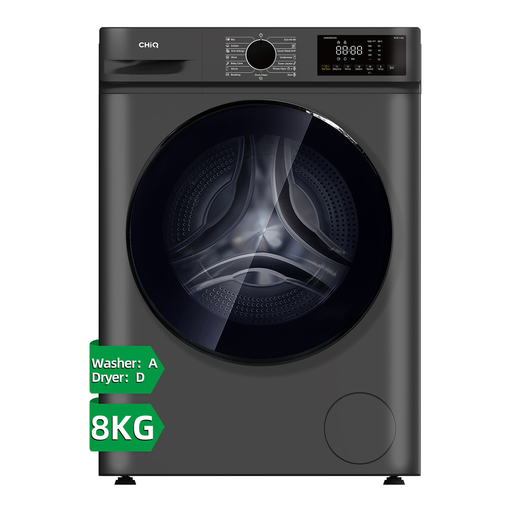 Image unavailable
This model combines washing and drying, but an 8 kg wash load can’t be dried in one go within the stated 5 kg capacity.
Before planning where to install it, ask the retailer to confirm the dimensions of the model and its packaging: the measurements listed for this appliance conflict. Also check the label for the consumption and duration of a full cycle.
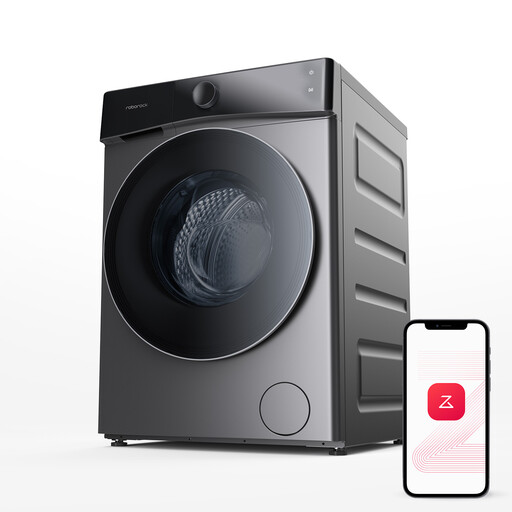 Image unavailable
To run a wash and dry cycle without removing any laundry, stick to the stated drying limit of 6 kg rather than the 10 kg washing capacity.
This model features automatic dosing and a LintClear filter-cleaning system. Check the appliance and packaging dimensions, as well as the wash-and-dry cycle information, before deciding whether it will fit your space.
No, not in one go within the stated drying capacity of 6 kg. To run both functions back-to-back without removing any laundry, limit the initial load to 6 kg. Otherwise, take some of the laundry out after washing or dry it in batches.
Compare cycles of the same type. The European Commission lists information including the energy rating, energy use per 100 cycles, water use per cycle, cycle duration and noise level. Check the figures for wash-only and wash-and-dry cycles separately where both are shown.
Yes, as long as you can manage the moisture produced by your laundry. For air-drying, ADEME recommends a large, well-ventilated room or one fitted with a mechanical ventilation extractor vent. Don’t assume a small, closed room will be suitable.
Start by following the model’s instructions for maintenance tasks and how often to do them. In particular, check that you can access the filters, detergent drawer and door seal. UFC-Que Choisir takes their maintenance into account when assessing washer-dryers.