You only have room for one machine
A washer-dryer combines both functions in one appliance. As well as measuring the space the machine takes up, check there’s enough room for the door to open and for the connections.


A washer-dryer lets you wash and dry your clothes in one appliance when you only have room for one machine. To run both stages back to back, you’ll need to keep the laundry load within the drying capacity. Before choosing, check that there’s enough room to open the door, and look at the full cycle time and energy and water use. If you could fit two separate appliances after all, compare that option with your usual laundry loads.
Saving space isn’t the only thing to consider: the amount of laundry you need to dry and the time you have available matter too.
A washer-dryer combines both functions in one appliance. As well as measuring the space the machine takes up, check there’s enough room for the door to open and for the connections.
The key is how much laundry the appliance can dry without you having to take some out after washing. UFC-Que Choisir points out that a washer-dryer’s drying capacity is lower than its washing capacity.
Built-in drying can save you from having to make room for a clothes airer. But if you plan to use it regularly, compare the full wash-and-dry cycle time, water use and electricity consumption.
First, check whether the appliance will fit. Then make sure its drying capacity is enough for the laundry you want to wash and dry in one go. UFC-Que Choisir also highlights the length of the cycle and the resources used by integrated drying.
| What matters | What to check | Who should consider it? |
|---|---|---|
| Available space | Measure the height, width and depth, then check the door clearance and the space needed for the connections. | If a machine already takes up all the available space, I need to be able to install it and open the door without blocking the way. Around 33% of consumers are said to prioritise how much space it takes up. |
| Drying capacity | Compare the drying capacity, in kg, with the amount of laundry you want to wash and then dry without any intervention. | If I want to take out a dry load without removing some items part-way through, the maximum drying load is crucial. This is said to be the top priority for around 25% of consumers. |
| Cycle time and consumption | For the wash-and-dry cycle, compare the duration, kWh per 100 cycles and litres per cycle, using comparable programmes and capacities. | If I need my laundry to be ready by a certain time, I want to know how long the full cycle takes and how much it uses. Around 25% of consumers are said to put these criteria first. |
| Room to air-dry laundry | If you’re considering a washing machine with an indoor airer, check the available space and ventilation in the room. | If I can air-dry my laundry in a suitable room, I can consider doing without electric drying. This is said to be the priority for around 17% of consumers. For indoor air-drying, ADEME recommends a large, well-ventilated room or one with mechanical ventilation (VMC) extraction. |
A machine rated for an 8 kg wash may not be able to dry 8 kg in the same cycle. For the Bosch WNA13400FF, LG F854M21WR and Haier X5 HWD80-BP14357NTU1, manufacturers list an 8 kg washing capacity and a 5 kg drying capacity.
Base the load you want to wash and dry in one go on the drying capacity of the exact model, rather than its washing capacity alone.
The energy use and duration for washing alone don’t tell you what to expect from a cycle that includes drying. LG’s F854M21WR product information shows figures for both uses separately.
If you’re comparing appliances for regular drying, check the figures for the wash-and-dry cycle and the capacity they apply to.
A machine may fit into its space but still block the way when its door is open. Hoses can also affect how much room you need for installation.
Measure the space and the walkway, then check the clearance requirements in the manual for the model you’re considering.
ADEME points out that drying laundry indoors adds moisture to the room.
Before relying on an airer as your main drying solution, check that you have a large, well-ventilated room or one with mechanical ventilation (VMC) extraction.
These models provide specific points of comparison; their features don’t automatically apply to other appliances from the same brand.
The WNA13400FF lets you assess the trade-off between washing capacity and the load it can handle in a continuous wash-and-dry cycle.
The F854M21WR product information lets you compare figures for washing alone with those for a cycle that includes drying.
The X5 HWD80-BP14357NTU1 is worth considering if the machine’s depth is a major constraint.
These appliances combine washing and drying in one machine. To choose between them for a small home, compare their drying capacity with your usual laundry loads and check their dimensions against the space you have available.
 Image unavailable
Worth considering if you want both functions in one appliance and need to dry loads of up to 6 kg. The product information lists an 11 kg washing capacity, a 6 kg drying capacity and dimensions of 60 × 85 × 60 cm. Also check the space needed for the door and connections.
For the stated wash-and-dry cycle, the product information gives 308 kWh per 100 cycles, 90 L per cycle and a duration of 7 h 32. These figures don’t apply to washing alone.
 Image unavailable
An option if your laundry load fits within the stated 6 kg drying capacity. The product information lists a 10 kg washing capacity and dimensions of 600 × 850 × 590 mm; allow for the necessary clearance when measuring your space.
If you expect to use the drying function often, check the label for the exact model to see the duration, water use and electricity consumption for the full cycle.
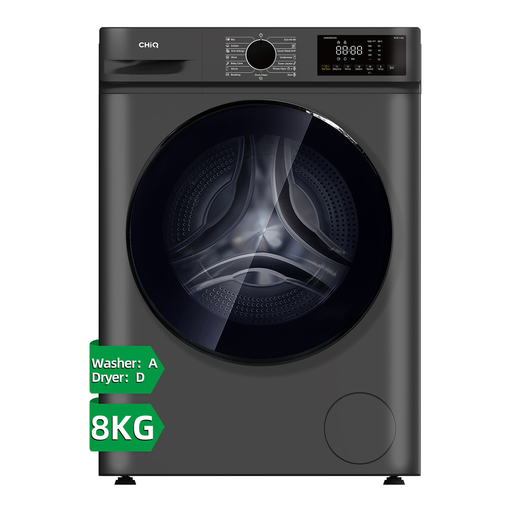 Image unavailable
Worth considering if a 5 kg drying capacity is enough for your laundry. The description gives a depth of 520 mm, but the width of 465 mm in the title conflicts with the 600 mm stated in the dimensions in the description. Confirm the exact measurements before deciding whether it will fit your space.
Also check the duration and consumption figures for the wash-and-dry cycle for this variant.
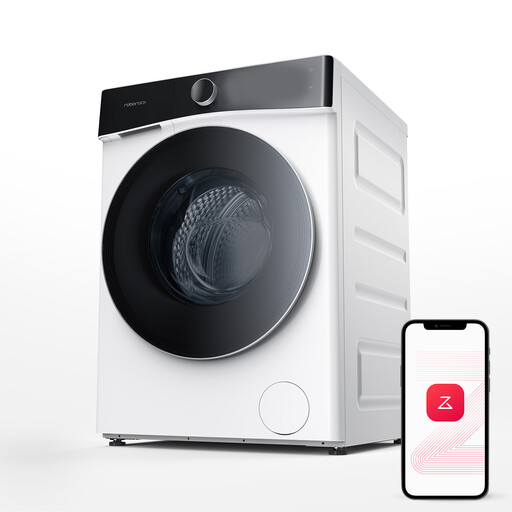 Image unavailable
This washer-dryer combines both functions, with a stated drying capacity of up to 6 kg compared with a 10 kg washing capacity. The description mentions automatic dosing and the LintClear system.
Before choosing it for a particular space, check the model’s dimensions and the full-cycle figures in the product information. Also check whether your laundry products are suitable for the dosing system.
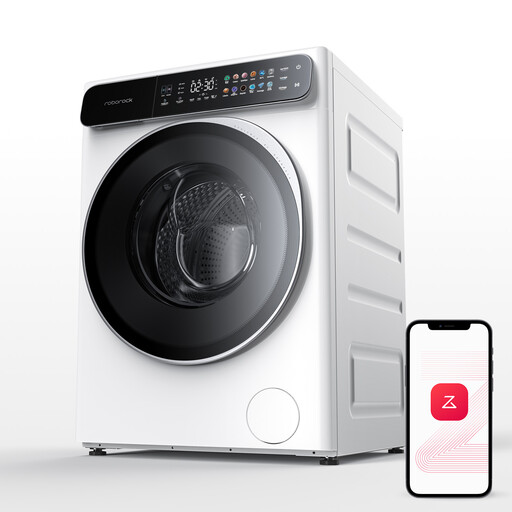 Image unavailable
Worth considering if you want a single appliance and your drying loads don’t exceed the stated 6 kg capacity, compared with 10 kg for washing. The description mentions LintClear and automatic dosing.
Check the model’s dimensions in the product information before planning the installation. If they’re important to your choice, also check the duration, water use and electricity consumption for the wash-and-dry cycle.
No, not for an 8 kg load in a continuous cycle: on an 8/5 kg model, the drying capacity is 5 kg. To run both stages back to back, keep the load within the drying capacity stated for the programme you’ve chosen. Otherwise, you’ll need to remove some laundry before drying.
Compare the figures for the wash-and-dry cycle: rated capacity, energy, water and duration. Don’t rely only on the Eco 40-60 wash figures; the label and the European Commission’s EPREL database list the two cycles separately.
Yes, if you have enough space and suitable ventilation, and you’re happy to wait for your laundry to air-dry. To limit the moisture caused by drying laundry indoors, ADEME recommends a large, well-ventilated room or one with a mechanical ventilation (VMC) extraction vent.