People living in smaller homes
If a permanent clothes airer or two appliances would take up too much space, a washer-dryer is worth considering. Just check how much laundry it can dry in one go, not only how much it can wash.


If you can dry your washing in a well-ventilated space, a washing machine with an effective spin cycle may be all you need; ADEME recommends comparing spin efficiency ratings and noise levels. If there’s not enough room for two appliances, a washer-dryer can save you from having a clothes airer out all the time, but its drying capacity is lower than its washing capacity, as UFC-Que Choisir points out. If you often need to dry large loads, two appliances with capacities suited to your needs mean you’re less likely to have to split your washing into several loads, provided you have room to install them.
If a permanent clothes airer or two appliances would take up too much space, a washer-dryer is worth considering. Just check how much laundry it can dry in one go, not only how much it can wash.
When loads keep coming, drying capacity and cycle times determine whether you’ll need to split your laundry across several drying cycles. Two appliances may be an option if you have room to install them.
ADEME highlights the moisture released into your home when you dry clothes indoors. If your appliances will be near living areas, compare their noise levels too, and check how well the chosen location can be ventilated.
Start by considering the space you have and how much laundry you need to dry regularly, then compare the figures that match the way you’ll actually use the appliance.
Worth considering: if you can dry your washing in a well-ventilated space and a clothes airer fits into your day-to-day routine.
Downside: spinning doesn’t remove the moisture that’s released into the room as your clothes dry; ADEME recommends taking indoor drying into account.
Worth considering: if one appliance needs to handle both washing and drying in a home where space is limited.
Downside: according to UFC-Que Choisir, drying capacity is lower than washing capacity, and drying takes longer than with a conventional tumble dryer.
Worth considering: if you often dry loads close in size to the ones you wash and have room to install both appliances.
Downside: you’ll need to allow for the space and connections required by each model. The tumble dryer’s technology also affects cycle time and energy use, according to UFC-Que Choisir.
| Factor | What to check | Think about your needs |
|---|---|---|
| Space and damp | Measure the space for the appliances and any clothes airer you might use. Check the room’s ventilation and the installation instructions for the model you choose. | I’d rather not leave damp washing in my living space. ADEME notes that air-drying releases moisture into the air indoors. |
| Drying capacity | For a washer-dryer, check the washing and drying capacities separately. If you’re buying two appliances, choose a tumble dryer with a capacity suited to the loads you usually dry. | I want a full load of washing to fit into my daily routine without routinely having to split it across several drying cycles. |
| Spin cycle | Compare spin efficiency ratings, spin speed and noise rather than looking only at the maximum spin speed. ADEME recommends checking the spin efficiency rating when drying clothes indoors. | If I’m still going to use a clothes airer, I want to choose a spin cycle with the subsequent drying and noise levels at home in mind. |
| Energy, water and cycle time | Compare cycles used for the same purpose: washing only, or a complete wash-and-dry cycle. Check the energy, water and time figures on the labels and product information for each model. | I want to know how long it takes for my washing to come out dry, without confusing figures for a wash-only cycle with those for a complete cycle. |
| Noise and installation | Check the stated noise emissions for the appliances you’re considering, then check the clearance, connections and condensate collection or drainage arrangements specified in their manuals. | If an appliance is running near a bedroom or in the evening, noise matters just as much as whether it can be installed correctly. |
A washer-dryer rated at 9/6 kg can wash up to 9 kg but dry up to 6 kg, according to its stated capacities. So you may need to split a full wash load into several drying loads.
Compare both capacities with the amount of laundry you actually want to dry after each wash.
ADEME describes air-drying as a significant source of moisture in indoor air. Even after an effective spin cycle, your clothes still need to dry in conditions suited to the room.
If a clothes airer often takes up space in a living area, consider whether it can be ventilated before sticking with this setup or choosing a drying appliance.
Figures for a washer-dryer’s wash-only cycle don’t describe the same use as a wash followed by drying. UFC-Que Choisir also reports that most washer-dryers in its test use water during drying.
For each model you’re considering, compare the energy, water and time figures for the cycle you’ll actually use.
According to UFC-Que Choisir, heat pump tumble dryers generally use less energy than conventional models, which usually dry clothes more quickly. So there’s more to consider than the technology listed.
Measure the space and check the model’s manual for clearance, power supply and condensate handling requirements.
These ranges give you an idea of the setups available; check the specifications of each model you’re considering.
In France, Bosch offers washing machines and heat pump tumble dryers, giving you the option to put together a two-appliance setup.
LG offers washer-dryers and a WashTower column, giving you two ways to combine washing and drying.
In France, Samsung offers washer-dryers with separate washing and drying capacities.
Miele offers heat pump tumble dryers, which you could pair with a separate washing machine.
These three models combine washing and drying in one appliance. They’re particularly suited to homes where it’s difficult to fit two machines. Compare their drying capacity with the size of your usual loads.
 Image unavailable
This washer-dryer lets you wash and dry your clothes in a single appliance. Its stated capacities are 11 kg for washing and 6 kg for drying, so you may need to split a full wash load before drying it.
To compare it with other models, check the product information for a complete cycle and the installation instructions for this model.
 Image unavailable
This model combines washing and drying in one appliance. Its stated capacities are 10 kg for washing and 6 kg for drying, so you may need to remove some of the laundry if your wash load is larger than its drying capacity.
Before choosing it, compare the time, energy, water and noise figures for the cycle that matches your needs, as well as the installation requirements.
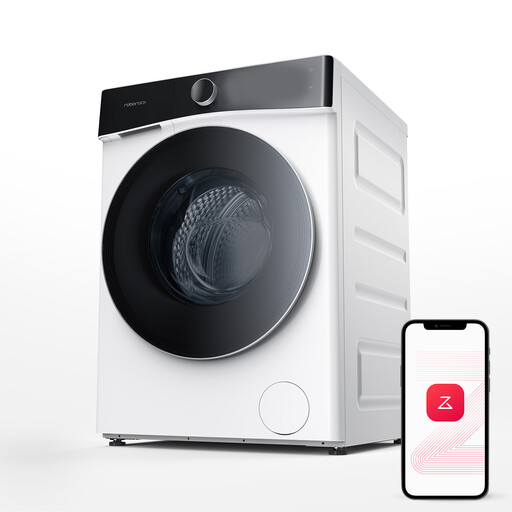 Image unavailable
The Roborock Zeo Lite combines washing and drying, with stated capacities of 10 kg and 6 kg respectively. If you wash more than 6 kg of laundry that you want to tumble dry, you’ll need to split the load.
Check the dimensions, the figures for the cycle you’ll use and the ventilation instructions before deciding where to put it.
Yes. ADEME recommends checking the spin efficiency rating when you need clothes to dry quickly indoors. Compare noise levels too: the maximum spin speed alone doesn’t tell you how effective the spin cycle is.
A washer-dryer rated at 9/6 kg is designed to wash 9 kg and dry 6 kg. A 9 kg wash load therefore exceeds its stated drying capacity and may need to be dried in several loads. UFC-Que Choisir notes that this difference in capacity is a feature of washer-dryers.
Compare the wash-only cycle with the complete wash-and-dry cycle separately: they’re not the same use. The labelling information provided by the European Commission lets you compare energy, water, cycle time and noise, taking into account which cycle each figure applies to.
According to Miele, a heat pump tumble dryer can operate indoors without an external air exhaust duct, unlike a vented model. You’ll still need to check the manual for the model’s condensate arrangements, clearances and connection requirements.
If energy use is your priority, look at heat pump tumble dryers; if cycle time matters more, compare conventional models too. UFC-Que Choisir says heat pump models generally use less energy, while conventional appliances generally dry clothes more quickly. The figures and cycle times for the specific model you choose are what matter most.