People with space for just one appliance
A washer-dryer combines both functions, so there’s no need to transfer washing to a second appliance. Check its depth, the space needed for connections and how much laundry it can dry.


A washer-dryer is a good option if you only have space for one appliance and want to wash and then dry a suitable load without transferring it. However, you’ll need to allow for a lower drying capacity than washing capacity, as well as the time and energy and water used by a full cycle. If you can install two appliances or air-dry your washing, compare those options too before deciding.
A washer-dryer combines both functions, so there’s no need to transfer washing to a second appliance. Check its depth, the space needed for connections and how much laundry it can dry.
Built-in drying means you won’t need to leave washing hanging around your home. According to UFC-Que Choisir, a washer-dryer’s drying capacity is lower than its washing capacity, and drying takes longer than in a conventional tumble dryer.
For bedding, towels or several consecutive loads, compare the number of kilograms accepted for a wash-and-dry cycle, not just for washing. If your space allows, consider two separate appliances as well.
Worth considering: if you only have space for one appliance and want to wash and dry your laundry in one go, without transferring it.
The trade-off: the load you dry must stay within the lower capacity for drying than for washing alone. UFC-Que Choisir also notes that drying takes longer than in a conventional tumble dryer and uses water.
Worth considering: if you have enough height and a suitable installation to stack a washing machine and tumble dryer.
The trade-off: you’ll need space for two appliances and have to transfer your washing between them.
Worth considering: if you can set aside space to hang your washing and are happy to wait for it to dry.
The trade-off: your washing won’t be ready to put away at the end of the wash, and the airer will take up space while it dries.
| What to consider | What to check | What I need |
|---|---|---|
| Drying load | Compare the capacity in kg for a wash-and-dry cycle with the capacity for washing alone. Also check the load limit for quick programmes. | I want to dry my washing without having to take some of it out after the wash. |
| Cycle time | Check the full cycle time for the exact model. Don’t assume a quick programme’s duration applies to a full-capacity load. | If I start a load in the evening, I need to know when I’ll be able to put it away. |
| Water and energy | In EPREL, the European Commission lists the full cycle separately from washing alone. Compare energy use in kWh per 100 cycles, water use in litres per cycle and the capacity for the full cycle. | I plan to dry laundry in the machine regularly, so the figures for washing alone don’t reflect how I’ll use it. |
| Installation | Measure the height, width and depth. Check the manual for connections, door clearance and access needed for maintenance. | My space is narrow, so the appliance needs to fit while remaining easy to load and use. |
A load that’s within the washing limit may exceed the limit for a wash-and-dry cycle. You’ll then need to remove some laundry before drying or split it into separate loads.
Choose a full-cycle capacity that suits the loads you actually want to dry in one go.
Figures for washing alone don’t tell you what to expect from a cycle that washes and then dries your laundry. The European Commission lists these cycles separately in EPREL.
When comparing washer-dryers, check the kWh per 100 cycles, litres per cycle and duration shown for the full cycle.
In an alcove, the appliance’s depth and the space needed for the door or connections can determine whether it’s practical to install.
Check all three dimensions for the exact model and make sure you allow for the clearances specified in its installation instructions.
A short wash-and-dry programme may be designed for a small load, so it won’t tell you how long a standard-capacity cycle takes.
Check the load limit for the quick programme and look up the full-cycle time separately on the model’s product details.
The capacities and dimensions below apply to the models mentioned, not to every appliance made by each brand.
Electrolux’s French range includes washer-dryers with different capacities.
The WNA13400FF is a good example of the difference between its washing capacity and its wash-and-dry capacity.
The WN54G200FR is worth comparing if you need to dry loads of up to 6 kg.
According to Haier France, the HWD100-B14939 has a washing capacity of 10 kg and a drying capacity of 6 kg.
These models wash and dry your laundry in a single appliance. To find the right one for your home, focus on the load you want to dry, then compare the dimensions and full-cycle figures for the model you’re considering.
 Image unavailable
For washing and drying without a second appliance, keep the load for the full cycle within the stated 6 kg drying capacity, even though this model can wash 11 kg on its own. Check the full-cycle time and energy and water use, and allow for the necessary installation clearances.
 Image unavailable
This model lets you wash and dry in one appliance, as long as you keep the load within the stated 6 kg drying capacity rather than the 10 kg washing capacity. Check the label for the exact model to find the full-cycle time and energy and water use, and allow enough space for the connections.
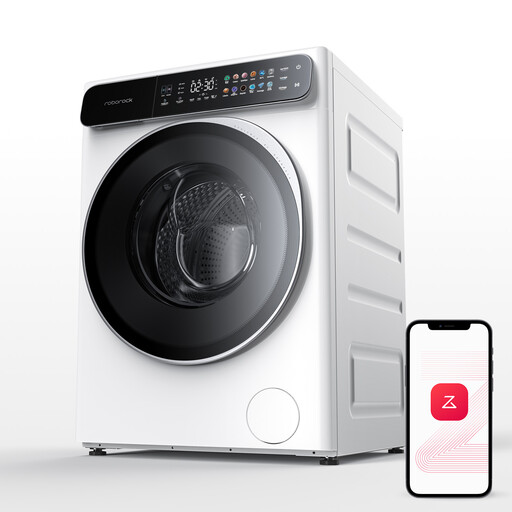 Image unavailable
This washer-dryer means you won’t need to transfer laundry to a second appliance, as long as your load stays within the stated 6 kg drying capacity. The 10 kg figure is for washing. Check the dimensions, full-cycle time and energy and water use for the exact model before choosing where to install it.
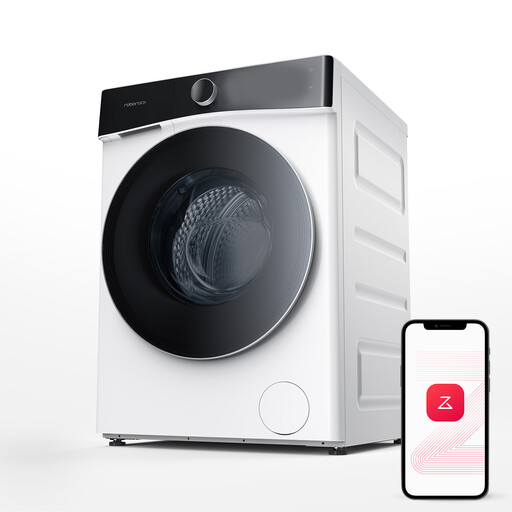 Image unavailable
For automatic drying after a wash, use the stated 6 kg drying capacity as your load limit, not the 10 kg washing capacity. Before buying, compare the full-cycle figures and check the dimensions and that you’ll have enough room to open the door.
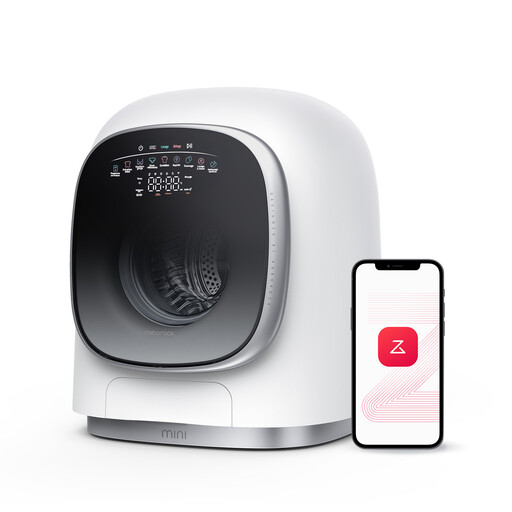 Image unavailable
With a stated washing capacity of 1 kg and drying capacity of 0.5 kg, this model is for very small loads, not a typical household wash. If you’re thinking of installing it in a compact space, check its dimensions and full-cycle figures.
Not if the load exceeds the model’s drying capacity. For example, Bosch Home Appliances France lists a capacity of 8 kg for washing alone but 5 kg for washing and drying on the WNA13400FF. Haier France lists 10 kg for washing and 6 kg for drying on the HWD100-B14939. Keep the load within the full-cycle capacity or remove some laundry before drying.
Check the figures for a full wash-and-dry cycle, which are separate from those for washing alone. In EPREL, the European Commission lists the capacity, duration, water per cycle and energy in kWh per 100 cycles for these uses. Compare models using the figures that match your routine.
No. A quick programme may be intended for a small load. Check the load limit in the model’s documentation and look up the full-cycle time at rated capacity separately.
Measure the height, width and depth, then check the manual for the space needed for connections and to open the door. As examples of manufacturers’ stated dimensions, the Bosch WNA13400FF is 590 mm deep and the Haier HWD100-B14939 is 688 mm deep. Width alone won’t tell you whether it will fit.