If you do frequent or large loads of laundry, it’s worth considering a separate tumble dryer if you have a suitable space for one. A washer-dryer combines both functions in one appliance, but its drying capacity may be lower than its washing capacity. If you have the space and time to air-dry your clothes, compare your washing machine’s spin performance and how you organise your laundry instead.
Which option suits you?
Households with frequent or large loads of laundry
If you can set aside space for a separate tumble dryer, compare its capacity with your washing machine’s and the size of your usual loads. Energy use, cycle times and maintenance are also important if you’ll use the appliance regularly. UFC-Que Choisir highlights capacity, programmes, energy consumption and installation space as key factors to consider.
People short on space
A washer-dryer combines washing and drying in one appliance. However, check how much laundry it can dry in one go: Bosch, for example, lists a 10.5 kg washing capacity but a 6 kg wash-and-dry capacity for its WNC254A0FR.
Households that mainly use an airer
If you can leave your laundry to dry in a dedicated space, check how much room you’ll need for an airer and look at your washing machine’s washing and spin performance. This approach means you don’t need an extra drying appliance, but you’ll need to allow time between the end of the wash and putting your clothes away.
What should you compare?
Start with the amount of laundry you need to dry and the space available, then compare the figures for the cycle you’ll actually use.
| Factor | What to check | What you need |
|---|
| Amount of laundry |
Compare the tumble dryer’s capacity with the size of your usual loads. For a washer-dryer, check the washing and drying capacities separately: Bosch lists 10.5 kg and 6 kg for the WNC254A0FR. |
I want to be able to dry a load without having to split it every time. |
| Time and energy use |
Check the energy consumption and duration of the programme you’ll use. For washer-dryers, the European Commission says the energy label shows separate information for washing and wash-and-dry cycles. |
If I do several loads in a row, I need to know how long the appliance will be in use and which energy-use figures apply to the way I use it. |
| Space and installation |
Measure the space and check the instructions. According to the European Commission, a vented tumble dryer needs an air outlet to the outside, unlike a condenser model. |
I may not have room for two appliances or be able to install an external air vent. |
| Air-drying |
Allow enough room for an airer and check your washing machine’s capacity, programmes and spin performance. Don’t choose a spin speed without considering the fabrics and programme you’ll use. |
I’d rather not add a drying appliance, as long as I can leave my clothes to dry for long enough. |
| Maintenance |
Check the model’s instructions for information about the filters, any condenser, and the water tank or drain. Whirlpool explains that condenser maintenance varies by appliance. |
I want to know what needs doing after each cycle and be able to access the parts that need maintenance easily. |
Which mistakes should you avoid?
-
Looking only at the washing capacity
You can’t always dry a full wash load in one cycle. Electrolux lists a 10 kg washing capacity and a 6 kg drying capacity for the EW9W1166RB; Bosch lists 10.5 kg and 6 kg for the WNC254A0FR.
Choose a washer-dryer based on how much laundry you want to dry in one go, and check both capacities in the product specifications.
-
Assuming a condenser model looks after itself
How you clean the filters and maintain the condenser depends on the model. Whirlpool distinguishes between appliances with a self-cleaning condenser and those that need the condenser maintained.
Check the instructions before buying to find out how easy it is to access the filters, what maintenance is needed and how to deal with the collected water.
-
Forgetting that a vented tumble dryer needs an air outlet
The European Commission says a vented appliance must release air outside. A condenser appliance doesn’t need this type of outlet.
Check which type of appliance you’re considering and review the installation requirements in its instructions before choosing a spot for it.
-
Comparing energy ratings alone
An energy rating on its own doesn’t tell you the capacity or cycle duration. A washer-dryer may also have different figures for washing alone and for washing and drying, as shown in Electrolux’s specifications for the EW9W1166RB.
Compare cycles designed for the same purpose, and consider their capacity, energy use and duration together.
A guide to some brands
These model examples can help you make sense of product specifications; they don’t represent every model from each brand.
Bosch
Bosch offers washer-dryers, including the WNC254A0FR.
- Bosch lists a 10.5 kg washing capacity and a 6 kg wash-and-dry capacity for this model.
- Check the capacities and dimensions of the specific model you’re considering.
Electrolux
The EW9W1166RB is an example of a heat pump washer-dryer featured by Electrolux France.
- The manufacturer’s specifications list a 10 kg washing capacity and a 6 kg drying capacity, with separate ratings for washing and washing and drying.
- These specifications apply to the EW9W1166RB; check the figures for each function on every model.
Whirlpool
Whirlpool’s range includes the FFTM229X3BSFR heat pump tumble dryer, which has a stated capacity of 9 kg.
- The stated capacity helps you compare this model with the size of your laundry loads.
- Whirlpool’s guidance explains that condenser maintenance varies by model, so check the instructions.
Appliances available on Joybuy
These options include one separate tumble dryer and three washer-dryers. Compare them based on the space you have and how much laundry you need to dry; air-drying is another option to consider as part of your overall decision.
 Image unavailable
Hotpoint CHD84MWBSEE, 8 kg heat pump tumble dryer
An option to consider if you’re looking for a separate tumble dryer for regular laundry loads. The product name gives a capacity of 8 kg and a C rating; check the dimensions, energy consumption and duration of the programme you’re interested in before comparing it with other appliances.
View on Joybuy
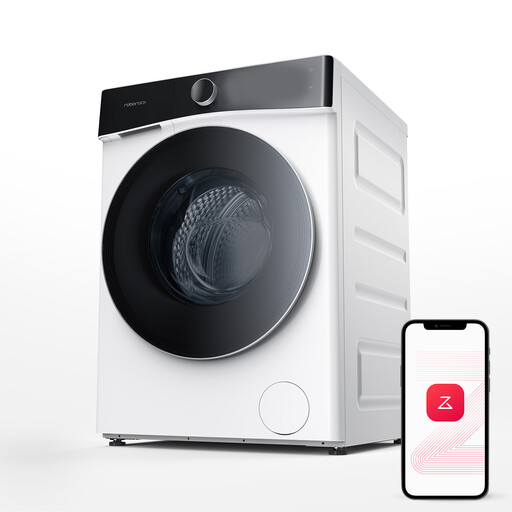 Image unavailable
Roborock Zeo Lite Zeo-Cycle, 10 kg/6 kg washer-dryer
This model combines washing and drying for households that prefer to have just one appliance. Its stated capacities are 10 kg for washing and 6 kg for drying, so you’ll need to adjust a load over 6 kg before drying it. Also check the dimensions and the figures for the wash-and-dry cycle.
View on Joybuy
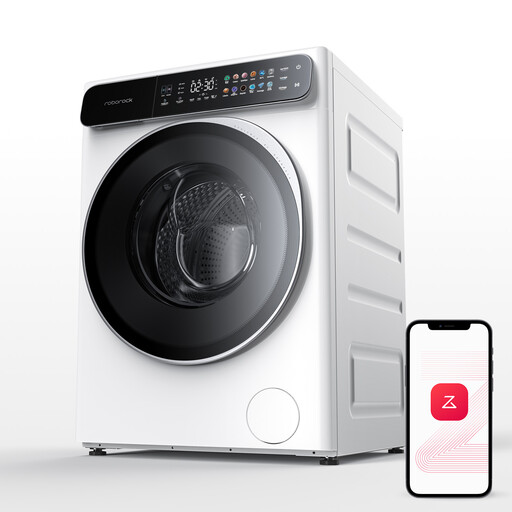 Image unavailable
Roborock Zeo One, 10 kg/6 kg washer-dryer
The combined design means you don’t need to install two separate appliances. The product name gives a 10 kg washing capacity and a 6 kg drying capacity, as well as Zeo-Cycle and LintClear functions. For a load over 6 kg, plan to adjust the amount you dry; check the model’s specifications for its dimensions and cycle information.
View on Joybuy
 Image unavailable
Samsung WD10HG6U34BEU3, 10 kg/6 kg washer-dryer
This washer-dryer is worth considering based on the space you have and the amount of laundry you need to dry. The product name gives a 10 kg washing capacity and a 6 kg drying capacity, so adjust any loads that exceed the latter. Check the installation requirements in the instructions, and the figures for the wash-and-dry cycle on the energy label.
View on Joybuy
Frequently asked questions
Do you need an external vent to install a tumble dryer?
Yes, for a vented tumble dryer: the European Commission says it must release air outside. A condenser model doesn’t need an air outlet, but check its instructions for other installation requirements.
Can a washer-dryer dry the whole load it has washed?
Not necessarily. Bosch lists a 10.5 kg washing capacity but a 6 kg wash-and-dry capacity for the WNC254A0FR, while Electrolux lists 10 kg and 6 kg for the EW9W1166RB. Compare the two capacities for your model and adjust any load that exceeds its drying limit.
How do you compare the energy use of a tumble dryer and a washer-dryer?
Check the figures for the cycle that matches how you’ll use the appliance, rather than looking at the energy rating letter alone. The European Commission says a washer-dryer’s energy label shows separate information for washing and wash-and-dry cycles. You should also consider the capacity and duration of the cycle you’re comparing.
Do you need to clean the condenser after every drying cycle?
It depends on the model: Whirlpool says some condensers are self-cleaning and that maintenance procedures vary. Check your appliance’s instructions to find out how to maintain the condenser and filters.


