Households without space for two appliances
A washer-dryer combines washing and drying in one space. However, bear in mind that its drying capacity may be lower than its washing capacity, as Que Choisir points out.


If you still have a suitable, well-ventilated room where you can dry your clothes, start by considering that option. Otherwise, choose based on the space available and the amount of laundry you need to dry. A separate tumble dryer suits a dedicated space and frequent use, while a washer-dryer combines both functions in one space, with a lower drying capacity than washing capacity.
A washer-dryer combines washing and drying in one space. However, bear in mind that its drying capacity may be lower than its washing capacity, as Que Choisir points out.
If you have space for a separate appliance, choose a tumble dryer with a capacity suited to your usual loads. If you’ll use it frequently, also check the energy consumption and programme times of the model you’re considering.
Before adding an appliance, check whether a suitable room, good ventilation and a well-planned laundry routine would still allow you to air-dry your clothes. ADEME points out that drying clothes indoors adds a lot of moisture to the air.
First, consider whether your clothes could dry without an appliance in your home. If that doesn’t suit your needs, the space available and the amount of laundry you need to dry will help you choose between a separate appliance and a washer-dryer.
| Factor | What to check | Who is this for? |
|---|---|---|
| Space for the appliance | Measure the space and the clearance needed to open the door. If stacking the appliances, check which arrangement is approved by the manufacturer. | If I can’t fit a second appliance at home, I need to combine washing and drying in one space; around 33% of consumers reportedly have saving space as their main need. |
| Drying capacity | Compare the drying capacity in kg with your usual load, and check how long a complete washer-dryer programme takes. | When I need to do several loads in a row, splitting a load before drying makes laundry harder to manage. Drying capacity and getting laundry through the machine would reportedly be priorities for around 27% of consumers. |
| Running costs | Check the energy label and the product information for the exact model. Compare cycles on an equivalent basis. | If I dry clothes frequently, I want to factor in electricity use, not just cycle time; around 20% of consumers reportedly prioritise running costs. |
| Drying without an appliance | Check whether a suitable, well-ventilated room would let you dry clothes in line with your laundry routine. | If I can organise indoor drying more effectively at home, I’d rather consider this option before adding an appliance; for around 20% of consumers, this is reportedly the first need to address. |
Que Choisir points out that a washer-dryer may dry less laundry than it can wash. So a full washing load may not fit in a single drying cycle.
Compare your usual load with the drying capacity in kg, and check the length of the wash-and-dry programme.
If the washing load is larger than the drying capacity, you’ll need to remove some clothes or run separate drying cycles.
According to Que Choisir, a vented tumble dryer needs an outlet to the outside or a suitable ventilation duct. It’s not enough to have space for the appliance in the room.
Before choosing this type, check the duct route and the requirements in the instruction manual. If suitable venting isn’t possible, choose another solution.
Que Choisir’s guide notes that heat pump tumble dryers use less electricity, while conventional condenser models generally have shorter cycle times. Cycle time alone doesn’t tell you everything about how an appliance will work for you.
Compare the technology, stated energy consumption and programme times for the loads you expect to dry.
ADEME says that drying clothes indoors adds a lot of moisture to the air. However, you may still be able to dry clothes without an appliance if the room and ventilation are suitable.
Consider where you could put an airer, the ventilation and how often you do laundry before deciding whether an appliance is necessary for your household.
Bosch France product pages let you compare separate heat pump tumble dryers, including models listed with capacities of 8 kg and 9 kg.
Electrolux France lists washer-dryers with capacities such as 10 kg for washing and 6 kg for drying.
Some Samsung France product pages list washer-dryers with capacities of 9 kg for washing and 6 kg for drying.
Whirlpool France lists freestanding and built-in washer-dryers, with washing and drying capacities that vary by model.
This selection includes a washer-dryer for combining both functions in one space, as well as separate tumble dryers to consider if you have room for one. Before choosing, compare each model’s drying capacity and installation requirements.
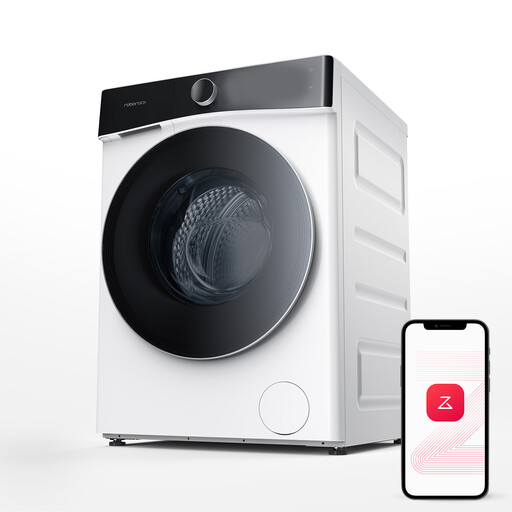 Image unavailable
Worth considering if you want to combine washing and drying in one appliance. The title lists a washing capacity of 10 kg and a drying capacity of 6 kg. Check that the latter is enough for your usual loads, then check the dimensions and programme times to make sure they suit your needs.
 Image unavailable
A separate appliance for drying clothes alongside your washing machine. This model is listed as an 8 kg condenser tumble dryer. Check its dimensions and the clearance required in the instruction manual against the space you have in mind.
 Image unavailable
Worth looking at if you have space for a separate tumble dryer. The title lists heat pump technology and an 8 kg capacity. Check the dimensions, clearance requirements and the details for the programme you’ll use.
 Image unavailable
Another option for drying laundry in a dedicated appliance. The title lists heat pump technology and an 8 kg capacity. Compare its dimensions with the space available, and check the programme time and energy consumption for the cycle you’re considering.
 Image unavailable
Worth considering if you have room for a separate tumble dryer. The descriptions for this variant give conflicting capacity information, so confirm the drying capacity of the CD10EHP05W-HR before comparing it with your laundry loads. Also check the dimensions and details of the programme you plan to use.
Not necessarily: its drying capacity may be lower than its washing capacity. Que Choisir points this out, and manufacturers’ product pages give examples such as 9 kg for washing and 6 kg for drying. Compare your laundry load with the drying capacity, not the washing capacity.
A vented tumble dryer needs an outlet to the outside or a suitable ventilation duct, according to Que Choisir. If you can’t install it in a way that complies with the instruction manual, rule out this type rather than venting damp air into your home.
Heat pump models described by Que Choisir work without a duct to vent air outside, unlike vented tumble dryers. Still, check the instruction manual for the chosen model’s requirements for positioning, electrical supply, clearance and condensate water management.
No, not automatically. ADEME points out that drying clothes indoors adds a lot of moisture to the air. Check whether you have a suitable, well-ventilated room, then consider how much laundry you have and how long you’re willing to wait for it to dry.