Just one space in your flat
A washer-dryer combines both functions. However, check the available depth and how much laundry the appliance can dry in one cycle: UFC-Que Choisir points out that its drying capacity is lower than its washing capacity.


If you only have room for one appliance, a washer-dryer lets you wash and dry in one go, as long as you keep the load within its drying capacity, which is often lower than its washing capacity, according to UFC-Que Choisir. If you regularly dry full loads and have room for a second appliance, compare separate tumble dryers. If you’re keeping a drying rack, ADEME recommends using a large, well-ventilated room or one with mechanical ventilation extraction.
A washer-dryer combines both functions. However, check the available depth and how much laundry the appliance can dry in one cycle: UFC-Que Choisir points out that its drying capacity is lower than its washing capacity.
If you can fit in a second appliance, it’s worth comparing a separate tumble dryer with a washer-dryer. Match its capacity to the loads you want to transfer from the washing machine, and don’t forget to allow enough space.
If installing a tumble dryer isn’t an option, adjust the spin cycle and the amount of laundry to suit the space available. For indoor drying, ADEME recommends using a large, well-ventilated room or one with mechanical ventilation extraction.
Worth considering: when one appliance needs to handle both washing and drying.
The trade-off: according to UFC-Que Choisir, drying capacity is lower than washing capacity, and drying takes longer than with a separate tumble dryer.
Worth considering: if you dry laundry often and have room for a second appliance, or a suitable stacking option.
The trade-off: you’ll need to make room for it and follow the installation instructions for your chosen appliance.
Worth considering: if you’re keeping a drying rack instead of installing a drying appliance.
The trade-off: spinning doesn’t remove the need for a drying rack or the moisture released into the room as laundry dries.
| Priority | What to check | Think about your needs |
|---|---|---|
| Moisture and space | Decide where to put a drying rack or second appliance. For indoor drying, ADEME recommends using a large, well-ventilated room or one fitted with mechanical ventilation extraction. | I don’t want damp laundry taking up space in my living room for a long time. If I keep a drying rack, I need to be able to put it in a suitable room. |
| Drying capacity | Compare the washing and drying capacities for the programme you plan to use. If you have two appliances, check that the washed load will fit in the tumble dryer. | After a large wash, can I dry everything without taking any laundry out? With a washer-dryer, I need to go by its drying capacity, not just its washing capacity. |
| Cycles and energy use | Check the stated cycle duration and energy use for the cycle in question, comparing like with like. UFC-Que Choisir notes that a washer-dryer takes longer to dry than a conventional tumble dryer. | If I do several loads in a row, the length of a complete cycle matters just as much as being able to do everything in one appliance. |
| Installation and maintenance | Measure the route to the space, the depth available and the clearance needed for the door. Check the manual for connections and access to parts that need maintenance. UFC-Que Choisir distinguishes between vented models, which need an outlet to the outside, and condenser models. | My appliance needs to fit through to its intended spot, fit in that space and remain accessible for everyday use and maintenance. |
A washer-dryer can wash more laundry than it can dry in a single cycle. For example, Bosch lists a 10 kg washing capacity and a 6 kg capacity for the WDU8H500FF’s wash-and-dry cycle.
If you want to wash and dry in one go without removing any laundry, size your load according to the drying capacity of the programme you choose.
A two-in-one appliance frees up the space a second machine would take, but UFC-Que Choisir says it takes longer to dry than a conventional tumble dryer.
Before choosing, compare the duration and energy use of the wash-and-dry cycle with how often you do laundry.
Laundry drying indoors adds moisture to the room, even after a spin cycle.
ADEME recommends using a large, well-ventilated room or one with mechanical ventilation extraction. If you don’t have a suitable space, reconsider whether you could install a drying appliance.
Depth, the route to the space and the door opening can also prevent installation or make maintenance difficult.
Measure the route and the actual space, then check them against the dimensions and installation instructions for the model you’re considering.
These manufacturer examples highlight details to check for specific models; they don’t represent every model from each brand.
The WDU8H500FF illustrates the difference between the two capacities to check on a washer-dryer.
The F964R35WR is another example of a washer-dryer with separate washing and drying capacities.
The WD90DG5B15BE lets you look at both a washer-dryer’s capacities and the conditions for using its connected features.
This Joybuy selection includes washer-dryers for homes with room for just one appliance, and separate tumble dryers for homes that can accommodate a second. Compare their capacity with your usual loads before checking the installation requirements.
 Image unavailable
For washing and drying with one appliance: the stated capacity is 11 kg for washing and 6 kg for drying. If you want to wash and dry in one go without taking any laundry out, keep the initial load within the drying programme’s capacity.
 Image unavailable
This washer-dryer has a stated capacity of 10 kg for washing and 6 kg for drying. If your wash load is more than 6 kg, plan to take some laundry out before drying. Also check the full cycle duration and the model’s installation instructions.
 Image unavailable
This separate 8 kg tumble dryer is suited to an installation with space for a second appliance. Check that its capacity suits the loads transferred from your washing machine, and check the dimensions and installation instructions too.
 Image unavailable
If you have room for a second appliance, this heat pump model has a stated capacity of 8 kg. Compare it with your washing loads, and check the dimensions and maintenance requirements in the manual.
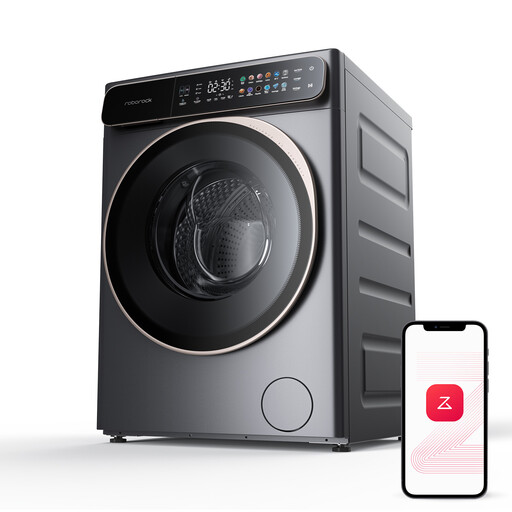 Image unavailable
This washer-dryer has a stated capacity of 10 kg for washing and 6 kg for drying, with Zeo-Cycle, LintClear and automatic dosing features listed in its product name. For a full cycle without taking any laundry out, start with the drying capacity. Also check the dimensions and the specifications for your chosen cycle.
Yes, as long as the load doesn’t exceed the drying capacity of the programme you choose. This is generally lower than the washing capacity, as UFC-Que Choisir points out: for example, Bosch lists a 10 kg washing capacity and a 6 kg capacity for the WDU8H500FF’s wash-and-dry cycle. For larger loads, you’ll need to take some laundry out or dry it in more than one load.
A condenser model with a heat pump doesn’t need a vent duct leading outside, unlike a vented tumble dryer, according to UFC-Que Choisir. However, check the manual for the space required, the power supply and the maintenance needed for the exact model.
No. Even after a spin cycle, you’ll need a suitable room for damp laundry. For indoor drying, ADEME recommends a large, well-ventilated room or one with a mechanical ventilation extract vent, preferably humidity-sensitive.
Look at the figures for washing alone separately from those for the wash-and-dry cycle, especially capacity and stated energy use. The European Commission’s energy labelling framework for washing machines and washer-dryers lets you check this information for the exact model. Don’t assume figures for one mode apply to another.
Yes, if you bought it from a professional seller. According to economie.gouv.fr, the statutory guarantee of conformity is mandatory and covers new, second-hand and refurbished goods. Keep your proof of purchase and make a note of which seller to contact if the appliance isn’t as it should be.