People without room for two appliances
A washer-dryer combines both functions in one machine. However, check how much laundry you can dry without taking some out after washing: Que Choisir notes that drying capacity is lower than washing capacity.


A washer-dryer is a good choice if you can only fit one appliance and the amount of laundry you need to dry is within its drying capacity, which is generally lower than its washing capacity. If your space and appliance compatibility allow you to stack two machines, this is worth considering if you dry loads regularly. An airer is another option if you can ventilate your home to clear the moisture.
A washer-dryer combines both functions in one machine. However, check how much laundry you can dry without taking some out after washing: Que Choisir notes that drying capacity is lower than washing capacity.
Drying capacity and the length of the full cycle matter more than washing capacity alone. You could also consider stacking two separate appliances if they can be installed safely and reducing or splitting loads would be too inconvenient.
You can stack a washing machine and a separate tumble dryer. Measure the available height and depth, then check that both appliances and the stacking kit are compatible: having enough floor space alone does not guarantee a suitable installation.
Start by working out where your laundry can dry, then compare each option against your usual load size, available space and cycle time.
Consider this if: you can only install one machine and your drying load can stay within its drying capacity.
The trade-off: if you fill the machine to its washing capacity, you may need to split the load before drying. You’ll also need to allow for the full cycle time.
Consider this if: you often dry large loads and have enough height for a stacked setup.
The trade-off: you’ll need two appliances and a compatible stacking kit, not just enough floor space.
Consider this if: you don’t need to machine-dry every load and have a suitable place to hang your washing.
The trade-off: drying laundry indoors releases moisture, which needs to be cleared with suitable ventilation or extraction, as ADEME points out.
| Priority | What to check | Your needs |
|---|---|---|
| Available space | Measure the space, depth and door clearance. For a stacked setup, also check the height and stacking kit compatibility. | I only have floor space for one laundry appliance, but there may be enough height to stack two machines. |
| Load to be dried | Compare the washing and drying capacities in kg separately. For a continuous wash-and-dry cycle, use the model’s stated drying limit. | I’d like to start drying without having to take laundry out after washing each time; my usual load needs to fit in the drum. |
| Full cycle | Check the time, water and energy use for the wash-and-dry cycle, not just washing. The European Commission says the label for washer-dryers shows separate information for these uses. | If I dry most of my laundry, I want to judge the machine by the cycle I’ll actually use and how long it takes out of my day. |
| Indoor drying | Find a room where you can hang your laundry and check how moisture will be cleared. ADEME highlights the importance of ventilation or suitable extraction. | An airer would suit me if I can make room for it without letting moisture build up at home. |
Que Choisir says a washer-dryer’s drying capacity is lower than its washing capacity. So you may not be able to dry a full load straight after washing it.
Compare the stated capacity in kilograms for each function with the amount of laundry you want to dry in one go.
As the European Commission explains, the label shows separate information for washing alone and the wash-and-dry cycle. The rating for one does not tell you how the other performs.
If you plan to dry laundry regularly, check the rating, water and energy use, and duration for the full cycle.
The stated duration for a particular programme may not reflect a cycle at the model’s maximum capacity.
Check the programme’s permitted load in the manual, then compare the duration of the cycle that matches how you usually do your laundry.
ADEME notes that laundry drying naturally indoors releases moisture; if it isn’t cleared, the risk of mould increases.
Before choosing this option, identify a well-ventilated room or one with suitable extraction.
These examples show capacities you can compare on the product pages for the models in question; they don’t represent each brand’s full range.
AEG France lists the LWR7G944B and LWR98B166X as washer-dryers with different capacities.
LG France lists the F164R78BSTA with a washing capacity of 11 kg and a drying capacity of 6 kg.
Miele France describes the WTD160 WCS as a machine that combines washing and drying.
Bosch France lists the WNG24400FR’s washing capacity separately from its wash-and-dry capacity, at 9 kg and 6 kg respectively.
These machines combine washing and drying in one appliance. Compare their drying capacity with your usual loads; the mini model is designed for much smaller loads than the other models featured here.
 Image unavailable
This model combines both functions in one appliance and has a washing capacity of 11 kg and a drying capacity of 6 kg. If you want to run both stages without taking laundry out, compare your usual load with the 6 kg limit. Also check the full-cycle information and measure the space where you plan to install it.
 Image unavailable
This washer-dryer has a washing capacity of 10 kg and a drying capacity of 6 kg. If you want to dry a load without splitting it, the 6 kg figure is the one to bear in mind. Before choosing, check that its dimensions fit your space and look at the wash-and-dry label for cycle duration and consumption.
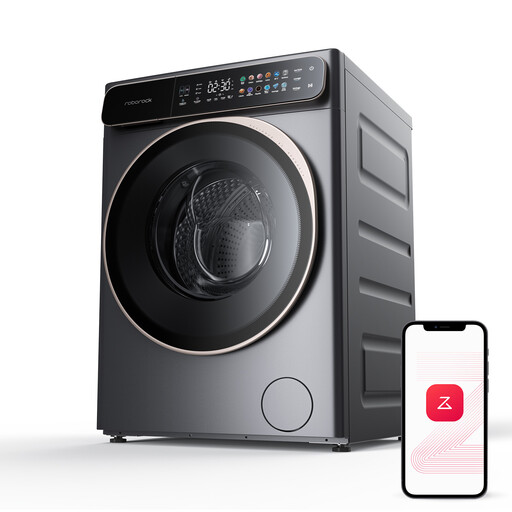 Image unavailable
The Zeo One combines washing and drying, with capacities of 10 kg and 6 kg respectively. Its product title mentions Zeo-Cycle drying, the LintClear system and automatic dosing. To assess its installation and full cycle, check the dimensions, duration, water use and energy consumption.
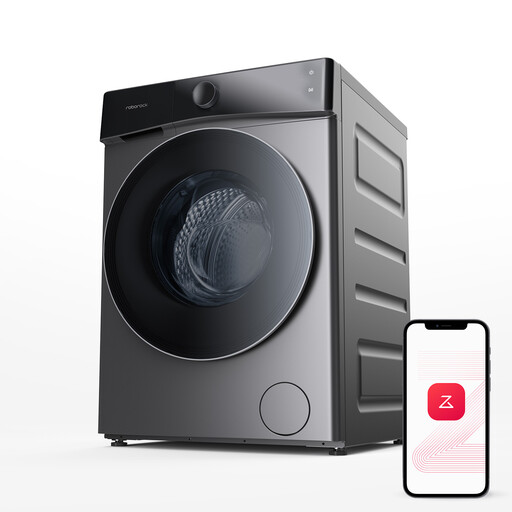 Image unavailable
This model has a washing capacity of 10 kg and a drying capacity of 6 kg, an important difference if you want to run both stages one after the other. Its product title mentions 27 washing programmes and app control. Check which programmes suit your fabrics, along with the dimensions and full-cycle information.
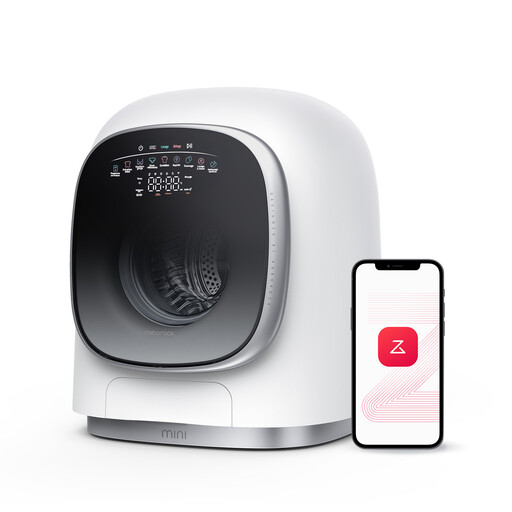 Image unavailable
This mini model has a washing capacity of 1 kg and a drying capacity of 0.5 kg, making it suitable for small loads rather than a typical laundry load. Check that these limits suit the items you plan to wash, then check the dimensions and full-cycle information before installation.
Not if it exceeds the model’s drying capacity. Que Choisir says this is lower than the washing capacity. Compare the two figures in kg and, if necessary, wash a smaller load or take some laundry out before drying.
The European Commission’s label distinguishes between the wash-and-dry cycle and washing alone. If you’ll use the integrated dryer often, compare the full-cycle information, including energy use, water consumption and duration, rather than looking only at the washing rating.
Check that both models and the stacking kit are compatible, and make sure the space is tall and deep enough. Bosch, for example, says one of its kits is designed for a standard-size washing machine over 55 cm deep. You’ll still need to check that the kit is compatible with your specific setup.
It can if you have somewhere to hang your laundry and a way to clear the moisture. ADEME highlights the moisture produced when laundry dries naturally indoors, so choose a well-ventilated room or one with suitable extraction rather than leaving an airer in an enclosed space.