You only have room for one appliance
A washer-dryer lets you wash and dry your clothes in a single appliance. Before choosing one, check that its dimensions and door opening will fit the space available.


Choose a washer-dryer if you only have room for one appliance and can keep the loads you dry within its capacity. UFC-Que Choisir notes that a washer-dryer’s drying capacity is lower than its washing capacity. If you have enough height and compatible appliances, two separate machines stacked together are worth considering if you regularly dry large loads. Either way, check the installation dimensions. For a washer-dryer, also compare the duration and energy and water consumption of the wash-and-dry cycle.
A washer-dryer lets you wash and dry your clothes in a single appliance. Before choosing one, check that its dimensions and door opening will fit the space available.
Towels, bedding and combined loads make drying capacity especially important. UFC-Que Choisir points out that a washer-dryer’s drying capacity is lower than its washing capacity, so you may need to take some clothes out before drying.
If floor space is limited but you have enough height, a suitable floor and compatible appliances, consider stacking two machines. Bosch Electroménager France recommends checking that the appliances are compatible and using a suitable stacking kit.
Worth considering: when you can only install one appliance and your loads for drying are within its drying capacity.
The trade-off: according to UFC-Que Choisir, a full wash load may not be able to dry in one go in the same drum.
Worth considering: if you often dry a lot of laundry and can install two compatible appliances, one above the other.
The trade-off: this arrangement needs enough height and a compatible stacking kit. Bosch Electroménager France advises against simply placing one appliance on top of the other.
| Factor | What to check | Who is this for? |
|---|---|---|
| Space and installation | Measure the width, height and depth, and allow room for the door to open. For a stacked pair, check that the appliances can be stacked and that the kit is designed for both models. | If I can only set aside one space for laundry, I need to know whether a washer-dryer or stacked pair will actually fit in my home; around 33% of consumers put this arrangement first. |
| Load to be dried | Compare the washing and drying capacities in kg, as well as the maximum load for the model’s combined wash-and-dry programme. | When I combine loads, I want to avoid taking some clothes out after washing. Drying capacity would be the top priority for around 27% of consumers. |
| Full cycle | Check the duration, water use per cycle and energy use per 100 wash-and-dry cycles, separately from the figures for washing alone. The European Commission explains that the label for relevant appliances shows these figures per cycle. | If I expect to do several loads, the duration and consumption of a full cycle affect how I plan my day; around 20% of consumers would make this their top priority. |
| Occasional drying | Check the load allowed for any quick programme and the ventilation available if you plan to hang some of your laundry out to dry. | If I only use a dryer for small, urgent loads, I also need somewhere suitable to hang the rest. This would be the top priority for around 20% of consumers. |
A full wash load may be larger than the maximum drying load. UFC-Que Choisir highlights this difference in washer-dryers.
Check both capacities in kg. If you want to run the wash and dry phases back to back without removing any clothes, make sure the load is within the drying capacity.
The European energy label gives separate figures for washing alone and for washing and drying, as the European Commission explains. The first set of figures does not describe the cycle you’ll use to get dry laundry.
Compare the capacities, durations and consumption figures for the specific cycle you plan to use.
Two machines can’t be stacked just because their widths look similar: their stability and connection depend on the models and installation instructions.
Before buying, check that the model numbers are compatible, choose the right kit, measure the space and follow the manufacturers’ instructions. If needed, ask a professional for advice.
You may need a suitable stacking kit and, depending on the installation, a professional to fit it.
Drying clothes indoors should also factor into your choice of drying solution. ADEME recommends using a large, well-ventilated room or a room with mechanical ventilation (VMC) to dry laundry.
If you plan to hang some loads to dry, check the room’s ventilation before relying on this as an everyday option.
If you’re considering a shallow washer-dryer, the French product page for the LG F852SV52IRS lists a depth of 47,5 cm, a washing capacity of 8,5 kg and a drying capacity of 5 kg.
For an integrated installation, the Beko B5DBT69547W is listed with a 6+6 kg capacity for a combined wash-and-dry programme.
Bosch gives you two separate things to consider: the capacity of a washer-dryer and whether the accessories are compatible with a stacked set-up.
These appliances wash and dry your clothes in one machine. To compare models for a home with limited space, match their drying capacity to your usual loads, then check the dimensions and figures for the full cycle.
 Image unavailable
Worth considering if you want to wash large loads in one appliance while keeping the drying load within capacity. It has a washing capacity of 11 kg and a drying capacity of 6 kg, so you’ll need to reduce a full wash load before drying.
 Image unavailable
This washer-dryer could suit you if the laundry you want to dry fits within a 6 kg load. It has a washing capacity of 10 kg and a drying capacity of 6 kg. If you plan to use the full cycle regularly, also check its duration and consumption.
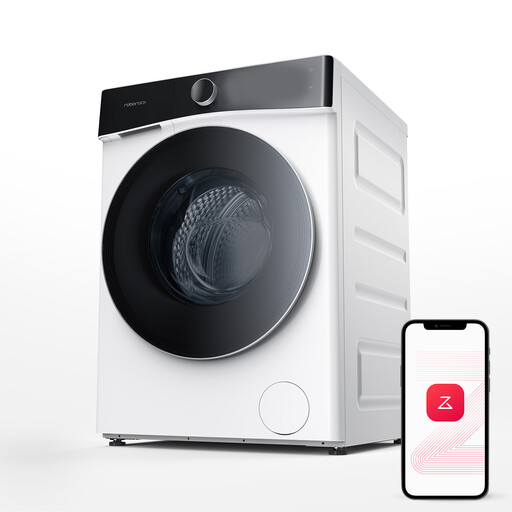 Image unavailable
If you want to wash and dry clothes in one appliance, first check that its drying capacity suits your usual laundry. This model is listed with a washing capacity of 10 kg and a drying capacity of 6 kg. Before choosing a space for it, check its dimensions as well as the duration and consumption of the full cycle.
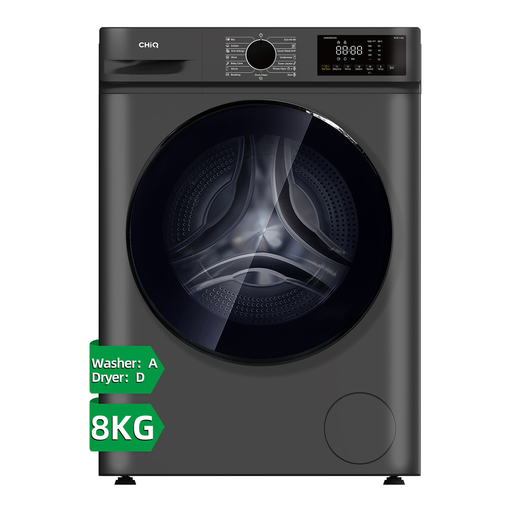 Image unavailable
This washer-dryer is worth considering if a 5 kg drying load suits your needs. It has a washing capacity of 8 kg and a drying capacity of 5 kg. Check its exact dimensions before planning an alcove installation, then check the duration and consumption of the wash-and-dry cycle.
Not always. UFC-Que Choisir says a washer-dryer’s drying capacity is lower than its washing capacity. To run both phases one after the other without stopping to remove clothes, keep to the drying load allowed for your chosen model and programme.
No. Both models must be suitable for stacking and installed according to their instructions, using a compatible stacking kit. Bosch Electroménager France recommends checking that the appliances are compatible rather than simply placing one on top of the other.
Compare the figures for washing alone with those for the wash-and-dry cycle you plan to use. The European Commission lists energy classes and consumption per 100 cycles, among other details. Also check the capacity, water use per cycle and duration for each mode on the model’s product page.
Follow the maintenance instructions and schedule in your model’s manual. Electrolux France recommends leaving the door and detergent drawer slightly open after each cycle. Other maintenance tasks depend on the appliance.