If you only have room for one appliance on the floor, a washer-dryer is an option, provided its drying capacity suits the amount of laundry you need to dry. A stacked washer and tumble dryer are worth considering if you do frequent loads and have enough height, with a compatible stacking kit. An airer, meanwhile, means you’ll need to manage indoor humidity. Whichever option you choose, check the dimensions, cycle times and installation requirements of the model you’re considering.
Who is each option right for?
Room for just one appliance
If you can’t fit two appliances side by side, compare the depth of the washer-dryer and the space needed to open its door. Its drying capacity should also suit your laundry loads: UFC-Que Choisir points out that it’s lower than the washing capacity.
Frequent, large drying loads
If you do load after load of laundry, a stacked washing machine and tumble dryer may suit your routine, provided you have enough height and a stacking kit compatible with both models. Bosch explains that its stacking accessories have specific compatibility requirements.
Drying on an airer
If you can hang your laundry to dry, consider the humidity it will add to the room. ADEME recommends choosing a spin setting that suits the fabrics and advises paying attention to ventilation when drying laundry indoors.
How do the options compare?
Washer-dryer
Consider it: when you can install only one appliance and the load you need to dry is within its drying capacity.
Bear in mind: you may need to split a full wash load before drying, as UFC-Que Choisir explains.
Two appliances stacked
Consider it: if you regularly dry loads and have enough available height.
Bear in mind: stacking requires a compatible installation and kit for the models you choose, according to manufacturers such as Bosch.
Washing machine and airer
Consider it: if you have somewhere to hang your laundry and can keep the room ventilated.
Bear in mind: drying indoors adds humidity to your home, as ADEME points out.
| Factor |
What to check |
Who it matters to |
| Space |
Measure the width, height and depth, and allow room for the door to open; check the connections required in the instruction manual. |
If I only have a narrow space, I want to know whether the appliance will fit and still be usable with the door open. Around 42% of consumers put space-saving needs first. |
| Capacity and routine |
Compare the washing and drying capacities in kg, then check the cycle time for the load you have in mind. |
When I’m doing several loads in a row, I want to dry the laundry without having to split every load. For around 33% of consumers, drying capacity and speed come ahead of other factors. |
| Humidity and running costs |
For an airer, consider ventilation; for an appliance, compare the water and energy use, along with the length of the relevant cycle. |
If I dry laundry indoors, I need to take humidity into account; with an appliance, I want to compare the consumption of the cycle I’ll use. This is the top concern for around 25% of consumers. |
Mistakes to avoid
-
Looking only at washing capacity
With a washer-dryer, a full wash load may exceed the maximum drying capacity. UFC-Que Choisir distinguishes between the two capacities, which can affect how you organise your laundry.
Choose based on the amount you want to dry in one go, and check the washing and drying figures separately.
-
Assuming a quick cycle is suitable for a full load
The maximum load for a short programme may differ from the load allowed for a standard wash-and-dry cycle.
Check the instruction manual for the load allowed on the quick programme, then look at the cycle time for the programme that suits your usual load.
-
Planning a stack without checking the models
A stacking kit won’t necessarily fit every washing machine, tumble dryer or appliance depth. Bosch and Electrolux list specific requirements for their accessories.
Before deciding where to put the appliances, confirm that the kit and installation method are suitable for the exact models you’re buying.
-
Relying on an airer without considering humidity
According to ADEME, drying laundry indoors adds a lot of moisture to the air in your home.
Before choosing this as your everyday solution, assess how well the room is ventilated and select a spin setting that’s suitable for the fabrics.
Brands to consider when comparing
Bosch
Bosch offers washer-dryers, tumble dryers and stacking kits, which you’ll need to check for compatibility with each specific model.
- Its dedicated accessories make it possible to explore a stacked installation.
- The right kit depends on the models and their dimensions. An accessory being available in the range doesn’t confirm it will fit your particular pair of appliances.
AEG
The AEG range includes washer-dryers, such as the LWR98B166X, which the brand lists with a washing capacity of 10 kg and a drying capacity of 6 kg.
- This model lists separate washing and drying capacities for you to compare with your usual load.
- Its specifications don’t represent the whole range, so check the details and installation requirements for the specific model you’re interested in.
LG
LG offers washer-dryers, including a Slim model listed at 8.5/5 kg, as well as vertically arranged WashTower sets.
- These configurations let you compare a combined appliance with two separate functions arranged vertically.
- For a WashTower, check the height, depth and installation requirements. The Slim label doesn’t replace checking the exact dimensions.
Washer-dryers to consider on Joybuy
These three washer-dryers combine washing and drying in a single appliance. To find out which one will fit in your home, compare its drying capacity with your usual loads, then check its dimensions and the details of the wash-and-dry cycle.
 Image unavailable
Samsung WD10HG6U34BEU3, 10/6 kg washer-dryer
Worth considering if you want to wash and dry with one appliance and 6 kg of drying capacity is enough for your load.
Listed capacity: 10 kg for washing and 6 kg for drying. This means a full wash load is larger than the stated drying capacity.
Before choosing, check the dimensions against your available space and look at the water and energy use, along with the wash-and-dry cycle time.
View on Joybuy
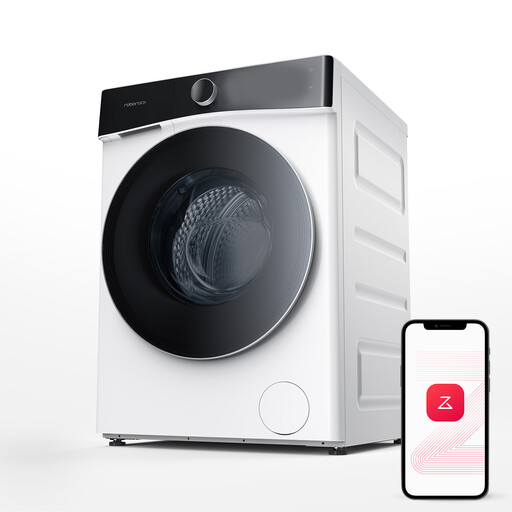 Image unavailable
Roborock Zeo Lite, 10/6 kg washer-dryer
Worth considering if you have room for just one appliance and your drying load is within the stated 6 kg capacity.
The product name lists a washing capacity of 10 kg, a drying capacity of 6 kg and Zeo-Cycle technology. A 10 kg wash load can’t be dried in one go at the stated capacity.
Check the dimensions against your available space, as well as the cycle time and consumption for the programme you’ll use.
View on Joybuy
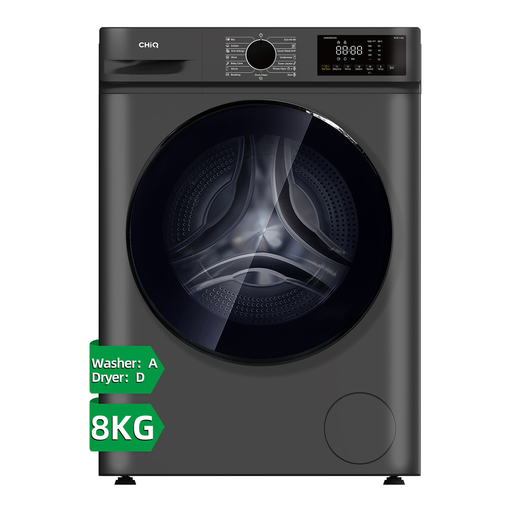 Image unavailable
CHiQ JW85882HG, 8/5 kg washer-dryer
Worth considering if a combined appliance suits your space and you dry no more than 5 kg per load.
Listed capacity: 8 kg for washing and 5 kg for drying. The width in the product title doesn’t match the other dimensions listed, so get all measurements confirmed before planning to fit it into a narrow space.
Also compare the time, water and energy use of the wash-and-dry cycle that suits your needs.
View on Joybuy
Frequently asked questions
Why won’t a 9/6 kg washer-dryer dry 9 kg?
On a 9/6 kg model, 9 kg is the washing capacity and 6 kg is the drying capacity. So, a 9 kg wash load needs to be reduced before it can be dried in the appliance. UFC-Que Choisir distinguishes between these two capacities; compare the drying capacity with the amount of laundry you want to dry in one go.
Can you stack any tumble dryer on top of any washing machine?
No. Stacking needs to suit the appliances and their dimensions, and requires a compatible fitting. Bosch and Electrolux list specific requirements for their kits, so check the exact model numbers of both appliances before planning a stack.
Is an airer suitable for a poorly ventilated home?
Before drying laundry indoors, assess how well your home is ventilated, as this adds humidity to the air. ADEME recommends using a suitable spin setting to reduce the water left in the laundry, unless the fabric can’t be spun in this way.
What should you compare on a washer-dryer’s energy label?
Compare the figures for the cycle you plan to use, particularly energy and water use and cycle time, rather than looking only at the washing capacity. The European Commission states that washer-dryer labels use a class scale from A to G. Check the relevant information for washing and for the wash-and-dry cycle separately.


