If you only have space for one appliance on the floor, a washer-dryer lets you run a wash and dry cycle back to back, as long as you keep the load within its drying capacity, which is usually lower than its washing capacity. If you have enough height and the appliance models are compatible with a stacking kit, two separate machines let you wash one load while another is drying. However, you’ll need to make more checks before installation.
Who are these options suitable for?
Households with space for just one appliance
If you can’t fit two appliances side by side and stacking isn’t an option, a washer-dryer lets you wash and dry your clothes at home. Its drying capacity is the key figure for back-to-back cycles, as UFC-Que Choisir points out.
Households with enough height for a stacked set-up
Stacking may work if there’s enough depth and access to the appliances, and a kit designed for the exact model numbers allows you to install them in line with the manufacturer’s instructions.
Households that often dry bulky loads
If you do laundry frequently or need to dry bulky items, start by comparing the actual drying capacity and programme times. You’ll also need to factor in maintenance for a separate tumble dryer.
How do the options compare?
Washer-dryer
Consider this if: you can install just one appliance and want to wash and dry your clothes without moving them between machines.
Bear in mind: the load for a back-to-back wash and dry cycle must be within the drying capacity, not the maximum washing capacity.
Washer and tumble dryer stacked together
Consider this if: there’s enough height and a kit compatible with both model numbers to stack the appliances.
Bear in mind: you’ll need to check the installation and leave enough access to use and maintain both appliances.
| What matters to you |
What to check |
Who this matters to |
| Available space |
Measure the alcove, the route to it and the space needed to open the door. For a stacked set-up, also check the height and whether the appliance models are compatible with the kit. |
I need to make sure the solution fits in my home before comparing programmes: around 27% of consumers would put this space constraint first. |
| Amount of laundry to dry |
Compare the washing and drying capacities in kg, then check the programme times for the loads you usually do. |
If I often dry sheets or towels, I want to avoid splitting one wash into several drying loads; around 27% of consumers would prioritise this capacity. |
| Running costs |
For a washer-dryer, check the water and electricity used by the wash-and-dry cycle. For a tumble dryer, compare the consumption and programme times shown on the model’s product information. |
If I use my appliances regularly, I want to know how much energy they use on the cycles I’ll run: around 20% of consumers would make this their top priority. |
| Installation and maintenance |
Confirm that the kit is compatible with both model numbers and check the room’s requirements. Make sure you can access the filter and, depending on the model, the condenser. |
I can only choose a stacked set-up if it can be installed correctly and maintained without access issues; around 26% of consumers would prioritise this. |
What pitfalls should you avoid?
-
Looking only at the washing capacity
A washer-dryer may be able to wash more laundry than it can dry in one go. For example, Samsung lists a washing capacity of 9 kg and a drying capacity of 6 kg for the WD90T954DSH.
For a back-to-back cycle, size the load according to the model’s drying capacity, particularly if you often wash bulky items.
-
Assuming any two appliances can be stacked
A stacking kit won’t fit every machine from the same brand. Bosch, for example, specifies a washing machine depth of over 55 cm for its WTZ2741X kit and excludes certain models.
Note down the exact model numbers of your washing machine and tumble dryer, then check the kit and any restrictions in the manufacturer’s documentation before planning a stacked set-up.
-
Comparing energy labels from different generations directly
The European Commission says that tumble dryer labels have used the A to G scale since 1 July 2025. A class on the previous scale can’t be compared like for like with a current class.
When comparing models, check the applicable energy label, the stated energy consumption and the duration of the programme you’ll use.
-
Forgetting about access to the filter and condenser
A blocked filter or condenser can affect how well a tumble dryer works. Electrolux recommends cleaning the filter after every cycle on the appliances concerned.
Make sure your installation leaves access to the parts that need maintenance, and follow your model’s instructions for the condenser.
Brands to consider for your project
Bosch
Worth considering for a stacked set-up where you can check the appliance model numbers against those compatible with a Bosch kit.
- Bosch offers the WTZ2741X for stacking a tumble dryer on top of a standard-sized washing machine, subject to compatibility.
- The kit requires a washing machine depth of over 55 cm, among other conditions; some Serie 2 models are excluded.
Samsung
Worth considering when comparing a front-loading washer-dryer or planning a stacked set-up with specific models.
- Samsung lists a washing capacity of 9 kg and a drying capacity of 6 kg for the WD90T954DSH, which measures 600 × 850 × 600 mm.
- Samsung says the SKK-ZSD kit is compatible with the WF90F09C4SU3 and DV90F09F4SU3 pair; this doesn’t mean it will fit other pairs.
Miele
Worth considering when comparing separate washing and drying capacities, or checking whether a stacking accessory is compatible.
- Miele lists a washing capacity of 9 kg and a drying capacity of 6 kg for the WTW870WPM.
- According to Miele, the WTV 512 kit is designed for White Edition T1 tumble dryers and certain washing machine series, but not the WTZH or WTW.
Joybuy products for your set-up
These washer-dryers are suited to choosing a single appliance. The Hotpoint tumble dryer is for a different set-up: you already have a washing machine or plan to install one separately. If you’re considering stacking the appliances, you’ll still need to check that the pair is compatible.
 Image unavailable
Samsung WD11DG6B85BEU3, 11 kg / 6 kg washer-dryer
Wash and dry your clothes with one floor-standing appliance. It has a stated capacity of 11 kg for washing and 6 kg for drying, so limit a back-to-back load to 6 kg.
Before choosing where to install it, check the clearances and connections in the model’s instructions.
View on Joybuy
 Image unavailable
Samsung WD10HG6U34BEU3, 10 kg / 6 kg washer-dryer
For a single appliance space, if the load to be dried can stay within the stated 6 kg capacity, compared with 10 kg for washing.
If cycle duration and energy consumption will determine your choice, compare them on the energy label and product information. Also check the required clearances.
View on Joybuy
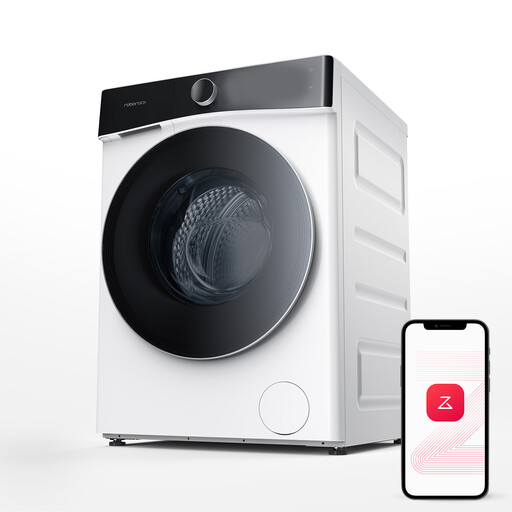 Image unavailable
White Roborock Zeo Lite Zeo-Cycle, 10 kg / 6 kg
Combine washing and drying in one appliance. This model has a stated capacity of 10 kg for washing and 6 kg for drying. Keep to the 6 kg limit when running a back-to-back cycle.
The model features app control and the LintClear system. Before you decide, check its dimensions and whether your laundry products are compatible with automatic dosing.
View on Joybuy
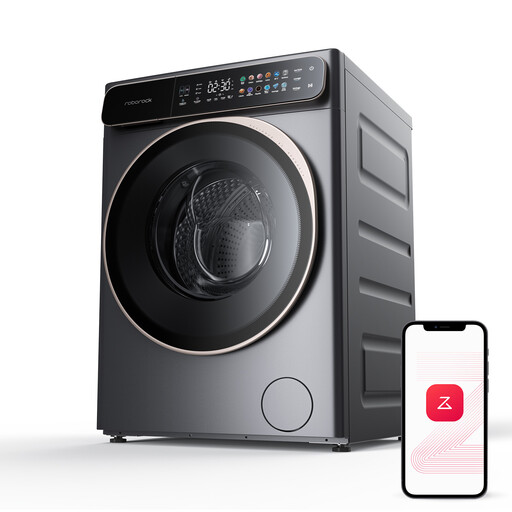 Image unavailable
Grey Roborock Zeo One, 10 kg / 6 kg washer-dryer
Make the most of a single floor space, with a stated washing capacity of 10 kg and drying capacity of 6 kg. If you wash a full load, you’ll need to reduce it before running a back-to-back drying cycle.
The model features Zeo-Cycle, LintClear and automatic dosing. Check the instructions for its dimensions, cycle times and guidance on the detergent to use.
View on Joybuy
 Image unavailable
Hotpoint CHD84MWBSEE, 8 kg heat pump tumble dryer
Dry up to the stated 8 kg capacity alongside a separate washing machine; this appliance doesn’t wash clothes.
Check its dimensions and make sure you can access it for maintenance. If you’re planning a stacked set-up, confirm that the tumble dryer, washing machine and kit are compatible before installation.
View on Joybuy
Frequently asked questions
Can a washer-dryer dry the whole load it has washed?
Not if the load exceeds its drying capacity. Check both figures for the model you’re considering. For example, Samsung lists a washing capacity of 9 kg and a drying capacity of 6 kg for the WD90T954DSH.
Can you stack any tumble dryer on top of any washing machine?
No. You need to check that a kit is designed for both model numbers and follow its installation restrictions. For example, Bosch requires a washing machine depth of over 55 cm for the WTZ2741X, while Samsung limits the SKK-ZSD to a specified pair of models.
Does a heat pump tumble dryer need a vent to the outside?
No. A condenser tumble dryer with a heat pump doesn’t need an exhaust vent to the outside. However, check the instructions to see how water is collected or drained, and what installation conditions apply to the room.
Is a new vented tumble dryer still an option for this project?
For the domestic tumble dryers concerned that have been placed on the EU market since 1 July 2025, the European Commission says new ecodesign requirements mandate heat pump technology. This market requirement doesn’t automatically mean that an older or second-hand appliance is prohibited from use; a vented model also needs an outlet to the outside.
What maintenance does a separate tumble dryer need?
Clean the fluff filter as instructed in the manual; Electrolux recommends cleaning it after every cycle on the appliances concerned. If the model has an accessible condenser, follow the manufacturer’s guidance on checking and cleaning it too.


