If you can install only one appliance and can adjust your laundry loads to suit the drying capacity, a washer-dryer gives you a way to wash and dry clothes in a small home. A stacked washer and dryer may be a better option if you often dry large loads and have enough height, with appliances and stacking kit that are compatible. If depth or access to your home is the main constraint, consider a compact washing machine with a separate drying solution, and check where your laundry can realistically dry.
Who is each set-up suitable for?
Homes with space for just one appliance
A washer-dryer combines both functions without the need to install two appliances side by side. Before choosing, check how much laundry it can dry in one go and how long the full cycle takes, not just its washing capacity.
Homes that often dry large loads
A washer-dryer’s drying capacity may be lower than its washing capacity, as UFC-Que Choisir points out. If you have enough height and the appliances are compatible, a stacked washer and dryer is another set-up worth considering.
People with limited space or awkward access
Measure the space and the route to it, then check how much clearance is needed to open the doors. For a stacked set-up, also check the total height and whether the stacking kit is compatible.
What should you check before choosing?
Washer-dryer
Consider this if: there’s room for only one appliance in your home and your laundry loads are within its drying capacity.
Bear in mind: you may need to split a washed load before drying. UFC-Que Choisir also notes that drying cycles take longer than with a conventional tumble dryer.
Stacked appliances
Consider this if: you often dry large loads and have enough height for two stackable appliances.
Make sure: the appliances, stacking kit and installation are compatible. Bosch instructions, for example, specify using a kit designed for the tumble dryer.
Compact washing machine with separate drying
Consider this if: your home’s dimensions rule out a standard appliance or a stacked set-up, and you have a practical space for drying separately.
Bear in mind: drying isn’t built into the washing machine. Check how much room and organisation your chosen solution will need.
| Priority |
What to check |
Your needs |
| Drying capacity |
Compare the stated washing and drying capacities of the exact model, in kg. A washing capacity of 9 or 10 kg doesn’t mean the same drying capacity: the Whirlpool and Electrolux specifications cited here include 9/7 kg and 10/6 kg combinations. |
I want to dry my laundry without always having to take some of it out after washing. |
| Cycles and energy use |
For a washer-dryer, compare the full wash-and-dry cycle like for like across models: energy, water, duration and capacity. The European Commission lists these separately from wash-only data in EPREL. Also check the energy label, as recommended by ADEME. |
The time it takes to get dry laundry and the energy and water used for drying matter to me, not just the wash cycle. |
| Space and installation |
Check the width, depth and height, access and door clearance. For a stacked set-up, check the instructions for both appliances and the kit: some of the Bosch kits mentioned require a standard washing machine with a depth of more than 55 cm. |
I need to be able to install the appliances in the available space, without assuming two models can be stacked just because they’re a similar width. |
| Separate drying |
If you’re considering a compact washing machine, decide how you’ll dry your laundry and how much space it will take. Check the dimensions of your chosen solution and how much laundry you’ll need to dry there. |
Limited depth is my main constraint, but I still need a practical way to dry laundry at home. |
What mistakes should you avoid?
-
Looking only at washing capacity
An appliance rated for a 9 or 10 kg wash may only dry 6 or 7 kg. A load filled to the washing capacity may therefore need to be dried in two batches.
Compare both capacities for the exact model and choose one that can dry the amount of laundry you want to dry in one go.
-
Comparing wash-only figures
Wash-only figures don’t tell you how much water and electricity the full wash-and-dry cycle uses, or how long it takes. The European Commission lists these cycles separately in EPREL.
Compare the full cycle on one washer-dryer with the full cycle on another, at a similar capacity.
-
Stacking two appliances without checking they’re compatible
Bosch instructions say to check that the models are suitable for stacking, use the correct kit and level the washing machine. Kit requirements don’t automatically apply to other kits.
Choose a compatible pair of appliances and stacking kit, then check the total height, depth and instructions before installation.
-
Confusing a quick programme with a full load cycle
Whirlpool’s advertised 45-minute programme for the BIWDWG96146 FR model is for 1 kg of laundry; it doesn’t tell you how long a full-capacity wash-and-dry cycle takes.
Check the load size for each programme and the duration of the full cycle that matches your usual needs.
Which brands should you consider for each set-up?
Electrolux
Electrolux describes its EW9W1166RA washer-dryer as a heat pump model with a 10 kg washing capacity and a 6 kg drying capacity.
- Its stated washing and drying capacities make it easy to check how much laundry it can dry.
- A 10 kg washing capacity doesn’t mean it can dry 10 kg: check the label for the version you’re considering, too.
Whirlpool
Whirlpool offers, among other models, the freestanding 9/7 kg FFWDB976258BCVFR washer-dryer and the integrated 9/6 kg BIWDWG96146 FR.
- The distinction between freestanding and integrated models can help you work out what to check about the space available.
- These two models have different capacities. Check the exact version and its dimensions before choosing.
LG
LG’s specifications for the F964R76WSTA and F96400WHR models both list a 9 kg washing capacity and a 6 kg drying capacity.
- For the F964R76WSTA, LG describes two drying modes: water and air.
- Check the drying mode and cycle data for the exact model before comparing its energy use with another appliance.
Bosch
Bosch is included here as a reference for stacked installations, with stacking kits designed for compatible appliances.
- The WTZ2741C kit specification states that a standard washing machine must be more than 55 cm deep and that a kit designed for the tumble dryer is required.
- This doesn’t guarantee compatibility with another pair of appliances or a different kit, so check the exact model numbers.
Washer-dryers available on Joybuy
These two appliances combine washing and drying for homes with space for just one appliance. Both have a stated drying capacity of 6 kg, so bear this in mind if you wash larger loads in one go.
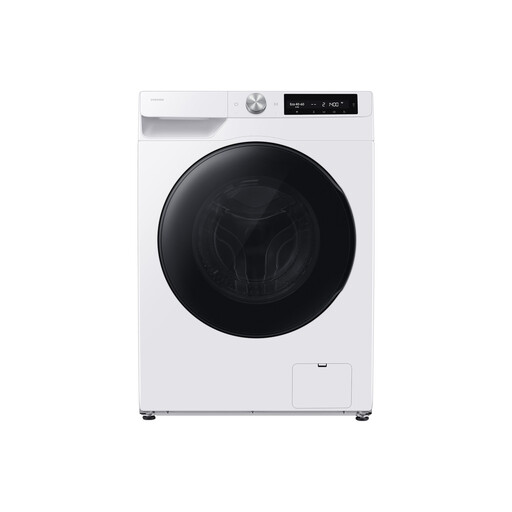 Image unavailable
Samsung WD10HG6U34BEU3 washer-dryer, 10/6 kg
This model offers a 10 kg washing capacity and a 6 kg drying capacity, letting you wash and dry with one appliance. Loads of more than 6 kg will need to be split or dried in batches. Check the installation dimensions and full-cycle data for the version you choose.
View on Joybuy
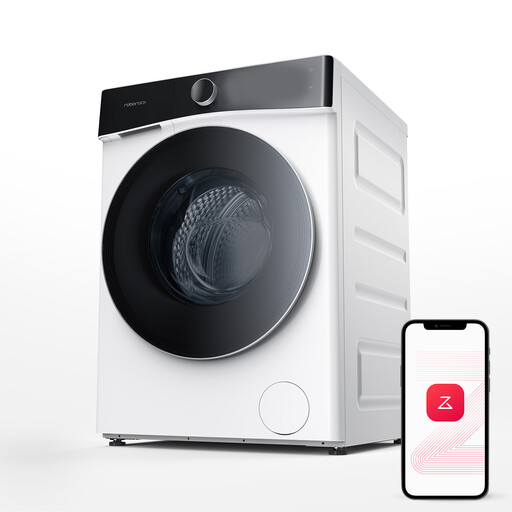 Image unavailable
Roborock Zeo Lite Zeo-Cycle and LintClear, 10/6 kg
This washer-dryer offers a 10 kg washing capacity and a 6 kg drying capacity, so larger loads will need to be split or dried in batches. The product name mentions Zeo-Cycle, the LintClear system and app control. Check the dimensions and full-cycle data for the version you choose.
View on Joybuy
Frequently asked questions
Why can’t a 9/6 kg washer-dryer dry a 9 kg load in one go?
The 9 kg figure is its rated washing capacity, while 6 kg is its rated drying capacity. These are two separate figures under European regulations. If your load weighs more than 6 kg, reduce it or plan to dry it in several batches.
Which figures should you compare between two washer-dryers?
Start by comparing figures for the same cycle: capacity, energy use, water use and the duration of the full wash-and-dry cycle. The European Commission lists this separately from wash-only data in EPREL, so washing figures alone don’t tell you what to expect when drying as well.
Can you put any tumble dryer on top of a washing machine?
No. Check that the appliances can be stacked and that a suitable kit is available. Bosch instructions also say to level the washing machine. The depth requirements listed for some of its kits don’t apply to every model.
Is a washer-dryer always the best choice for a small home?
Not necessarily. It’s worth considering if you can install only one appliance and its drying capacity is enough for your loads. If you often dry larger loads and can fit a compatible stacked set-up, compare the two options. If depth is your main constraint, check whether a compact washing machine with a separate drying solution would work in your home.


