Room for one appliance on the floor
A washer-dryer lets you wash and dry in the same space. Check that it fits, allowing for the door to open and the connections, then compare its drying capacity with your usual loads.


If you only have room for one appliance and can’t stack two, a washer-dryer combines both functions, provided your usual loads fit within its drying capacity, which is often lower than its washing capacity. If you have enough headroom, a stacking kit confirmed as compatible lets you keep two separate appliances; if you have space for both side by side, you can also wash one load while another dries. In every case, check the actual dimensions and, for a washer-dryer, the duration and energy and water consumption of the complete cycle.
The number of available spaces isn’t the only factor: height, depth and the amount of laundry you need to dry matter too.
A washer-dryer lets you wash and dry in the same space. Check that it fits, allowing for the door to open and the connections, then compare its drying capacity with your usual loads.
A continuous cycle saves you moving laundry to another appliance, but the load must stay within the washer-dryer’s capacity. UFC-Que Choisir points out that a washer-dryer’s drying capacity is lower than its washing capacity.
A stacked setup can fit a washing machine and a separate tumble dryer into the same floor space. It’s only an option if the models, their depths and the stacking kit are confirmed as compatible by the manufacturer.
First check what your space can accommodate, then compare the amount of laundry you need to dry with the details of the programme you’ll actually use.
Worth considering: if you can install only one appliance and want to wash and dry without transferring your laundry.
Bear in mind: the combined load is limited by the drying capacity, and you’ll need to check the duration and water and electricity consumption of a complete cycle.
Worth considering: if there’s enough headroom to stack the two models using a kit confirmed as compatible.
Allow for: an installation that follows the manufacturers’ instructions, and transferring laundry between the appliances.
Worth considering: if you have space for both, particularly if you want to wash and dry different loads at the same time.
Allow for: more floor space and transferring laundry after washing.
| Criteria | What to check | What I need |
|---|---|---|
| Load to dry | Compare the washing and wash-and-dry capacities in kg. For a continuous cycle, go by the drying limit rather than the washing capacity alone. | I want to dry my usual load without having to take out damp laundry after washing. |
| Duration and consumption | Check the duration, electricity and water use for the wash-and-dry cycle, along with the load size and programme. Compare like-for-like cycles, rather than a complete cycle with a wash-only programme. | If I regularly run both stages one after the other, I need to know how long the appliance will be in use and the figures for that type of use. |
| Dimensions | Measure the width, height and depth, then allow for the door to open and the clearances specified in the manual for connections and installation. | My space needs to fit the installed appliance, not just its front dimensions. |
| Stacking | Check the model numbers of both appliances, the permitted depths and the kit recommended by the manufacturer. Also check the fixing and stability instructions. | I have enough headroom, but I don’t want to assume two appliances can be stacked just because they’re a similar width. |
A washer-dryer may be able to wash more laundry than it can dry in the same cycle. If your load exceeds the drying limit, you’ll need to reduce it or dry it in batches.
Compare your usual load with the wash-and-dry capacity, which is separate from the wash-only capacity.
The class and figures for a wash-only programme don’t tell you the duration or consumption of a programme that washes and then dries. UFC-Que Choisir measures these stages separately in its test procedure.
For each model you’re considering, check the wash-and-dry figures and compare them using the same programme and load size.
If the appliance is too deep, it may not fit in an alcove or the door may not open properly, even if the front fits between the units.
Measure the space and delivery access, then compare them with the appliance’s full dimensions and the clearances specified in its manual.
Stacking requirements vary between appliances. Electrolux and Bosch, for example, specify depth limits for some of their kits; the availability of a kit doesn’t mean any two appliances are compatible.
Confirm that the kit is suitable for the exact model numbers of both machines, and follow the manufacturer’s fixing and installation instructions.
These manufacturer models illustrate the information worth comparing; they’re not a brand ranking or an indication of availability on Joybuy.
Bosch lists the WNG24402FR washer-dryer as having a 9 kg washing capacity and a 6 kg wash-and-dry capacity.
Electrolux lists its YW7IW1064DV washer-dryer as having a 10.5 kg washing capacity and a 6 kg drying capacity.
LG includes the F964V50WRS and F964X71WSTA washer-dryers in its range, both with a 9 kg washing capacity and a 6 kg drying capacity.
Samsung lists the WD10HG6U34BEU3 washer-dryer as having a 10 kg washing capacity and a 6 kg drying capacity.
These options combine washing and drying in one appliance. They’re worth considering if your home can’t accommodate two machines; focus on the amount of laundry you actually dry and the dimensions of the model you choose.
 Image unavailable
For both functions in one space, this model offers an 11 kg washing capacity and a 6 kg drying capacity. If you want to run both stages without removing laundry, stick to the 6 kg limit. Also check the dimensions and installation instructions in the manual.
 Image unavailable
This washer-dryer combines a 10 kg washing capacity with a 6 kg drying capacity. Compare the latter with your usual loads, then check the complete-cycle figures and the manual to make sure it’s suitable for your installation.
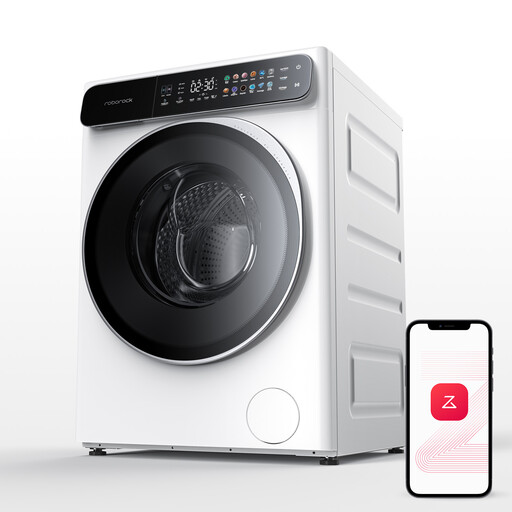 Image unavailable
This two-in-one model has a 10 kg washing capacity and a 6 kg drying capacity. Before relying on a cycle that runs without intervention, check that your load is within the drying limit. Also check the dimensions and the combined-cycle figures for the model.
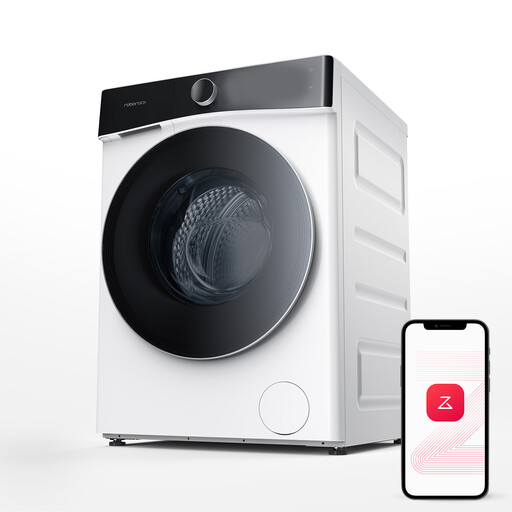 Image unavailable
For washing and drying in one appliance, the Zeo Lite offers a 10 kg washing capacity and a 6 kg drying capacity. Its product details mention automatic dosing and the LintClear system; check the dimensions, installation instructions and wash-and-dry cycle figures separately.
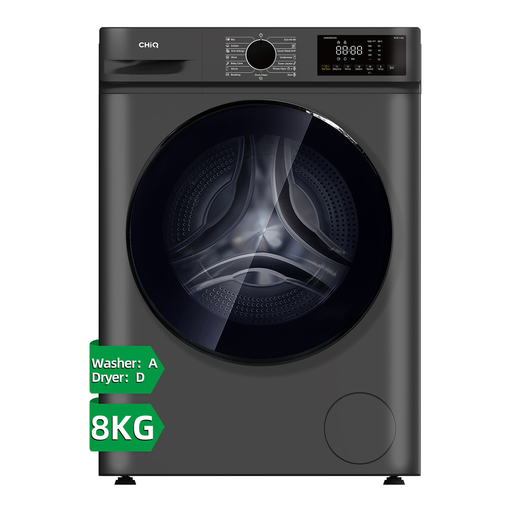 Image unavailable
With an 8 kg washing capacity and a 5 kg drying capacity, this model’s continuous cycle needs to be sized according to the load you want to dry. If you’re considering it for a narrow alcove, make sure you confirm its exact dimensions: the measurements in its title and description don’t match.
Not if the load exceeds the model’s drying capacity. Bosch, for example, lists the WNG24402FR as having a 9 kg washing capacity and a 6 kg wash-and-dry capacity; Electrolux lists the YW7IW1064DV as having a 10.5 kg washing capacity and a 6 kg drying capacity. For loads over 6 kg, you’ll need to remove some laundry or dry it in batches.
Compare wash-only programmes with wash-only programmes, and wash-and-dry cycles with the same type of cycle on another model. Check the load size and programme that go with the electricity, water and duration figures: wash-only figures don’t describe a complete cycle.
No. Compatibility needs to be confirmed for both model numbers and the specific kit. Electrolux states that its STA8GW4 kit is for front-loading appliances 47 to 60 cm deep, while Bosch requires a washing machine more than 55 cm deep for its 00717525 kit. These dimensions don’t replace checking which models are approved for use.
Check the space and electrical installation before choosing an appliance. Promotelec highlights the importance of earthing and 30 mA RCD protection for a washing machine installed in a shower room or bathroom. If you’re unsure about your installation, have it checked by a qualified professional.