Which factors make the difference?
Start by working out whether you can realistically install one or two appliances. Then compare how much laundry you need to dry per load and the figures for the cycle that matches how you’ll use it.
Washer-dryer
Worth considering: when you only have room for one appliance and want to wash and dry your laundry without transferring it between machines.
The trade-off: the drying load is smaller than the maximum washing load, so you may need to remove some laundry before drying.
Separate washing machine and tumble dryer
Worth considering: if you have room for two appliances, or if the instructions explicitly allow the selected models to be stacked.
The trade-off: you’ll need space for the tumble dryer and will have to transfer laundry between the two appliances.
| Factor |
What to check |
Who it matters to |
| Available space |
Overall dimensions, door clearance and installation gaps specified in the instructions; stacking-kit compatibility if the appliances are stacked. |
If a second appliance would block access or won’t fit in the room, having space for just one appliance becomes the deciding factor. Around 42% of consumers would put this constraint first. |
| Drying load and frequency |
Drying capacity in kg, which differs from washing capacity, and the cycle time for the load you have in mind. |
If you need to dry large loads or several loads in a row, being able to avoid removing laundry between washing and drying matters more than saving space. This would be the priority for around 33% of consumers. |
| Energy and water use, and damp |
Water, energy and full-cycle duration on the label or in EPREL; ventilation conditions if you also dry laundry in the room. |
If I dry laundry often, I want to compare energy and water use without having to leave damp laundry in a poorly ventilated room. This would be the top consideration for around 25% of consumers. |
Brands and models to consider
These examples let you compare specific set-ups; the features of one model shouldn’t be assumed to apply to every product from the same brand.
Bosch
Bosch France lists the WNG24402FR washer-dryer and the WQG24502FR heat-pump tumble dryer.
- The WNG24402FR is rated at 9 kg for washing and 6 kg for a wash-and-dry cycle; the WQG24502FR has a drying capacity of 8 kg.
- Bosch gives the separate tumble dryer’s dimensions as 842 × 598 × 613 mm. You’ll still need to check the clearances required for installation.
LG
LG France lists the F164R51WRS washer-dryer, rated at 11 kg for washing and 6 kg for drying.
- Its stated dimensions are 600 × 850 × 565 mm, giving you a useful starting point when checking whether it will fit.
- An 11 kg washing capacity doesn’t mean it can dry 11 kg. LG also gives separate classes for washing alone and washing and drying.
Electrolux
Electrolux France lists the PerfectCare 700 EW7W4954CA washer-dryer, as well as separate heat-pump tumble dryers.
- The EW7W4954CA is rated at 9 kg for washing and 5 kg for drying, so you can compare the two load sizes before choosing.
- Electrolux gives a duration of 6 h 20 for its full-load Eco 40-60 wash-and-dry cycle. Check whether this suits how often you do laundry.
Appliances for the space you have
This selection includes washer-dryers that combine both functions in one space, and separate tumble dryers for homes that can accommodate an extra appliance. Before choosing, check the installation dimensions and cycle information for the model you’re considering.
 Image unavailable
Samsung WD11DG6B85BEU3, 11/6 kg washer-dryer
Worth considering if you only have room for one appliance and can keep consecutive loads within its drying capacity.
Stated capacities: 11 kg for washing and 6 kg for drying. Check the instructions for the space needed with the door open and the installation clearances.
View on Joybuy
 Image unavailable
Samsung WD10HG6U34BEU3, 10/6 kg washer-dryer
A way to combine washing and drying in one appliance if there’s no room for a separate tumble dryer.
Stated capacities: 10 kg for washing and 6 kg for drying. Before planning a continuous wash-and-dry cycle, compare its duration and energy and water use on the model’s label; also check the door clearance.
View on Joybuy
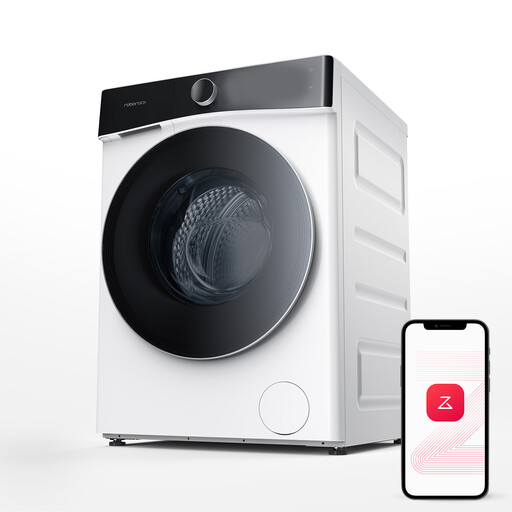 Image unavailable
Roborock Zeo Lite, 10/6 kg washer-dryer
Another washer-dryer to consider if you’d rather not install a second appliance.
Stated capacities: 10 kg for washing and 6 kg for drying. Measure the space and check the instructions and full-cycle information before choosing this model.
View on Joybuy
 Image unavailable
Hotpoint CHD84MWBSEE, 8 kg heat-pump tumble dryer
Worth considering if you already have a washing machine and space for a separate tumble dryer.
Stated capacity: 8 kg; stated energy class: C. Allow for transferring laundry and check the model’s dimensions, clearances and energy and water use.
View on Joybuy
 Image unavailable
Comfee CD08EHP05W-HR, 8 kg heat-pump tumble dryer
A way to add a separate drying appliance to your existing washing machine if your home has room for one.
Stated capacity: 8 kg; stated energy class: D. Check the dimensions, clearances and detailed energy and water use before planning the installation.
View on Joybuy
Frequently asked questions
Can a washer-dryer dry the whole load it has just washed?
Not if the load exceeds its drying capacity. The LG F164R51WRS, Bosch WNG24402FR and Electrolux EW7W4954CA models show how washing and drying capacities can differ. To complete both stages without removing any laundry, stick to the full-cycle capacity stated for your chosen model.
What should I measure before ordering?
Measure the available height, width and depth, as well as the delivery route and the space needed to open the door. Compare these measurements with the dimensions and clearances required in the instructions for the specific appliance.
Can you stack a tumble dryer on top of a washing machine?
Only if the instructions for the models in question allow it and specify a compatible stacking kit. Similar widths alone don’t guarantee stability, secure fixing or enough access for maintenance.
How do I compare a washer-dryer’s energy and water use?
Compare the figures for a complete wash-and-dry cycle, not just washing. The European information provided by the European Commission distinguishes between these uses. For each, check the capacity, water, energy and duration figures for the relevant model and programme.
What should I check about the electrical connection?
Make sure the socket and electrical installation are suitable for each appliance and follow the instructions; don’t improvise the connection. If your home’s wiring is old or you have any concerns about it, ask a qualified professional to check it before installing the machines.


