If you only have space for one appliance and can’t easily dry clothes on a rack, a washer-dryer lets you wash and dry in one go. Choose its capacity based on the load you want to dry, which is generally smaller than the washing capacity, as UFC-Que Choisir points out. If you can fit two appliances after all, consider this option if you dry clothes frequently, then compare the full footprint, cycle options and installation requirements of the models you’re considering.
Who is this choice for?
People with space for just one appliance
If you can only install one appliance and don’t want to leave a clothes airer up all the time, a washer-dryer is a space-saving solution. However, you’ll need to keep loads within its drying capacity, which is generally lower than its washing capacity, according to UFC-Que Choisir.
Households that often dry several loads
If you regularly need to dry large loads, check how much laundry the machine can handle in a continuous wash-and-dry cycle. Bosch and Electrolux product specifications include 8/5 kg configurations, for example: washing capacity and drying capacity aren’t the same.
People mindful of cycle times and consumption
If you need your laundry dried quickly or want to keep consumption in mind, compare the figures for the wash-and-dry programme, not just the washing programme. UFC-Que Choisir measures cycle time and water and electricity consumption separately in its tests.
Which factors should you weigh up?
A standalone washing machine may also suit you if you have somewhere to dry clothes from time to time, but it won’t give you machine-dried laundry. If you need to dry clothes in a machine, the space available will determine which setups are possible.
Washer-dryer
Consider this if: you only have space for one appliance and want to wash and then dry without moving the laundry.
Bear in mind: the load for a continuous cycle is limited by the drying capacity, and drying also takes time, water and electricity, according to UFC-Que Choisir.
Two separate appliances
Consider this if: you can install a separate tumble dryer and regularly dry large loads.
Bear in mind: this setup takes up space and means moving laundry between appliances; installation requirements depend on the models you choose.
| Factor | What to check | Who it matters to |
|---|
| Space for one appliance |
The appliance’s full dimensions and whether it can run a continuous wash-and-dry cycle. |
If I can’t fit two machines or keep a clothes airer up permanently, I’d prioritise a single appliance; around 31% of consumers in this situation would put this need first. |
| Drying capacity |
Separate washing and drying capacities, in kg, particularly for a continuous cycle. |
If I dry large loads, I want to avoid taking laundry out between washing and drying; around 25% of consumers in this situation would make this their priority. |
| Cycle time and consumption |
Duration, kWh per 100 cycles and litres per cycle for the specific model’s wash-and-dry programme. |
If I plan to use the drying function often, how long my laundry is tied up and the resources used will guide my choice; around 25% of consumers in this situation would prioritise these factors. |
| Installation |
Maximum depth, door clearance, connections and clearances specified in the instruction manual. |
If the appliance needs to fit in an alcove or pass through a narrow access point, it’s essential that it’s suitable for my home; around 19% of consumers in this situation would make this their top criterion. |
Mistakes to avoid
-
Assuming the washing capacity is the same as the drying capacity
An 8/5 kg washer-dryer can wash up to 8 kg, but its stated drying capacity is 5 kg. UFC-Que Choisir notes that this difference is typical of two-in-one appliances.
Start with the amount of laundry you want to dry in one go, then check both capacities for the model.
If the wash load exceeds the drying capacity, you may need to take some laundry out and run another drying cycle.
-
Comparing only the washing energy rating
The rating and consumption figures for washing alone don’t tell you about the wash-and-dry programme. Electrolux and Beko model specifications list these uses separately.
To compare models, look at the figures for the complete cycle on a like-for-like basis: capacity, energy, water and programme duration.
-
Measuring only the width of the alcove
Depth and the space needed to open the door matter too. For the F964V52IRSA, LG lists an overall depth of 565 mm, 620 mm including components and 1 100 mm with the door open.
Measure the space, front access and delivery route, then compare them with the dimensions and clearances required for the model you choose.
-
Assuming the word ‘condensation’ tells you everything about installation
The type of condensation listed on a product page doesn’t, on its own, tell you all the connections and clearances needed in your home.
Check the installation instructions for the exact model before planning to fit it under a worktop, in an alcove or in a bathroom.
Washer-dryer brands to consider
Bosch
The range includes freestanding and integrated front-loading washer-dryers.
- Bosch’s WNA13400FF specification lists 8 kg for washing and 5 kg for a wash-and-dry cycle, with a stated depth of 590 mm.
- If you’re planning to install it under a worktop or in an alcove, also check the connections and clearances in the manual for your chosen model.
Electrolux
The range includes freestanding and built-in washer-dryers; specifications vary by model.
- Electrolux’s EW7IW2856BG specification lists 8 kg for washing and 5 kg for drying, helping you work out the right load for a continuous cycle.
- A model’s capacity and energy figures don’t apply to the entire range, so check the specifications for the version you’re considering.
LG
LG offers front-loading washer-dryers with capacities such as 9/6 kg.
- For the F964V52IRSA, LG lists washing and drying capacities separately, as well as the dimensions with the door open.
- Its cycle time, water and energy figures apply to the specified programme and model; compare them with figures measured on the same basis.
Beko
The range includes 9/6 kg washer-dryers, including the B3D596441M.
- Beko’s B3D596441M specification gives the washing and drying capacities and states that it uses water condensation.
- This information alone isn’t enough to determine installation requirements for a particular room; check the installation instructions.
Washer-dryers to consider on Joybuy
These two-in-one appliances suit homes with space for just one machine for washing and drying. Before choosing a model, compare its drying capacity with your usual loads and check its dimensions and installation requirements against the space in your home.
 Image unavailable
Samsung WD11DG6B85BEU3, 11/6 kg washer-dryer
Worth considering if you want to wash and dry with a freestanding appliance. It has a stated capacity of 11 kg for washing and 6 kg for drying, so keep continuous-cycle loads within the drying capacity and check the required clearances before installation.
View on Joybuy
 Image unavailable
Samsung WD10HG6U34BEU3, 10/6 kg washer-dryer
This model combines washing and drying in a single appliance. Its stated capacity is 10 kg for washing and 6 kg for drying, so check the figures for the complete cycle and the installation instructions before deciding where to put it.
View on Joybuy
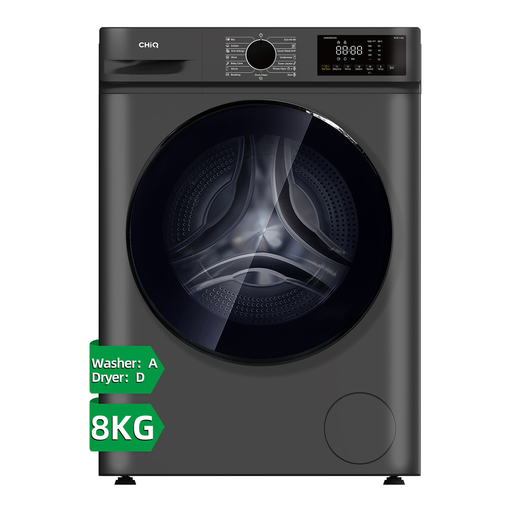 Image unavailable
CHiQ JW85882HG, 8/5 kg washer-dryer
Consider this if the stated capacity of 8 kg for washing and 5 kg for drying suits your loads. The width figures given for this version differ, so confirm its full dimensions and installation clearances before relying on it for a tight space.
View on Joybuy
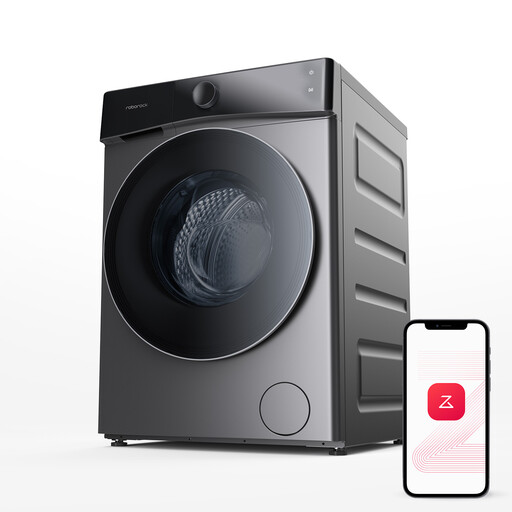 Image unavailable
Roborock Zeo Lite Gray, 10/6 kg washer-dryer
This two-in-one model has a stated capacity of 10 kg for washing and 6 kg for drying. If you’re planning to run a continuous cycle, size the load to the 6 kg drying capacity. Also check the model’s dimensions, full-cycle figures and installation requirements.
View on Joybuy
Frequently asked questions
Can you wash 8 kg and then dry it all in an 8/5 kg washer-dryer?
No, not in a single wash-and-dry cycle with the maximum washing load: an 8/5 kg configuration has a drying capacity of 5 kg. You can reduce the load from the start or take some laundry out after washing and dry it separately.
Which energy figures should I compare if I dry laundry often?
Compare the figures for the wash-and-dry programme, which are separate from those for washing alone. For the models you’re considering, compare energy use, water consumption and the duration of the complete cycle on a like-for-like basis, rather than relying on the washing rating alone.
What should I measure before installing a washer-dryer in an alcove?
Measure the available height, width and depth, as well as the space needed to open the door. Then check the instructions for the exact model to confirm the required clearances and that its connections and power supply are compatible with your existing setup.
What should you do with an old appliance in France?
An old washing machine or tumble dryer can be taken to a collection point or recycling centre for electrical and electronic equipment, as advised by the Ministry for Ecological Transition. The ministry also explains the ‘one-for-one’ take-back scheme when you buy an equivalent appliance; check the take-back options available for your purchase.


