If you only have room for one appliance, a washer-dryer combines both functions. To run wash and dry cycles one after the other without removing any laundry, however, you’ll need to keep the load within its drying capacity. Two separate appliances are better suited to frequent washing, as one load can dry while the next is being washed. Installation, particularly when stacking them, does require a few extra checks. UFC-Que Choisir also recommends comparing programme times and energy and water use, rather than looking at capacity alone.
Which set-up is right for you?
If you only have room for one appliance
A washer-dryer means you don’t need to find space for a second appliance. However, you’ll need to keep each load within the drying capacity, which is generally lower than the washing capacity, according to UFC-Que Choisir.
For households with frequent laundry loads
With two appliances, one load can dry while another is being washed. This is especially useful if your laundry baskets fill up quickly or bulky items mean you can’t dry enough in a single load.
If you’re thinking about day-to-day use
If water and electricity use, noise and maintenance are important to you, compare the figures for the programmes you’ll use and each appliance’s installation requirements, not just how much space it takes up.
What should you compare?
Start by checking whether your room can accommodate one appliance or a stable stacked set-up. Then compare how much laundry you need to dry in one go and how long each set-up ties up the appliances.
Washer-dryer
Worth considering : when you only have room for one appliance and your loads are within its drying capacity.
Bear in mind : the next wash has to wait until drying is finished, unless you stop the cycles from running one after the other.
Separate washing machine and tumble dryer
Worth considering : if you do laundry frequently and would benefit from running both appliances at the same time.
Bear in mind : even when stacked, the appliances need a compatible and stable installation, as UFC-Que Choisir points out.
| Consideration |
What to check |
Who is this important for? |
| Available space |
Measure the width, depth and height, and allow for the clearances specified in the manuals. If you’re stacking the appliances, check that they’re compatible. |
If your utility room, kitchen or bathroom only has room for one laundry area, saving floor space matters more than how quickly the appliances can process loads; around 30% of consumers are said to prioritise this. |
| Load size and washing routine |
Compare washing and drying capacities in kg. Check the maximum load for the programmes you plan to use. |
If you need to get through several laundry baskets in a row, having to remove laundry before drying can disrupt your day. Around 29% of consumers are said to prioritise drying capacity and being able to run loads one after another. |
| Cycle times and energy and water use |
Compare the time, water and electricity figures for the relevant programmes, particularly the wash-and-dry cycle on a washer-dryer. |
If you need your laundry back quickly and run cycles regularly, waiting times and running costs become decisive factors; they are said to be the main concern for around 24% of consumers. |
| Installation and maintenance |
Check the connections, stability, filter access and how collected water is handled, depending on the model. |
If connections or access to the appliances are limited in your room, being able to install and maintain everything easily is key; around 17% of consumers are said to put this need first. |
Mistakes to avoid
-
Confusing washing capacity with drying capacity
According to UFC-Que Choisir, a washer-dryer generally holds less laundry for drying than for washing. If you fill the drum to its washing capacity, you may need to remove some laundry before drying.
To run a cycle from start to finish without intervention, load the drum according to the drying capacity and the programme you’re using.
-
Focusing only on the space saved by an all-in-one appliance
A combined cycle ties up the appliance until drying is complete. UFC-Que Choisir assesses its duration and energy and water use separately, including the water used during drying.
Compare the figures for the wash-and-dry cycle with those of the programmes that match your usual routine.
-
Planning to stack appliances without checking they’re compatible
Stacked appliances need to be stable. UFC-Que Choisir says they should be front-loading models of similar dimensions, with the tumble dryer placed on top of the washing machine.
Check the manuals for compatibility and make sure the floor, sockets, water supply and drainage are suitable before ordering.
Depending on your set-up, you may need a stacking kit or changes to the connections.
-
Relying on an indoor clothes airer that’s hard to fit in
According to ADEME, air-drying laundry indoors adds moisture to the air. Even if a clothes airer takes up little space when folded away, you still need somewhere to put it while the laundry is drying.
If you still plan to air-dry some fabrics, choose a spot where the air can circulate and make sure there’s enough room to move around while the laundry is hanging.
Brands to know
There are no brands to feature in this section.
Washer-dryers to consider on Joybuy
These appliances wash and dry in a single machine, so they’re worth considering if avoiding a second appliance on the floor is your priority. For each model, keep the load within its drying capacity when running a wash and dry cycle back to back. Compare the dimensions and programme details before you buy.
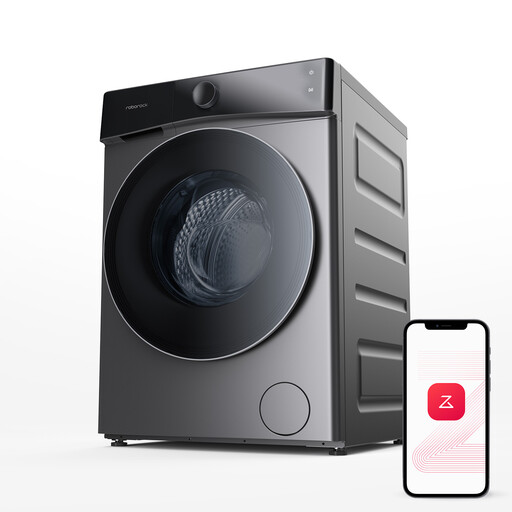 Image unavailable
Roborock Zeo Lite Gray, 10 kg washing and 6 kg drying capacity
Combines washing and drying in one appliance, with a stated drying capacity of 6 kg compared with 10 kg for washing.
The product name lists 27 washing programmes, app control, the LintClear system and automatic dosing. Check the dimensions and combined-cycle details to make sure they suit your space and needs.
View on Joybuy
 Image unavailable
Samsung WD11DG6B85BEU3, 11 kg washing and 6 kg drying capacity
A single appliance with a stated drying capacity of 6 kg, compared with the 11 kg washing capacity.
Check the product details and manual for the WD11DG6B85BEU3 variant before comparing its dimensions, cycle time and energy and water use.
View on Joybuy
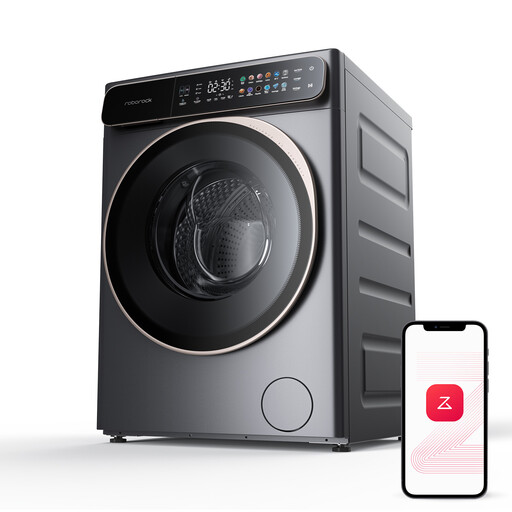 Image unavailable
Roborock Zeo One Gray, 10 kg washing and 6 kg drying capacity
Wash and dry with a single appliance, keeping loads for a continuous cycle within the 6 kg drying capacity.
The product name mentions Zeo-Cycle, LintClear and automatic dosing. Compare the dimensions, cycle time and energy and water use for the wash-and-dry cycle before choosing.
View on Joybuy
 Image unavailable
Samsung WD10HG6U34BEU3, 10 kg washing and 6 kg drying capacity
Keep just one appliance on the floor, with a stated washing capacity of 10 kg and a drying capacity of 6 kg.
Before choosing this model for consecutive wash and dry cycles, check its installation dimensions and the wash-and-dry programme’s duration, water use and electricity consumption.
View on Joybuy
Frequently asked questions
Can a washer-dryer dry a full wash load?
Not necessarily. According to UFC-Que Choisir, its drying capacity is lower than its washing capacity. If you want to go straight from washing to drying, load the drum according to the drying limit for the programme you’ve chosen.
Which tumble dryer should you choose if you don’t have an external vent?
A condenser tumble dryer doesn’t need an external air vent: depending on the model, water is collected in a tank or drained away. A vented tumble dryer sends moist air outside instead. Check the manual for maintenance and installation requirements too.
Can you stack any washing machine and tumble dryer?
No. UFC-Que Choisir recommends front-loading appliances of similar dimensions, with the tumble dryer on top of the washing machine. Check the manuals to make sure the models are compatible and find out which stacking accessories you’ll need.
How do you compare a washer-dryer’s energy and water use?
Compare the figures for the wash-and-dry cycle, not just the washing programme. The energy label and product information sheet show the figures for the reference programme. Also consider the stated load and cycle time to check that the programme suits your needs.
What maintenance does a tumble dryer need?
Follow the manual for your model when cleaning the filter, emptying the water tank and, where applicable, cleaning the condenser. UFC-Que Choisir recommends cleaning the filter after every use. Check the care labels on your clothes before tumble-drying them too.


