If you only have room for one appliance and can’t air-dry your washing, a washer-dryer combines washing and drying, provided you keep each load within its drying capacity. If you often dry large loads or do several loads back to back, two appliances may be more practical if you have space: one can wash while the other dries.
Which set-up suits you?
Households with space for one appliance
A washer-dryer combines both functions in one appliance. However, check how much washing you can dry without removing any items: UFC-Que Choisir notes that a washer-dryer’s drying capacity is lower than its washing capacity.
Households that do several large loads
If you have enough space, two appliances let you wash one load while another dries. This also means you don’t have to tie up your only drum drying a load before you can start the next wash.
People who already own a washing machine
If you’re happy with your washing machine, consider adding a tumble dryer rather than replacing it. Measure the available space and check the connections and installation instructions for the model you’re considering.
What should you check before choosing?
A washer-dryer
Consider this if: you only have space for one appliance and your drying loads are within its stated capacity.
The trade-off: you may need to reduce a full wash load before drying it. UFC-Que Choisir highlights this difference in capacity in washer-dryers.
Two separate appliances
Consider this if: your home can accommodate them and you need to process several loads one after another.
The trade-off: you’ll need room for two appliances and must check their installation requirements. You can then wash one load while another dries.
Start by measuring the space, then compare the load you need to dry with the figures for a complete cycle: washing capacity alone doesn’t tell you how your laundry routine will work.
| Criteria | What to check | How it suits my needs |
|---|
| Space |
Measure the appliance and the clearance it needs. For two appliances, check whether they can be installed side by side or stacked. |
I only have room for one appliance, or I can genuinely fit a tumble dryer as well. |
| Load to dry |
Compare the washing and drying capacities separately, in kg, as well as the capacity for a combined cycle. For example, the French product information for some Bosch, LG and Siemens models cited here lists a 9 kg wash capacity and a 6 kg drying capacity. |
I want to know whether my usual load can be dried in one go, or whether I’ll need to reduce it and remove some damp washing. |
| Time available |
Check the stated duration of the wash-and-dry cycle for the exact model. Bear in mind that a washer-dryer can’t wash another load while it’s drying. |
Do I need to get through several loads quickly, or can I let the appliance finish a full cycle before starting another wash? |
| Energy and water |
Compare the figures for a complete cycle, not just washing, on the energy label or in EPREL. UFC-Que Choisir reports that most of the washer-dryers it tested use water during drying. |
I want to compare consumption figures that reflect how I’ll actually use the drying function. |
| Checking model details |
Note the exact model reference so you can look up its EPREL record. Check the durability index if shown, along with information about maintenance and spare parts. |
Beyond the advertised programmes, I want to compare model-specific data and plan for maintenance. |
Mistakes to avoid
-
Looking only at washing capacity
For a washer-dryer rated at 9 kg for washing and 6 kg for drying, a 9 kg load is above its stated drying capacity.
Compare both capacities in kg with the amount of washing you want to dry without having to intervene.
-
Comparing only the washing figures on the label
Figures for washing alone don’t describe the full cycle. UFC-Que Choisir also reports water consumption during drying for most of the washer-dryers it tested.
For the exact model, check the capacity, duration and energy and water consumption for the wash-and-dry cycle.
-
Relying on one drum for back-to-back loads
A washer-dryer can’t wash the next load while it’s drying. This sequence of cycles matters especially if you need to get several loads done quickly.
Consider how many loads you need to process and, if you have the space, think about two appliances that can run at the same time.
-
Planning for a tumble dryer without checking installation requirements
You’ll need to find space for an extra appliance, even if stacking looks like an option.
Check the dimensions, clearances, connections and compatibility of the stacking kit in the instructions for the appliances concerned.
A guide to the brands
Bosch
Bosch’s French product information includes the WNG24402FR washer-dryer, with a 9 kg wash capacity and 6 kg drying capacity, and the WNA144V0FR, with capacities of 9 kg and 5 kg respectively.
- These models let you compare two drying capacities with the same stated washing capacity.
- Check the figures for the complete cycle and the dimensions of your chosen model; capacity figures alone won’t tell you these details.
LG
LG offers all-in-one washer-dryers in France; the product information for the F96400WHR lists a 9 kg wash capacity and a 6 kg drying capacity.
- The separate capacities for each function help you plan the load for a combined cycle.
- Check the dimensions and wash-and-dry cycle figures for the exact model rather than relying on general information about the range.
Siemens
Siemens’ French product information lists the WN34A100FF at 8 kg for washing and 5 kg for drying, compared with 10.5 kg and 6 kg for the WN54C2A0FR.
- These two models show why you should check washing and drying capacities separately.
- A higher washing capacity doesn’t mean the whole load can be dried straight afterwards.
Washer-dryers available on Joybuy
These four washer-dryers are options if you want a single appliance for washing and drying. First compare their drying capacities with your usual loads, then check the dimensions and complete-cycle figures for each model.
 Image unavailable
Samsung WD11DG6B85BEU3, 11 kg / 6 kg
This washer-dryer combines washing and drying in one appliance. It’s rated at 11 kg for washing and 6 kg for drying, so you’ll need to remove some items or split the load if you want to dry a full wash load. Check the dimensions and complete-cycle figures for this model.
View on Joybuy
 Image unavailable
Samsung WD10HG6U34BEU3, 10 kg / 6 kg
If you want to dry your washing without adding a second appliance, this model is rated at 10 kg for washing and 6 kg for drying. If you wash a full load, plan to reduce the amount going into the drying cycle. Check the duration and consumption figures for this model’s complete cycle before comparing it with others.
View on Joybuy
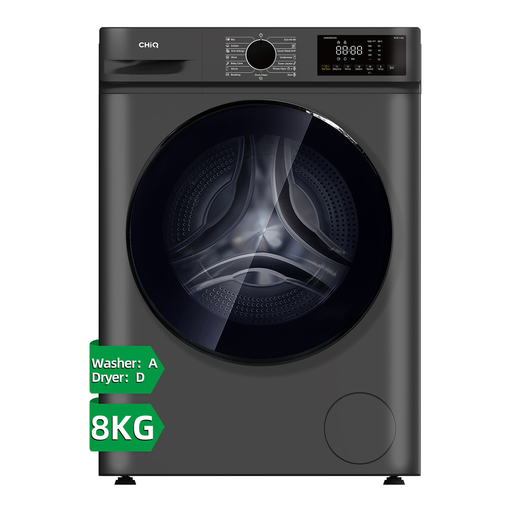 Image unavailable
CHiQ JW85882HG, 8 kg / 5 kg
This washer-dryer is rated at 8 kg for washing and 5 kg for drying, so bear the difference in mind if you want to run both functions one after another. Different dimensions are listed for this model, so confirm its actual measurements and the required clearances before deciding where to put it.
View on Joybuy
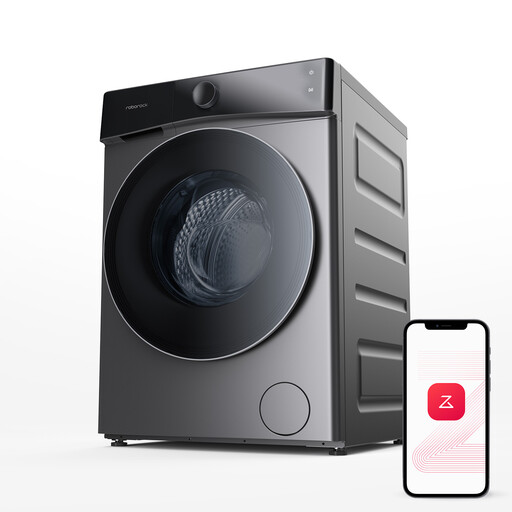 Image unavailable
Roborock Zeo Lite Gray, 10 kg / 6 kg
This washer-dryer is rated at 10 kg for washing and 6 kg for drying, so a full wash load exceeds its stated drying capacity. If you’re choosing it because you only have room for one appliance, also check the dimensions and complete-cycle figures for this model.
View on Joybuy
Frequently asked questions
Can a 9 kg / 6 kg washer-dryer dry a 9 kg load of washing?
No, not within its stated capacities: it’s rated at 9 kg for washing but 6 kg for drying. Reduce the load from the start or remove some items before drying, then check the capacity for a combined cycle on the model you’ve chosen.
What should I compare on a washer-dryer’s energy label?
Compare the wash-only and wash-and-dry cycles separately, including their capacities, duration and energy and water consumption. The European Commission’s EPREL product information lists these figures separately: the washing figure alone doesn’t describe the complete cycle.
Does a separate tumble dryer need an external vent?
Not necessarily: it depends on the model’s technology and connections. Before setting aside space, check the instructions to find out how it handles water, what clearances it needs and what the installation requirements are.
What energy label scale is used in France?
The European Commission states that the energy labels for the relevant washing machines and washer-dryers have used a scale from A to G since 1 March 2021. When choosing a washer-dryer, also check the figures for the wash-and-dry cycle on its product information.


