If you only have room for one appliance, a washer-dryer lets you run a wash and then dry your clothes in one go, provided you keep the load within its drying capacity, which is lower than its washing capacity according to UFC-Que Choisir. If you often dry large loads and can fit two appliances, check that this is possible before choosing a washer-dryer: a single appliance can’t wash a new load while it’s drying the previous one. In either case, compare the duration, water use and energy consumption of the full cycle, not just the washing figures.
Which solution is right for you?
If you only have room for one appliance
A washer-dryer combines both functions without taking up space for a second appliance. However, you’ll need to adjust each load to fit the drying capacity, which is generally lower, according to UFC-Que Choisir.
If you often dry large loads
Drying capacity and how long the appliance is in use matter more than washing capacity alone. If you have room for two appliances, separate machines give you another way to manage your laundry.
If you want to compare the full cycle
If you plan to use the drying function regularly, compare the duration of the wash-and-dry programme, along with its water and energy figures. The figures for washing alone don’t reflect the same use.
Which criteria should you prioritise?
First decide whether you need a single appliance, then choose based on the size of the load you want to dry without having to intervene.
Washer-dryer
Consider it if: you only have room for one appliance and want to run both stages without transferring the laundry.
The trade-off: a full washing load may exceed the drying limit. UFC-Que Choisir also highlights the limitations of drying with a washer-dryer compared with a separate tumble dryer.
Compact washing machine with a separate drying option
Consider it if: space requires a compact washing machine, but you don’t need every load to be dried automatically straight after washing.
The trade-off: an airer takes up space and needs good ventilation. ADEME notes that air-drying laundry releases moisture into the air indoors.
Separate washing machine and tumble dryer
Consider it if: you can install both appliances and want to wash one load while the previous one is drying.
The trade-off: you’ll need space and suitable installation conditions for two appliances, whether they’re placed side by side or stacked in line with the manufacturers’ recommendations.
| What matters |
What to check |
Who is it for? |
| Available space |
Dimensions of the exact model and the clearance needed for connections and to open the door. |
If I can only use one space, I want to combine washing and drying without blocking the way. Around 33% of consumers prioritise the space an appliance takes up. |
| Load size and drying time |
Washing and drying capacities in kilograms; whether two appliances can be installed if you do laundry frequently. |
If I often fill the machine, having to remove some of the laundry before drying makes washing more complicated. Capacity and turnaround time come first for around 27% of consumers. |
| Duration and consumption |
Duration of the full programme and its associated water and energy figures, separate from those for washing alone. |
If I use the drying function regularly, I want to know how long the laundry will be in the machine and which figures apply to the full cycle. This is the main concern for around 20% of consumers. |
| Programmes and fabrics |
Programmes suited to the fabrics you usually wash and the load limits stated in the manual. |
If my laundry has different care requirements, I want to choose a suitable programme without having to handle it several times. Around 20% of consumers put this first. |
Which mistakes should you avoid?
-
Assuming you can dry the whole load you’ve washed
The models compared have a lower drying capacity than washing capacity. For example, Bosch lists 9 kg for washing and 6 kg for the wash-and-dry cycle on the WNG24402FR; Electrolux lists 9/5 kg for the EW7W4954CA.
Start with the load you want to dry in one cycle, then check the corresponding washing capacity.
-
Comparing only the washing figures
The duration and consumption figures for the full cycle relate to a different type of use. In its test protocol published in January 2026, UFC-Que Choisir notes, among other things, that most of the models tested use water during drying.
Check the wash-and-dry figures on the label and product details for the exact model, as well as the duration of the programme you plan to use.
-
Measuring only the width of the space
Dimensions vary by model: Bosch lists a depth of 590 mm for the WNG24402FR, while Haier lists 688 mm for the HWD100-B14939. You’ll also need to make sure the appliance can be delivered and installed.
Measure the height, width and depth, the delivery route and the space in front of the door. Then compare these measurements with the manufacturer’s installation diagram.
-
Expecting one appliance to work as quickly as two
A washer-dryer can’t wash a new load while it’s drying the previous one. This matters most if you do laundry frequently.
Before choosing a two-in-one, check whether a washing machine and tumble dryer can be installed in separate spaces or stacked in line with their manuals.
Brands to compare
These examples of product ranges highlight the capacities and considerations of the models mentioned. They don’t necessarily apply to other models from the same brands.
Bosch
The range includes freestanding and integrated washer-dryers.
- According to Bosch, the WNG24402FR has a 9 kg washing capacity, a 6 kg wash-and-dry capacity and measures 848 × 598 × 590 mm.
- Its 60-minute wash-and-dry programme is for small loads. Check the permitted load before choosing it for your usual laundry.
Electrolux
The range includes models with capacities of 9/5 kg and 10/6 kg, among others.
- Electrolux lists a capacity of 9/5 kg for the EW7W4954CA and describes the EW9W1165RB as a 10/6 kg heat-pump model.
- The EW7W4954CA product details list a duration of 6 h 20 for the Eco 40-60 wash-and-dry cycle at full load. Check whether this suits the way you do your laundry.
LG
The F964R35WR is an example of a washer-dryer listed with a 9/6 kg capacity.
- LG’s product details list separate washing and drying capacities for the F964R35WR.
- To assess how it performs when drying, compare the full-cycle figures for this model, rather than figures that relate to washing alone.
Haier
The range includes models listed with a drying capacity of 6 kg.
- Haier lists a washing capacity of 10 kg and a drying capacity of 6 kg for the HWD100-B14939.
- Its listed dimensions of 595 × 688 × 850 mm make it particularly important to check the depth if space is tight.
Washer-dryers on Joybuy
These models combine washing and drying in one appliance. Their listed capacities are 10 kg for washing and 6 kg for drying. If you want to run a full cycle without removing any laundry, base your choice on the drying capacity.
 Image unavailable
Samsung WD10HG6U34BEU3, 10/6 kg
Worth considering if you have room for only one appliance and want to wash and then dry up to the permitted drying load. The listed capacity is 10 kg for washing and 6 kg for drying, so a 10 kg load can’t be dried all at once. Before choosing, check the full-cycle figures and the model’s installation requirements.
View on Joybuy
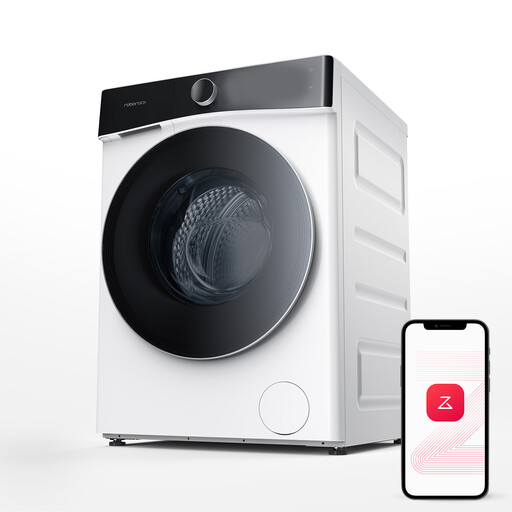 Image unavailable
Roborock Zeo Lite, white, 10/6 kg
Consider this model if you want both functions in one appliance and can limit the load for drying to 6 kg. The product name mentions app control, as well as Zeo-Cycle and LintClear systems; check the product details for how they work. Also check the duration and consumption of the full cycle, along with the dimensions and installation instructions.
View on Joybuy
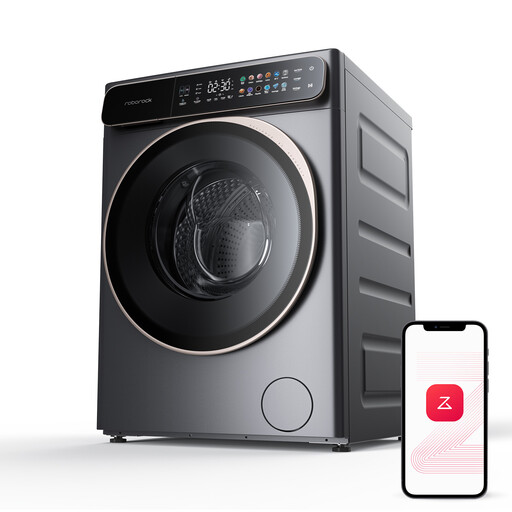 Image unavailable
Roborock Zeo One, grey, 10/6 kg
Worth considering if you’re looking for a washer-dryer and can adjust the load to suit its drying capacity. The product title lists 10 kg for washing and 6 kg for drying, along with Zeo-Cycle, LintClear and automatic dosing. Check the permitted load for a full cycle, its duration and consumption, and the space needed for installation.
View on Joybuy
Frequently asked questions
What do the two capacities in a 9/6 kg washer-dryer mean?
They indicate a 9 kg washing capacity and a 6 kg drying or wash-and-dry capacity, depending on how the model is described. To run both stages without removing any laundry, use the full-cycle limit as your guide and check the manual for the exact model.
Can I wash 9 kg and then dry it all in a 9/6 kg model?
Not in a single cycle if the drying limit is 6 kg. Bosch lists the WNG24402FR as having a 9 kg washing capacity and a 6 kg wash-and-dry capacity, so you’ll need to reduce the initial load or remove some laundry before drying.
Which consumption figures should I compare if I use the drying function?
Compare the water and energy figures for the wash-and-dry cycle of the model you’re considering, rather than confusing them with the figures for washing alone. Also check the duration and load conditions that apply to the figures shown.
Can a washer-dryer be installed in any space?
No. Check the model’s dimensions and the clearances listed in its manual, as well as access for delivery, space to open the door, water connections and the electrical supply where it will be installed.
What should I do with my old appliance in France?
The French Ministry for Ecological Transition says electrical equipment can be taken to a collection point, a household waste recycling centre or a retailer. When buying an appliance of the same type, ask the seller about the « 1 for 1 » take-back scheme.


