Who is it suitable for?

Tenants or homeowners with only one available space

You have room for just one appliance in a kitchen, bathroom or small utility room, and want to wash and dry your clothes without moving them between machines. Check the depth, door opening and access routes first; UFC-Que Choisir points out that drying capacity is lower than washing capacity.

Households that regularly dry small loads

This solution may suit you if you can organise your laundry so that the amount to be dried stays within the full-cycle capacity. In that case, the water, electricity and programme duration for the wash-and-dry cycle matter more than the washing class alone.

Households weighing up available space against laundry volume

If a second appliance could genuinely be installed, think about the volume you usually dry. Large loads or frequent cycles are less compatible with a reduced drying capacity and longer programmes.

Buying priorities

Washer-dryer

Choose this if: you only have space for one appliance and the loads you need to dry remain within the stated drying limit.

Trade-off: drying capacity is lower than washing capacity; UFC-Que Choisir also reports that drying takes longer than with a dedicated tumble dryer.

Separate washing machine and tumble dryer

Choose this if: you regularly dry large loads and have a second floor space available or a compatible stacking installation.

Trade-off: this arrangement requires more space and means transferring laundry between the appliances.

Priority What to check Your needs
Actual drying load Compare the drying kilograms with the washing kilograms; check the load permitted by the wash-and-dry programme in the manual for the exact model. I want to start washing and drying without removing damp laundry. I will therefore size my load according to the drying capacity, not the maximum washing capacity.
Complete cycle Record the class, kWh, litres and duration of the wash-and-dry cycle using the same basis for comparison. The European Commission distinguishes these figures from those for washing alone. If I dry laundry regularly, I want to know how much time and how many resources a cycle ending with dry clothes requires.
Installed footprint Measure the overall width, height and depth, then check the space required with the door open. Also check doors, corridors and lifts along the delivery route. My appliance must fit into the space without blocking the passage or preventing me from loading the laundry.
Routine maintenance Consult the manual to find out how to access the seal, detergent drawer and filters. Check whether a cleaning programme is available for the specific model. I would prefer to build cleaning into my routine. ADEME states that using too much detergent can encourage build-up and unpleasant smells.

Mistakes to avoid

  • Choosing based on washing capacity

    Drying capacity is lower than washing capacity. An overly large load may mean removing some damp laundry or splitting the drying cycle, reducing the convenience of an automatic programme.

    Base your choice on the number of kilograms you genuinely want to dry at once, and check the full-cycle capacity in the product listing and manual.

  • Looking only at washing-only data

    European information distinguishes between washing alone and washing plus drying. For the LG F964V72WRHT, LG France states 90 L and 7 h 50 for the full cycle at full load, compared with 50 L and 3 h 48 for the full-load Eco 40-60 wash; this example applies to this specific model.

    Compare the class, electricity, water consumption and duration in the wash-and-dry section of the label or EPREL listing, using the same basis for each model.

    A complete cycle may use more water, electricity and time than the washing-only information suggests.

  • Measuring only the width of the space

    Depth, connections, protruding parts, door clearance and the delivery route all matter too. LG France, for example, states an appliance depth of 565 mm, 620 mm overall and 1,100 mm with the door open for the F964V72WRHT.

    Measure the space in three dimensions, allow room for connections and check access routes before choosing a model.

    A door that cannot open properly can make loading difficult, even if the appliance fits into the space.

  • Overlooking drying-related maintenance

    UFC-Que Choisir considers access to filters, the detergent drawer and the seal in its practical-use tests. ADEME states that using too much detergent can cause build-up in the washing machine and create unpleasant smells.

    Before buying, check the manual to see how accessible parts should be cleaned. After installation, follow the recommended detergent dosage and the maintenance programme specified by the manufacturer.

Brand overview

Bosch

The French range includes freestanding and integrated washer-dryers, with separate washing/drying capacities such as 8/5 kg, 9/5 kg, 9/6 kg or 10.5/6 kg, depending on the model.

  • Integrated models may be a practical choice when a cabinet dictates the format.
  • Check the capacities of the model you choose: they do not, on their own, indicate its drying performance.

LG

LG offers washer-dryers as well as separate appliances. The F964V72WRHT is listed at 9/6 kg, with dimensions of 600 × 850 × 565 mm, 620 mm overall and 1,100 mm with the door open.

  • This model’s separate washing and wash-and-dry data make it easier to compare real-world use.
  • The figures published for this specific model should not be generalised to the entire LG range.

Samsung

The French range includes the WD70T554DBE/S3, listed at 7 kg for washing and 4 kg for drying, with dimensions of 600 × 850 × 550 mm.

  • A depth of 550 mm may make it easier to consider a shallow space, subject to the connections and door clearance.
  • A drying capacity of 4 kg is better suited to small loads than a full family wash.

Haier

The X5 HWD120-BP14357U1 is listed at 12/8 kg, with dimensions of 595 × 666 × 850 mm and a class D rating for the combined cycle.

  • A drying capacity of 8 kg may be a better match for bulky loads than a 7/4 or 9/5 kg model.
  • The stated depth of 666 mm needs careful checking in a very restricted space.

Joybuy products

Joybuy washer-dryer options for homes where one appliance needs to handle both washing and drying.

Samsung WD11DG6B85BEU3 washer-dryer

Samsung WD11DG6B85BEU3, 11 kg / 6 kg

For a single space, with loads intended for drying limited to 6 kg.

Stated capacity: 11 kg for washing and 6 kg for drying.

An 11 kg full wash cannot necessarily be dried in one go; also check the space, connections and door clearance.

Joybuy

Samsung WD10HG6U34BEU3 washer-dryer

Samsung WD10HG6U34BEU3, 10 kg / 6 kg

A combined model for washing and drying with one appliance, provided you observe the drying load limit.

Stated capacities: 10 kg for washing and 6 kg for drying; stated dimensions: 600 × 850 × 590 mm.

Check the exact model’s label for full-cycle data, as well as its overall depth and the space required with the door open.

Joybuy
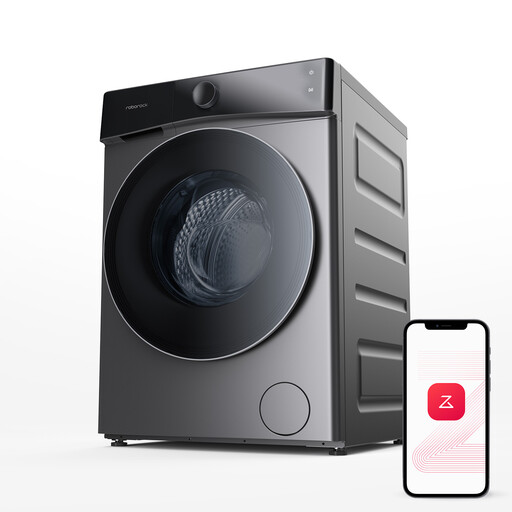
Roborock Zeo Lite Gray washer-dryer

Roborock Zeo Lite Gray, 10 kg / 6 kg

An all-in-one option for a utility room with space for just one appliance, with a separate drying capacity.

Stated capacities: 10 kg for washing and 6 kg for drying; 27 wash programmes, app control and automatic dosing are listed.

Check the dimensions, installation requirements and wash-and-dry cycle data before buying if space or frequent drying is a key consideration.

Joybuy
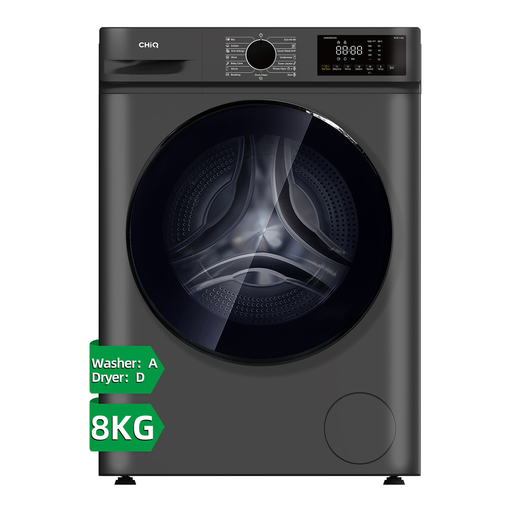
CHiQ JW85882HG washer-dryer

CHiQ JW85882HG, 8 kg / 5 kg

This washer-dryer may suit you if the loads you dry remain modest in a compact home.

Stated capacities: 8 kg for washing and 5 kg for drying; stated dimensions: 600 × 520 × 847 mm.

For the exact model, check the depth with the door open, connections and full-cycle data before ordering.

Joybuy

Frequently asked questions

Why does a washer-dryer show two capacities in kg?

Washing and drying capacities are different. European regulations define them separately, and UFC-Que Choisir points out that the drying load is lower. To run both functions consecutively without removing laundry, load the machine according to its drying capacity.

Which part of the energy label should I compare?

Compare the wash-and-dry cycle information if you plan to dry laundry regularly in the machine: class, electricity consumption, water consumption and duration. Washing-only figures remain useful if you rarely dry clothes, but they do not describe a cycle that finishes with dry laundry.

Can I wash 9 kg and immediately dry all 9 kg in a 9/6 kg machine?

No. A 9/6 kg machine can wash up to 9 kg, but the corresponding drying cycle is limited to 6 kg. Reduce the initial load or remove some laundry after washing before starting the drying cycle.

What should I measure before ordering for a small home?

Measure the space, the appliance’s total depth, the room needed with the door open and the delivery route. Width alone does not confirm compatibility: depending on the model, the depth and open door may take up considerably more room.

What basic maintenance helps limit unpleasant smells?

Avoid using too much detergent: ADEME states that this can cause build-up in the appliance and lead to unpleasant smells. Also follow the model’s manual for cleaning the seal, detergent drawer, filters and drum-cleaning programme, where provided.