People with space for just one appliance
If your bathroom or kitchen can only fit one appliance, a washer-dryer combines both functions. Check that its depth and door clearance suit the space available.


If there isn’t room for two appliances, a washer-dryer lets you wash and dry your clothes in the same space, provided you keep the load within its drying capacity, which is usually lower than its washing capacity, according to UFC-Que Choisir. If you could make room for a second appliance, compare the separate option too, taking into account the available space, installation requirements, cycle times and energy and water use.
If your bathroom or kitchen can only fit one appliance, a washer-dryer combines both functions. Check that its depth and door clearance suit the space available.
If you want to run a continuous wash-and-dry cycle, check the wash-and-dry capacity rather than the washing capacity alone. UFC-Que Choisir points out that the maximum load for drying is lower than for washing.
If you often tumble-dry your laundry, the combined cycle time and energy and water use are important factors. Compare these figures for the programmes you plan to use, as well as the appliance’s dimensions.
Worth considering: when there’s room for just one appliance and the loads you want to dry are within the stated capacity for a combined cycle.
The trade-off: UFC-Que Choisir notes that drying capacity is lower than washing capacity, and that drying cycles can be long and use more energy and water. Check the figures before you buy.
Worth considering: if you can make room for a second appliance and want to dry loads regularly without reducing them to the capacity of a washer-dryer.
The trade-off: you’ll need enough space and must meet the installation requirements for your chosen tumble dryer, particularly if it’s a vented model.
If you haven’t confirmed there’s room for two appliances, start by measuring the space. Then check whether the washer-dryer can handle the load you want to dry without removing any items.
| Factor | What to check | Relevant consumer priorities |
|---|---|---|
| Overall dimensions | Measure the height, width and depth, as well as the clearance needed for the door; also check the delivery route. | If there’s only one corner of the kitchen or bathroom available, I need to make sure the appliance will fit through the access route and that the door can open. Around 36% of consumers put the appliance’s size at the top of their list. |
| Load dried without transferring | Compare the capacities in kg for washing alone and for the wash-and-dry cycle, and check which fabrics the programme allows. | If I want to take out dry laundry without removing items between the two stages, the combined cycle needs to handle a load that suits my needs. This is a priority for around 29% of consumers. |
| Cycle time and energy and water use | Compare the time, water and electricity used by the wash-and-dry cycle across models, using the same basis for comparison. | If I often dry my laundry, I want to know how long the programme takes and how much it uses. This is the main priority for around 21% of consumers. |
| Everyday convenience | Check the stated noise level, access to the door and how easy it is to reach the parts that need maintenance. | In a small room near the living area, I want to be able to load and use the machine without it becoming a regular nuisance. Convenience comes first for around 14% of consumers. |
If a washer-dryer is listed as 9 kg for washing and 6 kg for washing and drying, you can’t dry 9 kg in a single continuous cycle. The Bosch, LG and Samsung product specifications cited for specific models show this difference.
If you don’t want to remove any laundry after washing, size your load according to the capacity of the wash-and-dry cycle.
An appliance might fit widthways but still block the door from opening or prevent it from getting through to its intended spot.
Measure the recess, the clearance in front of the machine and the delivery route, then compare these with the dimensions of the model and its packaging.
How often you use the drying function affects how important cycle times and energy and water use are. UFC-Que Choisir assesses these figures across cycles and distinguishes between the requirements of washing and wash-and-dry cycles.
Compare the figures for the combined cycle on a like-for-like basis, rather than assuming how it performs from washing figures alone.
According to UFC-Que Choisir, a vented tumble dryer needs an outlet to the outside, unlike a condenser model.
If there’s room for two appliances but no external air outlet, check the installation requirements for a condenser model, particularly one with a heat pump.
Bosch Électroménager France’s product page for the WNG24402FR lists two separate capacities: 9 kg for washing and 6 kg for washing and drying.
LG France’s product page for the F96400WHR lists a washing capacity of 9 kg and a drying capacity of 6 kg; the model is marked as discontinued.
Samsung France’s product page for the WD90DG6B85BKU3 lists a washing capacity of 9 kg, a drying capacity of 6 kg and dimensions of 600 × 850 × 600 mm.
These appliances combine washing and drying in a single machine. First, compare their drying capacity with your usual loads, then check the dimensions and combined-cycle figures for the model you’re interested in. The small Roborock model is designed for much smaller loads.
 Image unavailable
To wash and dry in one appliance, keep the load within the stated drying capacity of 6 kg, compared with 11 kg for washing. The title and description don’t give exactly the same model code, so check the variant and its specifications on the product page before choosing.
 Image unavailable
For a wash followed by drying without transferring the laundry, stick to the stated drying limit of 6 kg, compared with 10 kg for washing. Also check that its depth suits your space, then check the combined-cycle time and energy and water use on the product page.
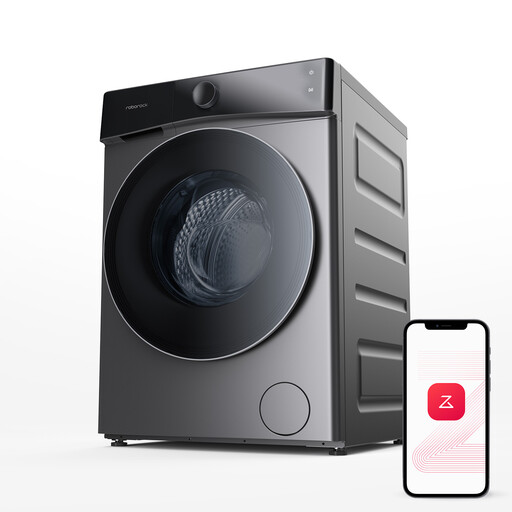 Image unavailable
This model combines both functions, with a stated washing capacity of 10 kg and drying capacity of 6 kg, so a continuous load must stay within the lower limit. If space is tight, check its exact dimensions and the time and consumption figures for your chosen programme.
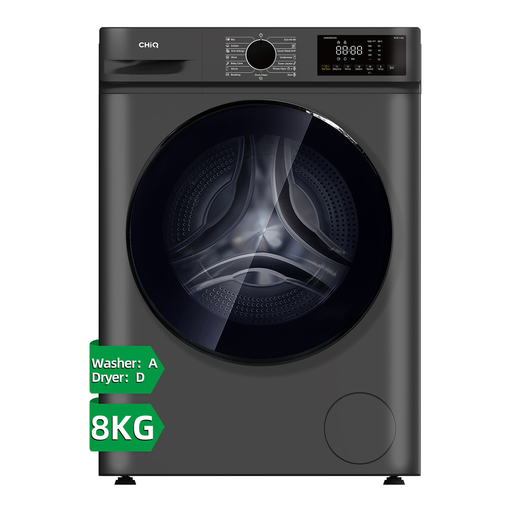 Image unavailable
If you want to dry your laundry without removing any items after washing, bear in mind the stated drying capacity of 5 kg, compared with 8 kg for washing. The width given in the title and product page doesn’t match, so confirm the exact dimensions before relying on this model for a narrow recess.
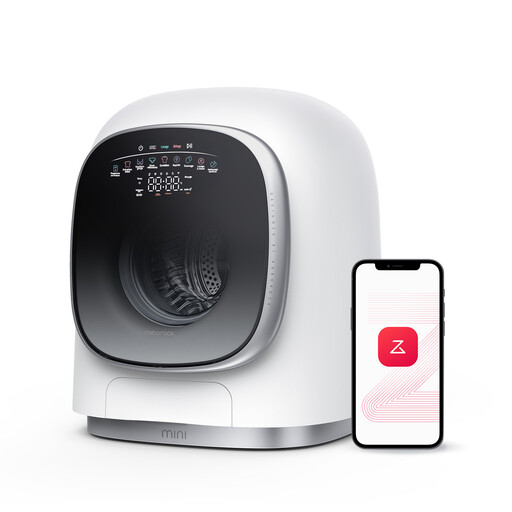 Image unavailable
This is worth considering for very small loads rather than a family wash: the title gives a washing capacity of 1 kg and a drying capacity of 0.5 kg. Check the dimensions and programme requirements if you plan to install it in a specific space.
No. 9 kg is the washing capacity, while 6 kg is the stated limit for the wash-and-dry cycle. To run both stages without removing any laundry, stick to this lower capacity and follow the programme instructions for the fabrics you’re washing.
No. It saves you the space needed for a second appliance, but you still need to check its depth and the clearance required in front of the door. Also measure the doors and corridors along the delivery route, then check the dimensions of the specific model.
Compare the capacities, cycle times and energy and water use listed for the wash-and-dry cycle, without confusing them with figures for washing alone. Compare cycles on a like-for-like basis and consider how often you’ll use the drying function.
It depends on the type of tumble dryer. According to UFC-Que Choisir, a vented model needs an outlet to the outside, unlike a condenser model. Check the installation requirements for the appliance you’re considering and make sure you have enough space.
A washer-dryer can only dry loads that fit within the limits of its programme. For laundry you hang indoors, ADEME recommends using a large, well-ventilated room or one fitted with a mechanical ventilation extract vent, preferably a humidity-controlled one.