If you only have room for one appliance and can’t easily hang washing out to dry, a washer-dryer lets you run washing and drying one after the other, provided you keep the load within its drying capacity. If you can still use a clothes airer, a washing machine that fits your available space avoids the limitations of built-in drying. If you can fit two appliances, a separate heat-pump tumble dryer is worth considering if you dry clothes frequently, after checking that it can be installed in your home and reviewing its energy use.
Which option is right for you?
The space you need to dry your washing matters just as much as the space taken up by the machine.
Room for just one machine
A washer-dryer combines both functions without the need for a second appliance. However, if you want to wash and dry without taking any items out between cycles, you’ll need to size the load to the drying capacity, which is lower than the washing capacity, according to UFC-Que Choisir.
A small alcove or narrow passage
Measure the available depth and the space in front of the door before choosing a compact model. For example, LG France lists the F742212WR as 45 cm deep. This washer-dryer has a 7 kg washing capacity and a 4 kg drying capacity, so always check the exact model rather than relying on a general “compact” description.
You dry clothes often and have room for two appliances
A separate tumble dryer could suit your needs if it can be installed in your home. UFC-Que Choisir highlights the difference between condenser dryers with heat pumps, which use less electricity, and vented models, which need an opening or duct to the outside.
What are the key differences between the options?
First decide where your washing can dry, then check the available space, drying capacity and the figures for the programme you’re likely to use.
Washer-dryer
Consider this if: you only have room for one appliance and drying clothes on an airer is difficult.
The trade-off: the drying capacity is lower than the washing capacity. UFC-Que Choisir also notes that drying programmes take longer than on a conventional tumble dryer.
Washing machine and clothes airer
Consider this if: depth is limited but you can still use a space to hang your washing.
The trade-off: the airer takes up space while your washing dries, and this option won’t work if you can’t hang your washing out to dry.
Two separate appliances
Consider this if: you can install a washing machine and a tumble dryer, and you often use a machine to dry your clothes.
The trade-off: you’ll need enough space and a suitable installation for the second appliance. Unlike a condenser model, a vented model needs an outlet to the outside, according to UFC-Que Choisir.
| Criterion |
What to check |
What I need |
| Space and access |
Measure the width, height and depth of the exact model. Allow space to open the door, connect the machine and walk in front of it. If you’re buying two machines, check how they can be installed together. |
I need to be able to load the machine without blocking the passage, even if it fits in the alcove. |
| Load and cycle time |
Compare the washing and drying capacities in kg separately. Check the cycle time for the load you expect to run: according to UFC-Que Choisir, a washer-dryer dries less laundry than it can wash. |
If I wash a large load, can I dry some of it later, or does everything need to be dry at the end of a single cycle? |
| Water and electricity |
Check the label and product information for the exact model, comparing energy use per 100 cycles and water use for the programme in question. Make sure you’re comparing like with like: check the washing figures separately from those for a wash-and-dry cycle. |
I plan to use the dryer often, so the figures for the programme I’ll use matter more than the washing energy rating alone. |
What should you avoid before buying?
-
Measuring the width only
A machine might fit in its space but leave too little room to open the door or move around in front of it. Dimensions vary by model, particularly the depth.
Measure the overall dimensions and the space needed with the door open, then check the room required for hoses, the plug and loading.
-
Confusing washing and drying capacities
On a washer-dryer listed as 9/6 kg, 9 kg is the washing capacity and 6 kg is the drying capacity. So you can’t dry a maximum washing load all at once.
Choose a model based on the weight of laundry you want to dry, and plan to remove some of the load if necessary.
-
Comparing energy use for different programmes
The energy use for a wash-only cycle doesn’t tell you how much a combined cycle uses. UFC-Que Choisir points out that integrated drying also uses water, and that cycle time is an important part of how you use the machine.
Check the label and product information for figures that match the programme you’re considering, then relate them to how often you’ll dry clothes.
-
Overlooking the type of separate tumble dryer
According to UFC-Que Choisir, a vented tumble dryer needs an opening or duct to the outside, unlike a condenser model. This difference could determine whether you can install it at all.
If you don’t have a suitable outlet to the outside, look at condenser models and check the installation instructions before choosing a specific model.
Brands and models to consider
These models give you examples of capacities and formats to compare. Always check the specifications of the exact model you’re considering.
Bosch
Bosch’s French catalogue includes washer-dryers with capacities of 8/5 kg, 9/6 kg and 10.5/6 kg. The two figures refer to washing and drying capacity respectively.
- A range of drying capacities lets you choose a model suited to a 5 or 6 kg load.
- Check the depth, door clearance and wash-and-dry cycle figures for each model.
Haier
Haier France describes the X7 HWD100-B14367U1 as a freestanding washer-dryer with a 10/6 kg capacity, measuring 595 × 598 × 850 mm.
- Its stated 6 kg drying capacity gives you a useful benchmark when comparing loads.
- The 10 kg washing capacity doesn’t mean you can dry a full 10 kg load in one cycle.
Electrolux
The GentleCare 600 YW6HI841DC, listed by Electrolux France, is a separate 8 kg heat-pump tumble dryer. Consider it only if you can install a second appliance.
- Its product information lists 119 kWh per 100 cycles and a noise level of 64 dB. Compare these figures on the same basis of use.
- It doesn’t wash clothes and needs its own space.
Appliances for two different set-ups
These Joybuy options include washer-dryers for a single space, followed by separate tumble dryers to consider if you also have a washing machine and room for another appliance. Before choosing, check the exact model’s dimensions and programmes against your home and your usual loads.
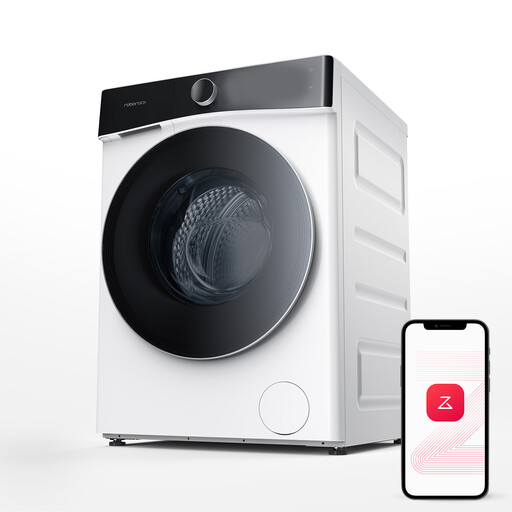 Image unavailable
Roborock Zeo Lite Zeo-Cycle 10/6 kg
This washer-dryer combines washing and drying in one appliance. It has a stated washing capacity of 10 kg and a drying capacity of 6 kg, so adjust the load if you want to run both cycles one after the other. Check the dimensions, door clearance and wash-and-dry cycle figures for your needs.
View on Joybuy
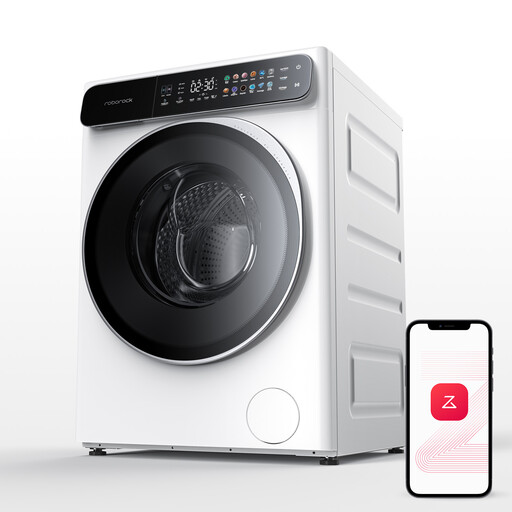 Image unavailable
Roborock Zeo One 10/6 kg
This model combines both functions when you only have room for one appliance. It has a stated washing capacity of 10 kg and a drying capacity of 6 kg, as well as the LintClear system. Don’t expect to dry a maximum washing load in one go. Check its dimensions and the length of the programmes you’re interested in.
View on Joybuy
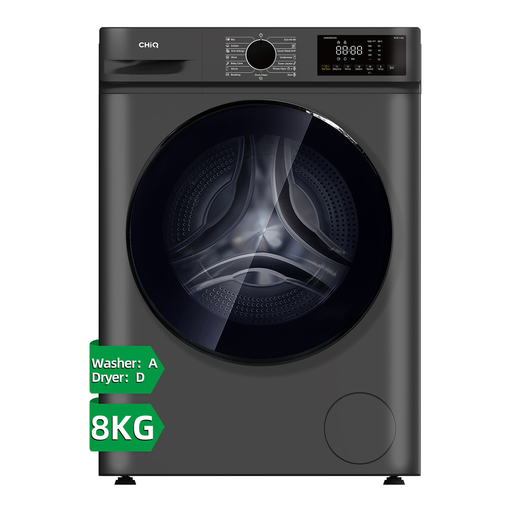 Image unavailable
CHiQ JW85882HG 8/5 kg
This washer-dryer has a stated washing capacity of 8 kg and a drying capacity of 5 kg. If you’re choosing it for a narrow alcove, confirm the overall dimensions and the space needed with the door open: the width information associated with this model is inconsistent. Also check the figures for the wash-and-dry cycle.
View on Joybuy
 Image unavailable
Hotpoint CHD84MWBSEE 8 kg
This 8 kg heat-pump tumble dryer is suited to a set-up with a separate washing machine; it doesn’t wash clothes. Check how much space it needs, the installation instructions and the electricity use of the programme you plan to run.
View on Joybuy
 Image unavailable
Comfee CD08EHP05W-HR 8 kg
Consider this 8 kg heat-pump tumble dryer if you have a separate washing machine and room to install a second appliance. Measure the space and check the instructions and energy-use figures for the programme you plan to use.
View on Joybuy
Frequently asked questions
Can a washer-dryer dry a full load straight after washing it?
Not if the load is at the maximum washing capacity: UFC-Que Choisir states that the drying capacity is lower. To run both cycles one after the other, keep the load within the model’s drying capacity from the start, or remove some of the washing after the wash cycle.
Does a condenser tumble dryer need an outside vent?
No. UFC-Que Choisir says this requirement applies to vented tumble dryers. For a condenser model, including a heat-pump dryer, follow the installation and ventilation instructions in the manual.
What should I compare on a washer-dryer’s energy label?
Compare the figures for the programme you plan to use, including energy use per 100 cycles, water use, cycle time and noise. The European Commission says that energy labels for washing machines and washer-dryers have used an A to G scale since 1 March 2021. Make sure you distinguish the figures for washing alone from those for washing and drying.


