What should you compare?
If you live alone in a flat, start by looking at the space you actually have and how much laundry you need to dry in one go. Then compare cycle times and the conditions for air-drying. Automatic dosing is a secondary consideration.
Washer-dryer
Best if: you can only install one appliance and your drying loads stay within its stated capacity.
The trade-off: if you fill the machine to its washing capacity, you may need to remove some laundry before drying.
Separate washing machine and tumble dryer
Best if: you can install both appliances and want to wash one load while another dries.
The trade-off: you’ll need to allow room for both appliances, either side by side or in a suitable stacking arrangement, and transfer the laundry between them.
Washing machine and clothes airer
Best if: you’re happy to wait for your laundry to dry and have a suitable place to hang it.
The trade-off: drying laundry indoors takes up space and requires suitable ventilation to deal with the moisture it releases.
| Criterion |
What to check |
Who it matters to |
| Available space |
Measure the width and depth, the delivery route and the clearance in front of the door when it’s open. |
If I only have one available space, I want the machine to fit without needing to keep a clothes airer up; around 36% of consumers put this space constraint first. |
| Drying capacity |
Compare the capacities in kg for washing only and for the wash-and-dry cycle, as with Bosch 9/6 kg models. |
If I want to start a wash and take it out dry without removing some of the laundry, the drying limit will guide my choice; around 29% of consumers prioritise this. |
| Time, water and humidity |
Check the wash-and-dry cycle figures on the energy label and product information; if drying laundry indoors, consider the room’s ventilation. |
I need to balance the time required, the energy and water used for machine drying, and the moisture from a clothes airer in my home; around 21% of consumers put these constraints first. |
| Automatic dosing |
Check whether it’s included on the exact model and read the manufacturer’s guidance on detergents and system maintenance. |
For regular washes, I’d like to avoid measuring out detergent every time; around 14% of consumers prioritise this convenience above all else. |
Washer-dryers to consider on Joybuy
These models combine washing and drying in one appliance. When choosing one for a flat, first compare its drying capacity with your usual loads, then check the installation dimensions and the combined cycle information for the exact model you’re considering.
 Image unavailable
Samsung WD10HG6U34BEU3, 10/6 kg washer-dryer
Worth considering if you want to wash and dry with a single appliance. Its stated capacity is 10 kg for washing and 6 kg for drying, so a 10 kg wash load can’t be dried completely in one combined cycle. Also check the clearance in front of the door, as well as the duration and consumption figures for the full cycle.
View on Joybuy
 Image unavailable
Samsung WD11DG6B85BEU3, 11/6 kg washer-dryer
Worth considering if you want a combined machine with a stated washing capacity of 11 kg. Its stated drying capacity is still 6 kg, so adjust the initial load if you want to run both stages without removing any laundry. Check the dimensions and combined cycle figures for this exact model.
View on Joybuy
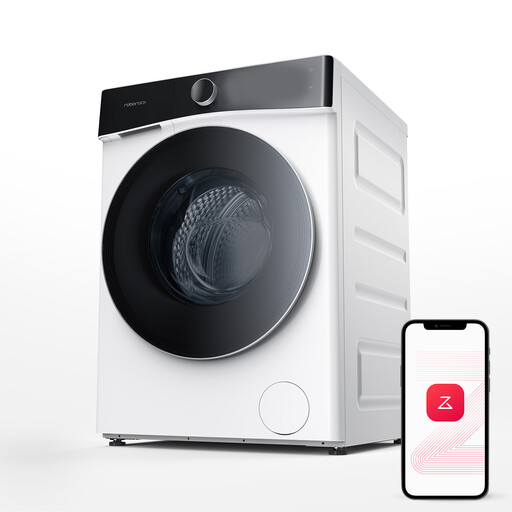 Image unavailable
Roborock Zeo Lite, 10/6 kg washer-dryer
Worth considering if you’re looking for a combined appliance with app control. The product title lists a 10 kg washing capacity and a 6 kg drying capacity, as well as Zeo-Cycle and LintClear systems. Check the space needed for installation and the wash-and-dry cycle figures before choosing.
View on Joybuy
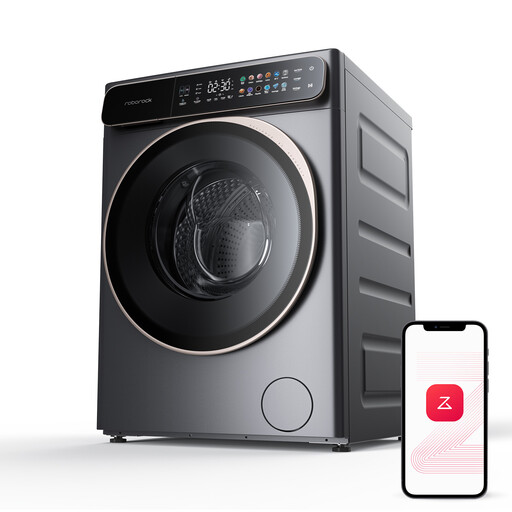 Image unavailable
Grey Roborock Zeo One, 10/6 kg washer-dryer
Worth considering if you want to combine washing and drying and explore automated features. The product title lists a 10 kg washing capacity, a 6 kg drying capacity, automatic dosing and a LintClear filter-cleaning system. Loads for drying must stay within the 6 kg limit; also check the dimensions and combined cycle figures.
View on Joybuy
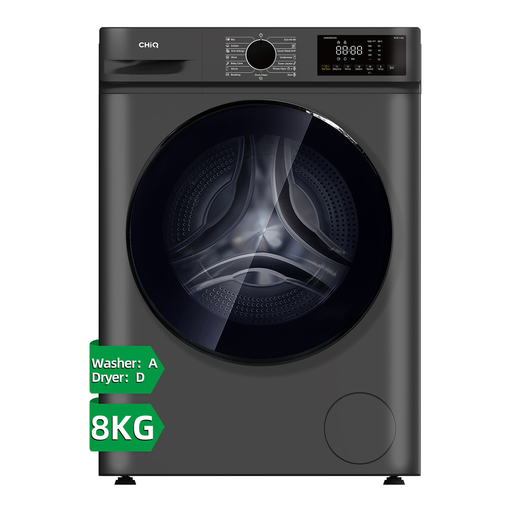 Image unavailable
Grey CHiQ JW85882HG, 8/5 kg washer-dryer
Worth considering if its stated 5 kg drying capacity is enough for your usual loads. This model lists an 8 kg washing capacity and a 5 kg drying capacity; the product title also mentions a 1,400 rpm spin speed and a 15-minute quick wash programme. Confirm the exact dimensions before planning the installation, then compare the wash-and-dry cycle figures.
View on Joybuy
Frequently asked questions
Can a 9/6 kg washer-dryer wash 9 kg and then dry it all?
No. On a 9/6 kg model, the stated capacity for a wash-and-dry cycle is 6 kg, compared with 9 kg for washing alone. If you wash a larger load, you’ll need to remove some of it before drying or dry it another way.
What should I compare if I plan to use the built-in dryer regularly?
Compare the wash-and-dry cycle figures, not those for washing alone. The information required for washer-dryers under European energy labelling lets you check details such as the stated cycle duration and consumption. Check these for each model you’re considering.
Is automatic dosing essential when you live alone?
No. It’s a convenience feature to consider after available space, drying capacity and cycle duration. It can save you from measuring detergent out regularly, but availability depends on the exact model and it doesn’t change the drying capacity.
Can I use a clothes airer in my flat?
Yes, if you can make room and allow time for your laundry to dry while managing the moisture it produces. For drying laundry indoors, ADEME recommends a large, well-ventilated room or one fitted with mechanical ventilation extraction (VMC).
Does an extended warranty replace the statutory guarantee in France?
No. The DGCCRF points out that the statutory guarantee of conformity applies to goods sold by a business to an individual; a commercial warranty is separate. Before taking out an extended warranty, check what it adds and read its terms.


