Which households is it for?

Small homes with just one appliance space

You have room for a washing machine, but not for a separate tumble dryer, and would like to dry some of your laundry without keeping an airer out permanently. Check the actual depth, protruding parts, door opening and the drying capacity of a continuous wash-and-dry cycle.

Households looking for a cycle without transferring laundry

You want to start a cycle and come back to dry laundry later, while still being able to reduce the load to stay within the drying limit. An all-in-one appliance is a good choice when this convenience matters more than drying large loads.

Households that often dry full loads

You regularly dry towels, bedding or several loads of washing and have enough vertical space for a stable stacked setup. Two appliances placed one above the other can help you avoid splitting loads so often.

Criteria to check

Washer-dryer

Consider it: when only one appliance can fit on the floor and a continuous drying cycle would be useful, at least occasionally.

Be prepared to accept: the drying load is smaller than the washing load, and the complete cycle should be compared for its duration, water consumption and energy use.

Washer and tumble dryer stack

Consider it: if floor width is limited but the height, flooring and compatibility requirements allow for safe stacking.

Be prepared to accept: two appliances, an explicitly compatible stacking kit and installation requirements that need to be checked.

Spinning and drying outside the appliance

Consider it: if you have space to hang laundry and mechanical drying is not essential every day.

Be prepared to accept: drying space, time and a little more laundry organisation.

Priority What to check Your needs
Actual drying capacity Compare the washing-only capacity with the wash-and-dry capacity in kg. Also check the programmes and fabrics approved for drying in the manual. I want to complete a load without removing damp laundry between washing and drying.
Actual footprint Measure the height, width, total depth, connections and door clearance. Also check floor stability and available circulation space. The machine must fit into the alcove without blocking the walkway or preventing access to the water and drainage connections.
Duration, water and energy Compare the duration, water per cycle and energy use for 100 cycles of the relevant programme. Distinguish washing-only data from data for the wash-and-dry cycle. My laundry routine must remain compatible with the appliance being occupied for a complete cycle.
Installation and maintenance Check the earthed wall socket, specified drainage height, levelling and the model’s maintenance instructions. I want a stable installation and to be able to limit humidity and odours after cycles.

Mistakes to avoid

  • Choosing the machine based only on its washing capacity

    A washer-dryer may be able to wash more laundry than it can dry in one continuous cycle. An oversized load then means removing or splitting some of the laundry before drying.

    For cycles that run without intervention, use the wash-and-dry capacity in kg as your reference. The washing-only capacity applies to cycles without drying.

  • Measuring only the width of the space

    The depth can increase because of connections and protruding parts, while the door opening may make the appliance difficult to use in a narrow alcove.

    Record the cabinet depth, total depth, door clearance and rear access, then compare them with the measurements for the exact model.

  • Comparing only the washing energy class

    The wash-and-dry cycle has its own duration, water and energy figures. Integrated drying can, in particular, increase the time the appliance is occupied.

    Read the label and product information for the complete cycle, then compare appliances using the same programme and load.

  • Stacking two appliances without a compatible kit

    An unstable stack can lead to excessive vibration, material damage or a risk of the appliance falling.

    Use only a suitable connection kit and check the compatibility specified by the manufacturer. Check that the floor is stable before installation.

Brand guide

Bosch

Worth considering for standard-sized front-loading washer-dryers, particularly when detailed installation documentation is important. The WNA13400FF model is listed with an 8/5 kg capacity, a depth of 59 cm and a spin speed of 1,400 rpm.

  • The manufacturer states a 5 kg wash-and-dry capacity compared with 8 kg for washing alone, making the difference in load size clear.
  • Connections and clearances must be checked in the manual for the model you choose.

LG

Worth looking at when depth is the main constraint. The F852SV52IRS model is listed at 47.5 cm deep, with an 8.5 kg washing capacity and a 5 kg drying capacity.

  • The product information also gives a depth of 53 cm including protruding parts and 101.5 cm with the door open—useful measurements for a narrow alcove.
  • The model’s availability should be confirmed with the retailer before you decide.

Electrolux

Worth considering for a heat-pump washer-dryer and a drying capacity of more than 5 kg. The EW9W1165RB model is listed as 10/6 kg with a spin speed of 1,551 rpm.

  • The model offers a 6 kg drying capacity.
  • According to Electrolux, the heat pump is designed to reduce consumption and protect fabrics. Check the label and product information for the model to compare the relevant figures.

Joybuy products for air drying

These Joybuy options are intended for spinning laundry and drying it outside the appliance. They do not offer integrated drying, so you will need space for an airer and enough time for your laundry to dry.
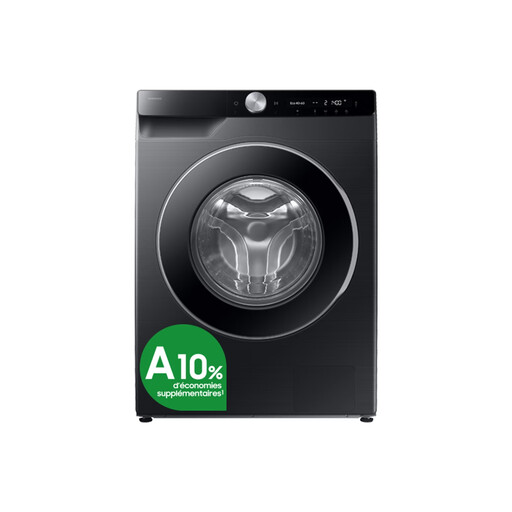
Samsung WW90DG6U85LBU3 AI Wash 6000 Series washing machine, 9 kg

Samsung WW90DG6U85LBU3 AI Wash 6000 Series, 9 kg

For a household with space for an airer and looking for a spin speed of 1,400 rpm before air drying.

Washing capacity: 9 kg. Stated depth: 55 cm; depth including the door: 63 cm. This model does not have integrated drying. Check the door clearance and connections in the manual.

Joybuy

Haier X Series 11 HW100-BD14397PGU1 washing machine, 10 kg

Haier X Series 11 HW100-BD14397PGU1, 10 kg, 1,400 rpm

Worth considering for large loads that will be washed and then dried on an airer, with a maximum spin speed of 1,400 rpm.

Washing capacity: 10 kg; drum: 63 L; product depth: 611 mm. This washing machine does not offer integrated drying. Check the available drying space, total depth and drainage requirements before installation.

Joybuy

Electrolux EWF1410N2 front-loading washing machine, 10 kg

Electrolux EWF1410N2, 10 kg front-loading washing machine

An option for drying outside the appliance when the maximum spin speed of 1,351 rpm and the available space suit your installation.

Washing capacity: 10 kg; dimensions: 847 × 597 × 658 mm; spin efficiency class: B. This model does not dry laundry. Add the rear clearances and door clearance to your measurements.

Joybuy

Frequently asked questions

Can I wash 8 kg and then automatically start drying on an 8/5 kg washer-dryer?

No, not for a continuous 8 kg cycle. On an 8/5 kg model, the 5 kg refers to the maximum dry textile weight permitted for washing and drying. Start with a smaller load or remove some laundry before drying, following the model’s instructions.

Which dimensions should I measure before ordering?

Measure the width, height and depth of the alcove, then allow for handles, hoses, connections, door opening and rear access. For example, the LG F852SV52IRS is listed as 47.5 cm deep for the cabinet, 53 cm including protruding parts and 101.5 cm with the door open.

Does a washer-dryer need an air vent to the outside?

Do not assume that it has the same requirements as an older vented tumble dryer. Consult the manual for the washer-dryer you have chosen. Also check that the floor is flat and hard, that the machine is stable and level, that the drainage is installed according to the instructions and that the wall socket is earthed.

How should I compare a washer-dryer’s energy consumption?

Compare the washing information separately from the information for the complete wash-and-dry cycle shown on the label and product information. Look at the energy use for 100 cycles, water per cycle and duration, using the same programme and load as your basis.

Can you put a tumble dryer on any washing machine?

No. A stack must be assembled using a suitable connection kit supplied or approved by the tumble dryer manufacturer, and placed on a stable surface. An improvised stack is not a safe installation.