Key selection criteria
Start by confirming the space that is actually available, then choose the configuration based on your drying loads and whether you can safely install a stacking column.
Two-in-one washer-dryer
Choose this if: you only have one floor-level space and need to dry clothes without hanging them out.
Bear in mind: the drying load is smaller than the washing load, and the combined cycle data needs to be checked.
Washer and tumble dryer in a stacking column
Choose this if: the available height, compatible models and stacking kit have all been confirmed.
Bear in mind: this installation frees up floor space, but does not reduce the height required and needs suitable fastening.
Separate drying solution
Choose this if: neither a washer-dryer nor a stacking column can be installed correctly and drying is only occasional.
Limitation: this option does not allow washing and drying to run automatically in the same appliance.
| Priority |
What to check |
Your needs |
| Actual footprint |
Measure the usable width, height and depth. Allow extra space for connections, protruding parts and the door when open. |
I want to avoid finding that an appliance fits the recess on paper but blocks access to the laundry or the connections. |
| Drying load |
Compare the wash-and-dry capacity with the washing-only capacity. The former determines the load that can remain in the drum through to drying. |
I want to run a complete cycle without removing some of the damp laundry before drying. |
| Duration and resources |
Check the duration, water per cycle and electricity consumption for the wash-and-dry cycle on the exact model’s label, using a like-for-like comparison. |
Drying needs to fit into my daily routine, and I want to assess regular use rather than washing alone. |
| Compatible stacking column |
Check the model numbers of both appliances, the specified kit, alignment and levelling before stacking them. |
I can make use of the available height, but I do not want to install a tumble dryer in an unstable way. |
Joybuy products
Joybuy two-in-one washer-dryer options for a home where one floor-level space needs to handle both washing and drying.
 Image unavailable
Samsung WD11DG6B85BEU3, 11 kg / 6 kg
For one space, with a stated drying capacity of 6 kg.
Stated dimensions: 60 × 85 × 60 cm. The wash-and-dry cycle is listed as 7 h 32, with 308 kWh/100 cycles and 90 L per cycle.
An 11 kg washing load cannot be dried completely in the same cycle; also check the usable depth, connections and door opening.
Joybuy
 Image unavailable
Samsung WD10HG6U34BEU3, 10 kg / 6 kg
For washing and drying in a single appliance, with the combined load limited to 6 kg.
Stated dimensions: 600 × 850 × 590 mm.
A full 10 kg load must be reduced before drying. Also check the wash-and-dry cycle data on the exact model’s label.
Joybuy
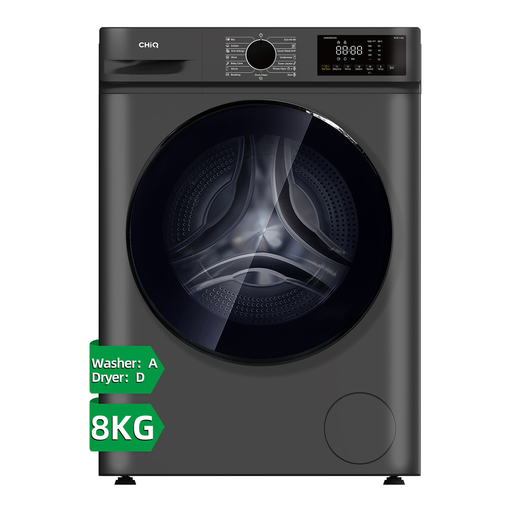 Image unavailable
CHiQ JW85882HG, 8 kg / 5 kg
A two-in-one option for loads limited to 5 kg when drying.
The model is listed with a 530 mm drum and a spin speed of 1400 rpm.
Confirm the width on the technical specification sheet or in the manual for the exact model before approving a recess.
Joybuy
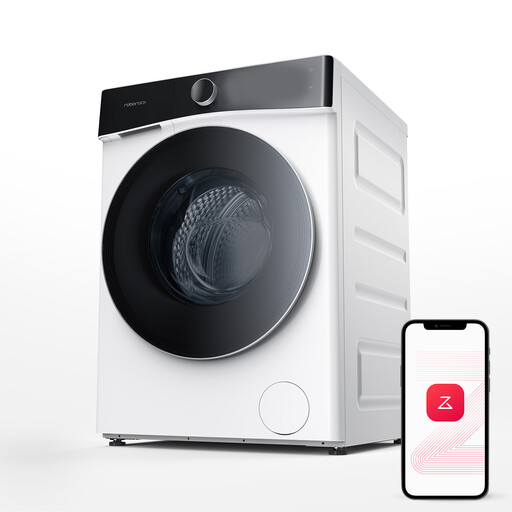 Image unavailable
Roborock Zeo Lite, 10 kg / 6 kg
For one space, with stated washing and drying capacities of 10 kg and 6 kg respectively.
The product features 27 programmes, a LintClear system and low-temperature Zeo-Cycle drying.
Before installation, check the dimensions, clearance for connections, door opening and combined-cycle data.
Joybuy
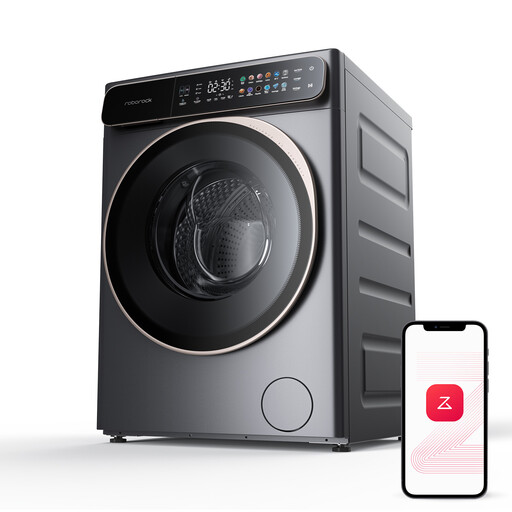 Image unavailable
Roborock Zeo One Gray, 10 kg / 6 kg
For combining washing and drying in one appliance, with a stated drying capacity of 6 kg.
The model features Zeo-Cycle drying, a LintClear system and automatic dosing.
Measure the recess and confirm the depth, space for connections, door opening and wash-and-dry cycle data before buying.
Joybuy
Frequently asked questions
Can I wash 9 kg and then dry the same load straight away?
No, if the wash-and-dry capacity is lower. For example, Bosch lists 9 kg for washing and 6 kg for a consecutive cycle on the WNG24402FR, so you need to reduce the load from the outset or remove some laundry before drying.
Which measurements should I take before installing an appliance under a worktop or between two units?
Measure the width, height and, most importantly, the usable depth, then compare these with the dimensions of the exact model, including protruding parts and the open door. For the LG F852SV52IRS, LG gives a cabinet depth of 47.5 cm, 53 cm including protruding parts and 101.5 cm with the door open at 90°.
Can any tumble dryer be stacked on any washing machine?
No. Bosch recommends checking that both models are suitable for stacking and using an appropriate stacking solution, with the appliances correctly aligned. The Electrolux STA8GW4 kit, for example, is intended for compatible front-loading appliances measuring 47 to 60 cm in depth and requires a precise compatibility check.
How should I compare washer-dryer energy and water consumption?
Compare the label data for the wash-and-dry cycle of the exact model, without confusing it with the class or consumption figures for washing alone. For example, LG lists 359 kWh/100 cycles, 90 L per cycle and 7 h 50 at full load for the combined cycle on the F852SV52IRS; these figures do not automatically apply to other models.


