One appliance, no transferring
You want to wash and then dry your laundry in the same drum, and can adjust the load to suit the capacity of the full cycle. Bosch Home Appliances’ product information illustrates how capacity varies by function.


If you want to get your laundry dry without transferring it, a washer-dryer could be a good fit, provided its drying capacity suits your loads. If you have enough vertical space and can install two models that are explicitly compatible, stacking them lets you keep washing and drying separate, but you’ll need to transfer the laundry and use a suitable stacking kit. A clothes airer can complement either option, though it takes up space and drying clothes indoors adds moisture to your home.
You want to wash and then dry your laundry in the same drum, and can adjust the load to suit the capacity of the full cycle. Bosch Home Appliances’ product information illustrates how capacity varies by function.
You could consider stacking appliances to choose separate washing and drying capacities, provided you check that the appliances and stacking kit are compatible. Bosch Home Appliances France explains that compatibility depends on the specific model numbers.
You want to air-dry some of your laundry and can make room for the airer and manage indoor humidity. ADEME explains how drying clothes indoors affects humidity.
Start by deciding what matters most to your household: avoiding transfers, getting a dry load out of the machine or air-drying clothes. Then compare features and energy and water use measured on a like-for-like basis.
| Priority | What to check before buying | Who is it for? |
|---|---|---|
| Wash and dry without transferring | Measure the space and clearances specified in the manual; check the permitted load for the full cycle. | If I want to start a load and get dry laundry out without moving it, I check that the capacity for a combined wash-and-dry cycle suits my loads. Around 31% of consumers prioritise completing both stages in one appliance. |
| Get a load that suits my needs | Compare the washing and drying capacities, as well as the duration of the programme you plan to use. LG France lists 9/6 kg for the F964R71WRST; Samsung France lists 11/6 kg for the WD11DG5B15BEEF. | When I plan several loads, I look at how much I can actually dry in each cycle. Around 25% of consumers prioritise the amount of dry laundry they get out and how they organise their washing. |
| Compare energy and water use | Distinguish between washing only, washing and drying, and drying only; compare figures using the same units and load basis. The European Commission provides separate indicators for washer-dryers. | If I want to manage the water and electricity used for the functions I need, I compare like with like rather than figures that don’t deliver the same service. Around 25% of consumers put running costs first. |
| Keep a clothes airer as an extra | Allow for the space the airer takes up while clothes dry and for managing indoor humidity; ADEME explains this trade-off but does not give a universal drying time. | If I want to air-dry some laundry and only use a tumble-drying function occasionally, I check where I can leave the clothes to dry. Around 19% of consumers prioritise air-drying, with occasional machine drying. |
The washing capacity may not match the capacity for a wash-and-dry cycle. Bosch Home Appliances lists up to 9 kg for washing and 5 kg for a complete cycle on the Bosch WNA144V0FR.
Start with the amount you want to dry in one go, then check the permitted load for the programme you plan to use.
A figure for washing alone doesn’t describe a complete cycle. For the Bosch WNA144V0FR, the Bosch / BSH Hausgeräte GmbH product sheet lists weighted consumption figures for the wash-and-dry cycle separately from those for the Eco 40-60 wash; the rated loads differ.
Compare the same function and compatible load bases. Don’t subtract weighted figures for different loads to work out the consumption for drying alone.
Compatibility depends on the models and the stacking kit. For the Bosch WTZ27510 kit, Bosch Home Appliances France specifies a depth requirement that applies to this kit and not to every installation.
Check the full appliance-and-kit combination in the manuals and choose a kit designed for those model numbers; never improvise a fixing.
A clothes airer takes up space while your laundry dries. ADEME also highlights the moisture released when clothes are air-dried indoors.
Plan where your laundry can dry and consider how you’ll manage humidity in your home, not just how much space the folded airer takes up.
The WNA144V0FR, WQG2451SFR and WTZ27510 kit are examples of a washer-dryer, a heat pump tumble dryer and a stacking solution, respectively, as documented by Bosch Home Appliances.
The F964R71WRST is an example of a washer-dryer listed by LG France with different capacities for each function.
The WD11DG5B15BEEF is an example of a washer-dryer listed by Samsung France with a higher washing capacity than drying capacity.
This selection features appliances that wash and dry your laundry in one machine. Check the drying capacity against the amount of laundry you want to wash and dry in one go.
 Image unavailable
This washer-dryer could suit you if you want to wash and dry your laundry in one appliance.
The product title lists a drying capacity of 6 kg; check the capacity of your chosen programme before preparing a full load.
 Image unavailable
This washer-dryer could suit you if you want to wash and dry your laundry in the same appliance.
The title lists 10 kg for washing and 6 kg for drying; size your combined load according to the drying capacity.
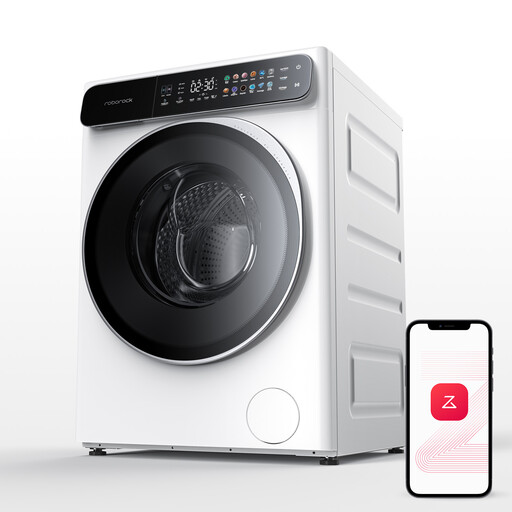 Image unavailable
This model could suit you if you want to wash and dry your laundry in one appliance.
The title lists 10 kg for washing and 6 kg for drying; plan combined cycles around the drying capacity.
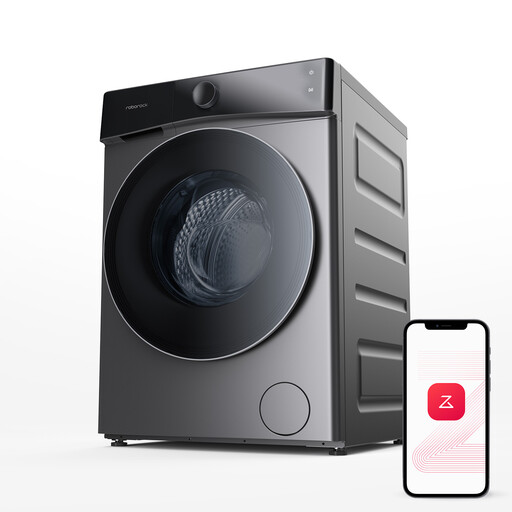 Image unavailable
This washer-dryer could suit you if you want to avoid transferring laundry between two appliances.
The title lists 10 kg for washing and 6 kg for drying; check that the latter capacity suits your loads.
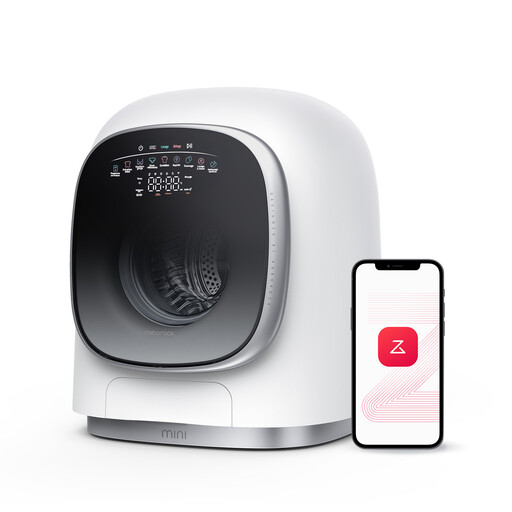 Image unavailable
This model could suit you for very small loads that you want to wash and dry in one appliance.
The title lists 1 kg for washing and 0.5 kg for drying; this drying capacity limits the size of loads you can wash and dry in one go.
To wash and dry in one go, follow the capacity for the full cycle and programme you choose, which may be lower than the washing capacity. Bosch Home Appliances lists up to 5 kg washed and dried in one cycle for the WNA144V0FR, compared with 9 kg for washing.
No. You need to check that both models are designed to be stacked and choose a compatible kit. Bosch Home Appliances France recommends placing the tumble dryer above the washing machine and checking the manuals. Its recommendation to use a qualified professional relates to its installation advice; it is not a general legal requirement established here.
Multiply the kWh for the cycle you plan to use by your electricity rate, and the litres divided by 1,000 by your water rate per m³. Compare the same function and a compatible load basis; the Bosch / BSH Hausgeräte GmbH product sheet for the WNA144V0FR gives declared weighted consumption figures, which may differ from real-world use.
No. Bosch’s claim refers to cleaning the condenser on the WQG2451SFR; it doesn’t mean the appliance needs no maintenance. Check the manual for the maintenance tasks required for the model you buy.
No. You need to account for the change in energy labelling. The European Commission states that Regulation (EU) 2023/2534 replaces the previous tumble dryer energy labelling scheme from 1 July 2025; the A to G scale has applied to washer-dryers since 1 March 2021.