A washer-dryer is worth considering if you only have room for one appliance and want to wash and dry your laundry without transferring it between machines. However, check the capacity for a complete wash-and-dry cycle, which is often lower than the wash-only capacity, as well as the cycle time and water and electricity consumption. If you can fit two appliances and regularly dry large loads, compare that option too. And if you can air-dry clothes in a well-ventilated room, a washing machine on its own is another option.
Who is this option for?
People without room for two appliances
You have space for one appliance and want to take out dry laundry without installing a separate tumble dryer. Compare how much laundry the model can wash and dry in one uninterrupted cycle, the length of the complete cycle and the installation requirements.
People who dry clothes indoors
You can air-dry some of your laundry, but it takes up space or makes it harder to manage moisture. If you continue to use an indoor drying rack, ANSES recommends drying clothes in a well-ventilated room when drying them outdoors isn’t possible.
Households that wash large loads
You often fill the drum and don’t want to run multiple drying cycles. UFC-Que Choisir points out that a washer-dryer’s drying capacity is lower than its washing capacity. Before choosing a combined appliance, also measure the space available for two separate machines.
How do the options compare?
Washer-dryer
Worth considering: if you can only fit one appliance and being able to wash and dry in one go matters more than drying a large load at once.
The trade-off: UFC-Que Choisir notes that drying capacity is lower than washing capacity and complete programmes take a long time. Compare the water and energy consumption of the combined cycle.
Washing machine and drying rack
Worth considering: if you can set aside space for a drying rack in a well-ventilated room.
The trade-off: spinning doesn’t dry clothes, and drying them indoors takes space and good ventilation, as ANSES reminds us.
Two separate appliances
Worth considering: if you have room to install them and regularly dry large loads.
The trade-off: you’ll need enough space and suitable installation conditions for each appliance. On the plus side, you can start another wash while one load is drying.
| What matters to you |
What to check |
Who this suits |
| Drying with one appliance |
Compare the capacity in kg for a wash-only cycle with the capacity for a complete wash-and-dry cycle on the same model. |
When I only have room for one appliance, I want to take out dry laundry without transferring it or using a drying rack, even if that means washing a smaller load. Around 42% of consumers prioritise this need. |
| Keeping an eye on cycle times and consumption |
For the complete cycle, check the kWh per 100 cycles, litres of water per cycle and cycle duration on the energy label. |
If I dry clothes often, I want to know how long the appliance will be in use and how much water and electricity the complete cycle needs. Around 33% of consumers prioritise this need. |
| Handling large loads |
Compare your usual load with the drying capacity, then measure the space you actually have for two appliances. |
When I do large or frequent washes, I’d rather not have to take some clothes out before drying or run several cycles. Around 25% of consumers prioritise handling these larger loads. |
Mistakes to avoid
-
Looking only at the washing capacity
A load that fits in the drum for washing may not all fit for drying straight afterwards. UFC-Que Choisir highlights this difference in capacity for washer-dryers.
Start by choosing a complete-cycle capacity that suits your usual load. Treat the wash-only capacity in kg as a separate figure.
-
Judging drying performance by the wash-only cycle
The EU energy label gives separate figures for wash-only and complete wash-and-dry cycles. UFC-Que Choisir also notes that most of the models it tested use water during drying.
When comparing models, look at the energy, water and time figures for the complete cycle.
-
Confusing a quick programme with a complete cycle
The advertised time for a particular programme may not reflect how long the complete cycle will take for the load you plan to dry.
Check the maximum load for the programme you’re interested in, and compare the complete-cycle duration shown on the energy label separately.
-
Ruling out two appliances without measuring the space
If you often handle large loads, it may be worth considering a stacked installation. Two appliances let you wash one load while another dries, but each has its own installation requirements.
Measure the space, access routes and clearances, then check the manuals for the appliances you’re considering before deciding.
Brands to consider
These examples give you a starting point for comparing different configurations. The capacities listed apply to the specific models mentioned, not every appliance from that brand.
Bosch
Bosch offers freestanding and integrated washer-dryers. The right configuration depends on the space you have.
- According to Bosch Electroménager France, the WDU8H500FF can wash up to 10 kg and wash and dry 6 kg. The integrated WKD28260FR is listed at 8 kg and 5 kg respectively.
- Check the capacity for a combined cycle and the dimensions of the specific model: the wash-only figure doesn’t tell you how much laundry it can dry.
LG
LG offers all-in-one washer-dryers as well as WashTower sets made up of two stacked appliances.
- LG France lists the F964R33WR with a 9 kg washing capacity and 6 kg drying capacity, so you can compare both figures for a specific model.
- A WashTower isn’t a single combined appliance. Check the space and installation requirements before choosing one.
Samsung
Samsung’s range includes washer-dryers with separate figures for washing and drying capacity.
- Samsung France lists the WD11DG6B85BEU3, for example, with an 11 kg washing capacity and a 6 kg drying capacity.
- Don’t assume the complete-cycle duration or consumption from the capacities or feature names alone. Check the energy label for the exact variant you’re considering.
Haier
Haier offers freestanding and integrated washer-dryers, including models designed for larger loads.
- Haier France lists the X5 HWD120-BP14357U1 with a 12 kg washing capacity and an 8 kg drying capacity.
- A higher capacity doesn’t mean you can skip checking the depth, clearances and complete-cycle figures for the model you choose.
Washer-dryers on Joybuy
These models combine washing and drying in one appliance. Their listed capacities give you a starting point for checking how much laundry they can dry. To compare different variants, also check the complete-cycle energy label and installation instructions.
 Image unavailable
Samsung WD11DG6B85BEU3 washer-dryer, 11 kg / 6 kg
For washing and drying in one appliance, make sure your load doesn’t exceed the listed drying capacity of 6 kg, even though the washing capacity is 11 kg.
Freestanding model: check the manual, dimensions and connections needed for your space.
View on Joybuy
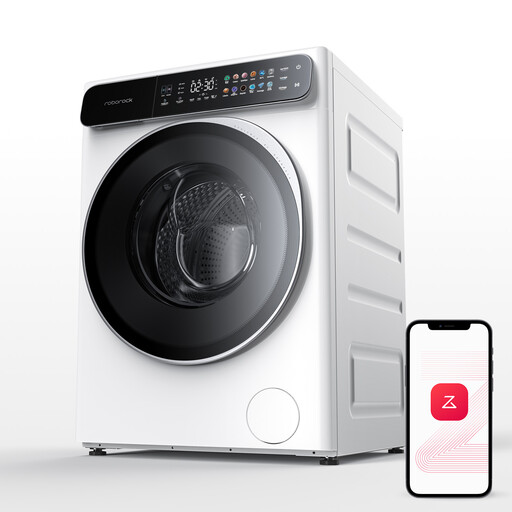 Image unavailable
White Roborock Zeo One washer-dryer, 10 kg / 6 kg
This model combines washing and drying in one appliance, with a listed capacity of 10 kg for washing and 6 kg for drying.
To assess how it would suit regular use, compare the energy, water and time figures for the complete cycle on the exact model’s energy label, then check its installation instructions.
View on Joybuy
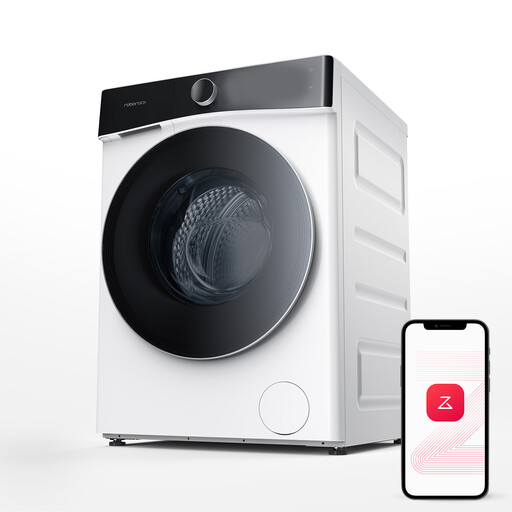 Image unavailable
White Roborock Zeo Lite washer-dryer, 10 kg / 6 kg
If you want to wash and dry your laundry without a second appliance, compare your usual load with the listed drying capacity of 6 kg, which is separate from the 10 kg washing capacity.
Check the complete-cycle figures on the energy label and the dimensions in the manual before comparing it with other models.
View on Joybuy
 Image unavailable
Samsung WD10HG6U34BEU3 washer-dryer, 10 kg / 6 kg
This combined appliance could suit a single-appliance space if your drying load stays within the listed 6 kg capacity. Its washing capacity is 10 kg.
The “D class” in its product name doesn’t replace the complete-cycle energy, water and time figures. Check the energy label and manual for this variant before choosing.
View on Joybuy
Frequently asked questions
Can I dry the whole load I’ve just washed?
Not necessarily: the capacity for a complete wash-and-dry cycle may be lower than the wash-only capacity. The European Commission distinguishes between these capacities on washer-dryer energy labels. Compare both figures for your chosen model with the size of your usual load.
Which figures on the energy label should I compare?
If you want laundry to come out both washed and dried, compare the figures for the complete cycle, including its capacity, energy and water consumption, and duration. ADEME and the European Commission distinguish between the figures shown on the label, so don’t judge drying performance by the wash-only figures.
What should I check before installing a washer-dryer?
Check the manual for the exact model and measure the space, access routes and clearances it requires. Also check which connections you’ll need. If you plan to dry clothes indoors on a rack instead, ANSES recommends choosing a well-ventilated room when drying them outdoors isn’t possible.
Can a washing machine with a good spin cycle replace a built-in dryer?
No, spinning doesn’t dry clothes. A washing machine on its own is still an option if you have room to air-dry laundry in a well-ventilated room. If so, check the spin-drying efficiency on the energy label and allow enough time for your clothes to dry.


