If you can only fit one appliance and have no room for an airer, a washer-dryer lets you wash and dry your clothes in one go. However, you’ll need to keep the load within its drying capacity, which is lower than its washing capacity, according to UFC-Que Choisir. If you have room for two appliances and often dry large loads, a separate tumble dryer avoids this limitation, but you’ll need to transfer the laundry between machines. Air-drying is still an option if you have a suitable space: ADEME recommends a large, well-ventilated room or one fitted with a mechanical ventilation extract.
Which option suits your home?
Room for one appliance only
In a studio or small home where an airer would get in the way, a washer-dryer combines both functions. First check how much laundry you can dry without taking any out after washing: UFC-Que Choisir points out that drying capacity is lower than washing capacity.
Large loads to dry regularly
If you regularly wash bedding and towels and have room for two appliances, a separate tumble dryer lets you choose its capacity independently of your washing machine. Make sure you have enough space and remember that you’ll need to transfer the laundry between drums.
A suitable room for an airer
Air-drying may still be an option if an airer genuinely fits in your home. To limit indoor humidity, ADEME recommends a large, well-ventilated room or one fitted with a mechanical ventilation extract.
What should you check before choosing?
Start by checking how much space you have, then compare the load you want to dry, cycle times and installation requirements.
| Criterion | What to check | Your needs |
|---|
| Available space |
Measure the width, height and depth, as well as door clearance and the space required according to the manual. If stacking two appliances, check that they’re compatible and that the stacking kit is suitable. |
I only have room for one laundry appliance, so a washer-dryer suits my needs. If I can fit a stacked set, I could also consider two separate drums. |
| Load to be dried |
Compare washing and drying capacities in kg. According to UFC-Que Choisir, a washer-dryer’s drying capacity is lower than its washing capacity, so check the load allowed for a continuous wash-and-dry cycle. |
To dry a whole load without stopping, I need to keep the load within the drying capacity from the outset. With a separate tumble dryer, I’ll check its capacity too. |
| Cycle time and energy use |
Compare cycle times, water and electricity use for equivalent cycles and loads. For a washer-dryer, distinguish between figures for washing alone and those for a combined wash-and-dry cycle. |
If I dry clothes often, the full cycle time and figures for that type of use matter more to me than the washing-only energy rating. |
| Water management |
For a separate tumble dryer, check the type of appliance, how it handles condensed water and whether direct drainage is compatible. A vented model needs a duct to the outside. |
Before installation, I want to know whether I’ll need to empty a tank, connect a compatible drain or arrange an external vent. |
| Drying on an airer |
Check that you can set up an airer and that the room is large and well ventilated, or has a mechanical ventilation extract, in line with ADEME’s recommendations. |
I can keep using this option only if it doesn’t take over my living space and my home has suitable ventilation for drying clothes indoors. |
Common drying pitfalls
-
Choosing a washer-dryer based only on its washing capacity
A full load at the maximum washing capacity may exceed the drying capacity. If so, you’ll need to take some laundry out before starting the drying cycle.
First choose a drying capacity that suits the load you want to dry in one go, then compare it with the washing capacity.
-
Comparing only the washing energy rating
On a washer-dryer, washing alone and a combined wash-and-dry cycle are different types of use. UFC-Que Choisir measures their cycle times and water and electricity consumption separately in its test protocol.
If you plan to dry clothes regularly, compare the figures for the combined cycle using the same load and programme, rather than looking only at the washing-only figures.
-
Overlooking the venting or drainage requirements of a separate tumble dryer
Depending on the type of appliance, water is collected after condensation or humid air needs to be vented outside. A drainage kit for condensed water won’t necessarily work with every model.
Check the type of tumble dryer and read the manual for the exact model before planning for a tank, direct drainage or a venting duct.
-
Setting up an airer in a poorly ventilated room
Drying clothes indoors adds moisture to your home. It also won’t solve a lack of space if the airer gets in the way.
If you choose this option, follow ADEME’s recommendations: use a large, well-ventilated room or one fitted with a mechanical ventilation extract.
A few brands to compare
These examples illustrate different setups. Compare the specifications of the exact model before choosing.
Bosch
Bosch’s range includes washer-dryers and separate tumble dryers, so you can explore both setups.
- Bosch says its washer-dryers can run a wash followed by a drying cycle, or use the functions separately.
- The brand notes that their drying capacity is lower than their washing capacity, so check both figures for the model you’re considering.
LG
LG’s WashTower F761TOWERB2 is a stacked setup with two separate drums.
- LG lists a 17 kg washing capacity and a 16 kg drying capacity for this model.
- A stacked setup needs enough height and a suitable space. Check the dimensions and installation requirements for the model you choose.
Samsung
Samsung’s range includes the separate heat-pump tumble dryer DV80TA020DH.
- Samsung’s product details for this model list an 8 kg capacity and dimensions of 600 × 850 × 600 mm.
- To compare its energy use with another appliance, compare the figures for the models in question rather than drawing conclusions from the technology alone.
Appliances for both setups
This selection from Joybuy includes four washer-dryers for homes with room for one appliance, plus a tumble dryer to pair with a washing machine if you have the space.
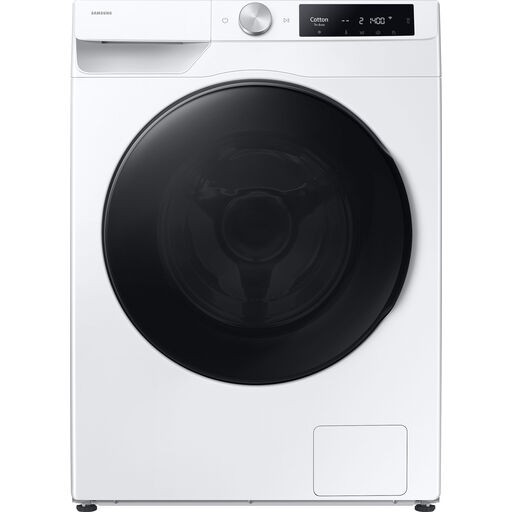 Image unavailable
Samsung WD11DG6B85BEU3, 11 kg washing, 6 kg drying
This washer-dryer combines washing and drying in one appliance. To run both cycles without taking any laundry out, keep the load within its 6 kg drying capacity, rather than its 11 kg washing capacity.
View on Joybuy
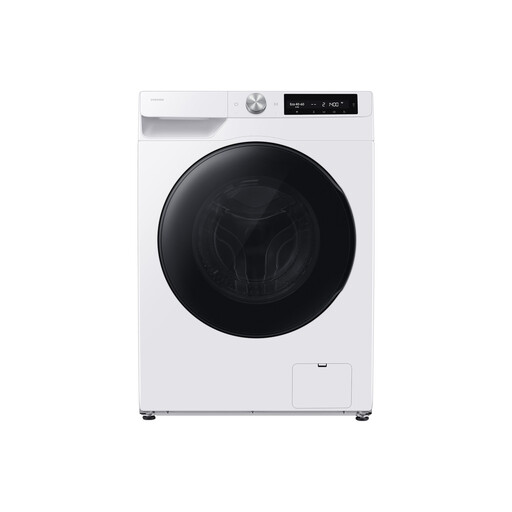 Image unavailable
Samsung WD10HG6U34BEU3, 10 kg washing, 6 kg drying
This washer-dryer is designed for homes with room for one appliance. It has a 10 kg washing capacity and a 6 kg drying capacity, so check the load before starting a continuous wash-and-dry cycle. The product title lists a D energy rating, which you should consider alongside the figures for the cycle you’ll use.
View on Joybuy
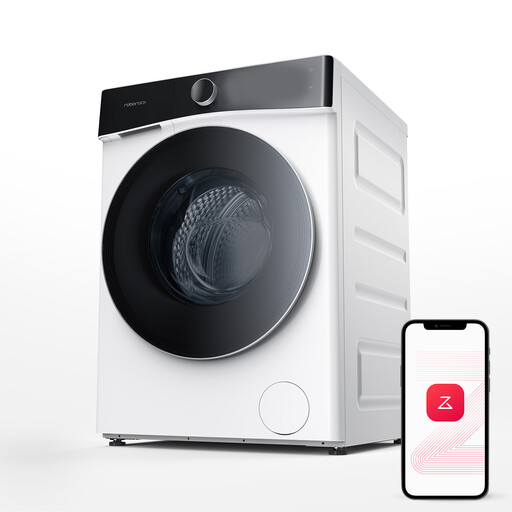 Image unavailable
Roborock Zeo Lite, 10 kg washing, 6 kg drying
The Roborock Zeo Lite combines both functions in one appliance, with a 10 kg washing capacity and a 6 kg drying capacity. A continuous wash-and-dry cycle must therefore stay within the lower of the two capacities. The product title mentions Zeo-Cycle, app control and LintClear; check that its programmes and settings suit your fabrics.
View on Joybuy
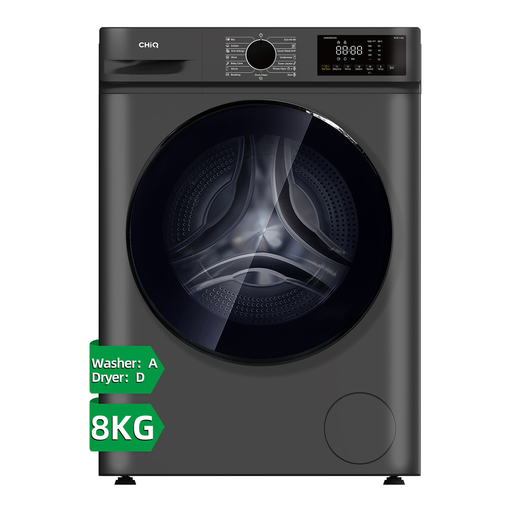 Image unavailable
CHiQ JW85882HG, 8 kg washing, 5 kg drying
This washer-dryer takes up just one space and has an 8 kg washing capacity and a 5 kg drying capacity. If you want to dry a full load straight after washing, stick to the 5 kg capacity. Before buying, also measure the space available and allow for the necessary clearance.
View on Joybuy
 Image unavailable
Hotpoint CHD84MWBSEE, 8 kg heat-pump tumble dryer
This separate 8 kg tumble dryer has a C energy rating and needs to be paired with a washing machine in a suitable space. You’ll need to transfer the laundry between appliances; check the manual for details on condensed water management and installation requirements.
View on Joybuy
Frequently asked questions
Can you wash a full load and then dry it all in a washer-dryer?
Not if the load exceeds the drying capacity. As UFC-Que Choisir points out, this is lower than the washing capacity. Compare both figures in kg and keep the load within the stated drying capacity if you want to run both cycles without taking any laundry out.
Which energy rating should you check on a washer-dryer?
Check the figures that match how you plan to use it: the combined wash-and-dry cycle and washing alone are listed separately. The washing-only rating isn’t enough to assess regular drying; also compare the cycle time and energy and water use for the cycle in question.
Does a separate tumble dryer always need an external vent?
No. Gifam distinguishes between vented dryers, which need a duct to the outside, and condenser dryers, which collect the water. Depending on the model, the water is collected in a tank or can be directed to a compatible drain. Check the manual before planning the connection.
Can you use an airer in a home without a dedicated drying room?
Only if you can set aside a suitable space and dry your laundry with adequate ventilation. ADEME recommends a large, well-ventilated room or one fitted with a mechanical ventilation extract, as drying clothes indoors adds moisture to your home.
What should you measure before choosing between a washer-dryer and two stacked appliances?
Measure the available width, height and depth, as well as door clearance and the space required according to the manuals. For a stacked setup, also check that the appliances and stacking kit are compatible; similar dimensions alone don’t guarantee they’ll fit together.


