People with space for just one appliance
You want to wash and dry your laundry in one appliance. As drying capacity is usually lower than washing capacity, check whether you can run both stages in one go without taking some of the laundry out.


A washer-dryer is a good choice when you only have space for one appliance, provided your load fits its drying capacity, which is usually lower than its washing capacity. If you can make room for an airer, drying clothes naturally means you can avoid using the machine’s drying cycle. If you have space for two appliances and regularly wash large loads, separate machines avoid the capacity limit of a combined cycle. In every case, check the space you need and compare the figures that match how you plan to use it.
You want to wash and dry your laundry in one appliance. As drying capacity is usually lower than washing capacity, check whether you can run both stages in one go without taking some of the laundry out.
If you often dry laundry for several people or bulky items, start by considering the amount you need to dry in one go. Washing capacity alone isn’t enough to compare appliances.
If you’re installing the appliance in a kitchen, bathroom or cupboard, also measure the delivery route, any protruding parts and the space needed to open the door.
Consider this if: you only have space for one appliance and want to wash and dry your laundry without transferring it between machines.
Bear in mind: drying capacity is often lower than washing capacity, and a combined cycle can take a long time, as UFC-Que Choisir points out.
Consider this if: you can temporarily set aside a ventilated space for your laundry and don’t need to use a tumble dryer.
Bear in mind: the airer takes up space while your laundry dries, so you’ll need to plan around the layout of your home.
Consider this if: you have room for two appliances and regularly dry loads that exceed a washer-dryer’s capacity.
Bear in mind: you’ll need space for two appliances and have to transfer your laundry between them.
When choosing for a small home, start with the amount you need to dry in one go. Then check the installation requirements and the figures for the cycle you’ll use.
| What to consider | What to check | Who is this for? |
|---|---|---|
| Load to dry | Drying capacity in kg and the capacity of the wash-and-dry programme, which are separate from washing capacity. | If I need to dry a whole load without taking some of it out, the drying limit matters more than the drum size quoted for washing. Around 36% of consumers may rank this capacity as their top priority. |
| Space and access | Overall dimensions, protruding parts, door opening and access along the delivery route. | If I have a narrow alcove, I want to be able to get the appliance in, connect it and open the door without any problems. This could be a priority for around 36% of consumers. |
| Cycle time and consumption | For the wash-and-dry cycle: duration, energy in kWh per 100 cycles and water in litres per cycle, for a comparable stated load. | If I often use the machine to dry clothes, I want to know how long the complete cycle takes and how much energy and water it uses. Around 28% of consumers may prioritise this repeated use. |
ADEME recommends choosing a capacity that suits your needs and checking the energy label. For a washer-dryer, read the figures for the wash-and-dry cycle separately from those for washing alone: a washing energy class on its own doesn’t tell you how the combined cycle performs.
A washer-dryer with a 9 kg washing capacity and a 6 kg drying capacity can’t dry a 9 kg load on a programme limited to 6 kg. UFC-Que Choisir highlights this difference in capacity.
Compare your largest load to dry with the drying limit and the combined programme’s capacity. You may need to use a smaller load or find another way to dry the rest.
The depth, connections and open door may make an alcove unusable, even if the width is right. You’ll also need to consider whether the packaged appliance will fit along the delivery route.
Measure the alcove and the entire delivery route, then compare these measurements with the dimensions of your chosen model, including the open door and any protruding parts.
Figures for washing alone and for a wash-and-dry cycle relate to different uses. The complete cycle time also matters if you need to run several loads one after another.
On the energy label and product information for the exact model, compare the figures for the combined cycle at the same stated capacity, rather than energy classes for different cycles.
A higher drying capacity doesn’t guarantee that an appliance will fit in your alcove. For example, Haier lists a depth of 666 mm for its 12/8 kg X5 HWD120-BP14357U1.
First check which dimensions will work for your installation, then compare the drying capacities of the models that will fit.
These range examples can help you identify useful measurements and capacities; specifications vary by model.
The range includes front-loading washer-dryers with different capacities. Compare washing capacity, drying capacity and dimensions separately.
Some 9/6 kg models list several depth measurements, which are useful when checking whether an appliance will fit in a narrow alcove.
The X5 HWD120-BP14357U1 is an example of a model to consider if you need to dry a large load and only have space for one appliance.
The range includes 8/5 kg washer-dryers, where it’s important to consider both capacities.
These appliances combine washing and drying in one space-saving unit. For each one, first compare its stated 6 kg drying capacity with your usual load, then check how much room you’ll need for installation.
 Image unavailable
Worth considering if you want to wash and dry in one appliance and a 6 kg drying capacity is enough for your load.
The product name lists an 11 kg washing capacity and a 6 kg drying capacity. You’ll need to reduce a full-capacity wash load before drying. Also check there’s room for the connections and to open the door, and that the appliance will fit along the delivery route.
 Image unavailable
Worth considering if you only have space for one appliance and your usual load to dry is no more than the stated 6 kg capacity.
The product name gives separate capacities of 10 kg for washing and 6 kg for drying. Before choosing this model for an alcove, check its full dimensions and the clearance needed to open the door. Also check the figures for the wash-and-dry cycle.
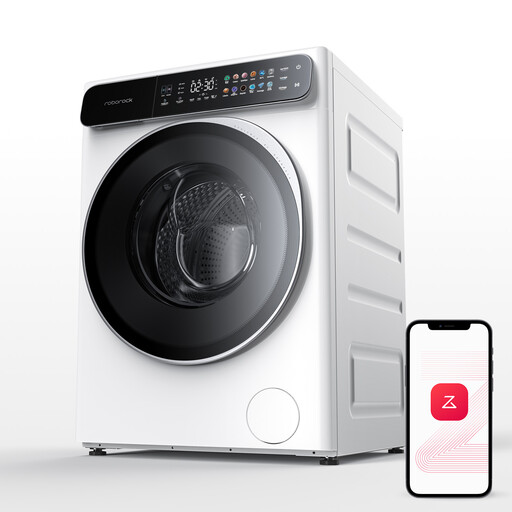 Image unavailable
Worth considering if you’re looking for an appliance that combines both functions and can keep your load to dry to 6 kg.
The product name lists a 10 kg washing capacity and a 6 kg drying capacity. To check whether it will suit your space and regular use, look at its full dimensions, door clearance, and the duration and consumption figures for the combined cycle.
No. If the programme is limited to 6 kg for drying, you’ll need to reduce a 9 kg load before that stage. You could also wash less laundry or dry some of it on an airer. Check the stated capacity for the combined programme on the exact model.
Measure the height, width and depth of the alcove, then check the doors, corridors and lifts along the delivery route. Also make sure there’s enough room for connections, protruding parts and the open door. For example, LG lists a depth of 1,100 mm with the door open at 90° for the F964V72WRHT.
Compare the figures for the wash-and-dry cycle and its stated load, rather than looking at the washing energy class alone. ADEME explains that energy is shown in kWh per 100 cycles and water in litres per cycle. If you run several loads one after another, also check the duration of the complete cycle.