Who is this option suitable for?

One laundry-appliance space

You have a water supply, a waste outlet and room for just one appliance, but still need mechanical drying. According to UFC-Que Choisir, you need to accept a smaller drying load than washing load, as well as longer cycles.

Small households wanting a cycle without transferring laundry

This solution is ideal if you want to collect dry laundry without moving the load. Check that your usual volume is compatible with the stated wash-and-dry capacity, often 6 kg on appliances that can wash more.

Households considering two narrow spaces

Two appliances may still be an option if the actual dimensions and installation allow it. A top-loading washing machine can reduce the width required, while a separate standard tumble dryer is usually close to 60 cm wide and deep.

Priorities before buying

Front-loading washer-dryer

Choose this if: you have only one space and can limit the drying load to the maximum stated for the combined cycle.

Bear in mind: drying capacity is lower than washing capacity, and the cycle ties up your only appliance for longer.

Compact washing machine with separate drying

Choose this if: width is your main constraint and another drying area is available.

Bear in mind: the laundry must be dried separately; a compact washing machine does not replace an integrated mechanical drying function.

Two separate appliances

Choose this if: two appliances can be installed side by side or stacked according to their manufacturers’ instructions.

Bear in mind: the total footprint will be greater, even though the drying capacity may be better suited to larger loads.

Priority What to check Your needs
Drying load Compare the washing capacity with the wash-and-dry capacity. Base your choice on the amount of laundry you want to dry in one go. I want to start washing and drying without removing any laundry. This is realistic only if my load does not exceed the drying capacity.
Actual footprint Measure the width, height and depth, then allow for the door swing and the clearances specified in the instructions. My appliance must fit under a worktop or between two units without blocking the door or making installation impossible.
Cycle times and consumption Check the wash-and-dry cycle data on the label and model information, rather than the figures for washing alone. I can accept a longer cycle if it means avoiding a transfer of laundry, but I want to understand how it will affect my laundry routine.
Installation and maintenance In a bathroom, check the earthing, 30 mA residual-current protection and installation zone. Also follow the dosage and maintenance instructions. I want to avoid odours, build-up and problems caused by unsuitable electrical installation.

Mistakes to avoid

  • Looking only at the washing capacity

    An appliance advertised as 9/6 kg or 10.5/6 kg cannot automatically dry a full 9 or 10.5 kg wash load. You will need to remove some laundry or split the drying cycle.

    Choose according to your largest single drying load and read the “wash-and-dry” capacity, not just the first figure.

  • Measuring only the width of the alcove

    The depth, door opening and required clearances may prevent installation between units or under a worktop.

    Measure the available width, height and depth, then compare them with the overall dimensions and installation instructions for the model you are considering.

  • Confusing space-saving with time-saving

    The combined cycle avoids transferring laundry, but UFC-Que Choisir states that drying takes longer than with a conventional tumble dryer and may use a great deal of water.

    Compare the duration, water use and electricity consumption of the precise model’s wash-and-dry cycle. A heat-pump model is worth considering based on its own specifications, dimensions and cycle.

  • Overlooking the electrical circuit in a bathroom

    An unsuitable installation in a damp room can pose an electrical risk.

    According to Promotelec, check the earthing, a 30 mA residual-current device and compliance with the safety zones. Have the installation inspected if you cannot confirm these conditions.

Brand overview

LG

LG offers front-loading washer-dryers such as the F964R35WRS, advertised as 9 kg for washing and 6 kg for drying.

  • The 9/6 kg format makes it easy to compare the washing load with the drying load.
  • A full 9 kg load does not equate to a 9 kg drying load; the AI Direct Drive and Steam functions are manufacturer claims.

Bosch

The Series 6 and Series 8 ranges include front-loading washer-dryers; the WNG254ASFR is advertised as 10.5 kg for washing and 6 kg for wash-and-dry cycles.

  • For this model, Bosch specifies dimensions of 848 × 598 × 590 mm and a spin speed of 1,400 rpm.
  • The load must be reduced before drying if it exceeds 6 kg, despite the large washing capacity.

Electrolux

Electrolux offers heat-pump models, including the PerfectCare 900 EW9W1165RB, advertised as 10/6 kg.

  • This technology is worth comparing when the combined cycle and fabric care are important factors in your decision.
  • Electrolux states that an Eco 40-60 wash-and-dry cycle takes 9 h 40 on one version in this range; claims regarding fabrics and energy are made by the manufacturer.

Whirlpool

Whirlpool offers FreshCare+ washer-dryers and separate tumble dryers, making it useful for comparing the two configurations.

  • The FFWDB864369BVFR model is documented as 8/6 kg and 54 cm deep.
  • A separate tumble dryer from the brand may be nearly 60 cm wide and deep, requiring a genuine second space.

Candy

Candy is a useful reference for top-loading washing machines when width is more restricted than depth and drying can be arranged separately.

  • The CSTG 27L3/1-47 is advertised as 40.5 cm wide, with a capacity of 7 kg.
  • This type of washing machine does not offer integrated drying, so you will need another drying solution.

Joybuy products for a small home

These Joybuy options are washer-dryers designed to wash and dry in a single appliance. First compare the drying capacity, dimensions that fit your alcove and the data for the combined cycle.

Samsung WD11DG6B85BEU3 washer-dryer, 11 kg washing and 6 kg drying

Samsung WD11DG6B85BEU3, 11 kg / 6 kg

For a home with one appliance space, provided you limit the load left for drying to 6 kg.

Stated capacity: 11 kg for washing and 6 kg for drying. The stated wash-and-dry cycle takes 7 h 32; also check the 60 cm depth, door and required clearances.

Joybuy
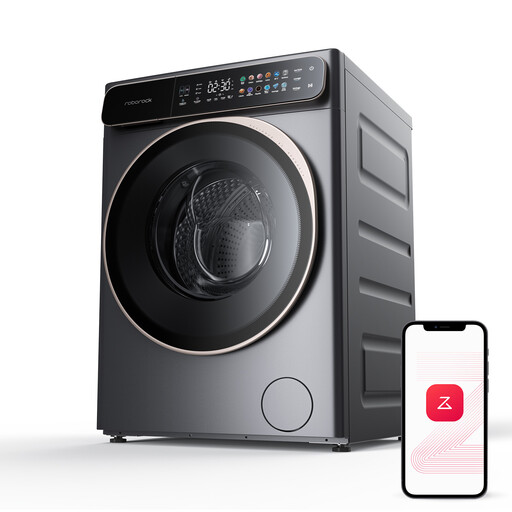
Roborock Zeo One grey washer-dryer, 10 kg washing and 6 kg drying

Roborock Zeo One, 10 kg / 6 kg

A combined option for regular loads of no more than 6 kg when drying.

The product offers 10 kg washing capacity, 6 kg drying capacity, automatic dosing and a LintClear system. Confirm the dimensions, duration and consumption of the combined cycle before installation.

Joybuy
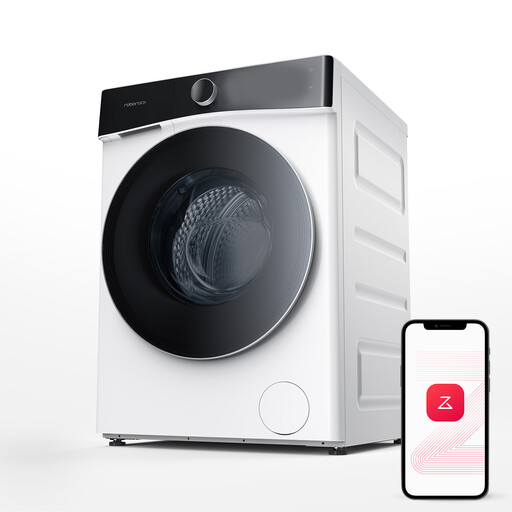
Roborock Zeo Lite white washer-dryer, 10 kg washing and 6 kg drying

Roborock Zeo Lite, 10 kg / 6 kg

It meets the need to wash and dry in the same appliance for loads limited to 6 kg when drying.

The stated capacities are 10 kg for washing and 6 kg for drying. Automatic dosing is intended for liquid detergents; check compatibility with the products you normally use.

Joybuy

Samsung WD10HG6U34BEU3 washer-dryer, 10 kg washing and 6 kg drying

Samsung WD10HG6U34BEU3, 10 kg / 6 kg

Worth considering for a single appliance space when continuously drying 6 kg of laundry matches your usual routine.

Stated capacities: 10 kg for washing and 6 kg for drying. The stated dimensions are 600 × 850 × 590 mm; check the wash-and-dry cycle data on the model’s label.

Joybuy
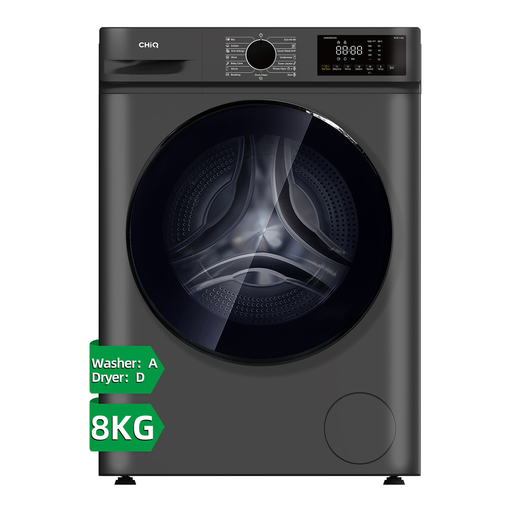
CHiQ JW85882HG washer-dryer, 8 kg washing and 5 kg drying

CHiQ JW85882HG, 8 kg / 5 kg

This option may suit small households whose drying loads are usually around 5 kg.

The product offers 8 kg washing capacity, 5 kg drying capacity and a depth of 520 mm. Confirm the actual width and required clearances before approving the installation.

Joybuy

Frequently asked questions

Can I run a full load and then dry it automatically?

Yes, but only if the amount of laundry does not exceed the drying capacity. UFC-Que Choisir points out that this capacity is lower than the washing capacity; for example, Bosch states 10.5 kg for washing but 6 kg for a wash-and-dry cycle on the WNG254ASFR.

Why compare the wash-and-dry cycle separately from washing alone?

Because the duration, water consumption, electricity consumption and rating can vary depending on the cycle. European regulations on washer-dryer energy labels require information specific to these appliances: check the details for the combined cycle on the exact model.

Can I install a washer-dryer in a bathroom?

According to Promotelec’s technical guidance, the appliance must be earthed, supplied by a circuit protected by a 30 mA residual-current device and installed beyond volume 2. Have the location and circuit checked by a qualified professional when these conditions are not clearly established.

What maintenance helps prevent odours?

ADEME states that using too much detergent can cause build-up in the washing machine and generate unpleasant odours. Follow the recommended dosage, run the maintenance cycles specified in the instructions and distinguish the Eco programme from a quick programme: Eco runs for longer at a lower temperature.

Is a separate tumble dryer always better suited to a small home?

No. It may provide greater drying capacity, but it requires a second space. The Whirlpool tumble dryer mentioned in the brand specifications measures 59.8 cm wide and 60.7 cm deep; a washer-dryer remains more suitable when only one space is available.