For homes with space for one appliance
You want to wash and dry clothes at home without making room for a second appliance or relying on a clothes airer every time. Check the appliance’s actual dimensions and how much laundry it can dry.


In a home with space for just one appliance and nowhere easy to dry clothes, a washer-dryer lets you wash and dry your laundry without moving it between machines, provided you keep within its drying capacity, which is lower than its washing capacity. If you can install a compatible stacking set, it’s worth comparing the two options for larger or more frequent loads. If you can dry clothes in a well-ventilated room, a washing machine on its own avoids electric drying, but adds moisture to your home, as ADEME points out.
You want to wash and dry clothes at home without making room for a second appliance or relying on a clothes airer every time. Check the appliance’s actual dimensions and how much laundry it can dry.
Your usual loads may exceed the washer-dryer’s drying capacity. Compare how much you’d need to split each load with the option of stacking two appliances.
You want to work out running costs based on how often you dry your laundry. Compare the figures for washing alone and for a complete wash-and-dry cycle across the models you’re considering.
Choose this if : you have space for just one appliance and want to wash and dry clothes without transferring them between machines.
Bear in mind : the drying capacity is lower than the washing capacity, and programmes can take a long time.
Choose this if : the height, depth and access allow for installation, and the appliances and stacking kit are compatible.
Bear in mind : you’ll need two appliances and a suitable stacking kit; check that the models work together. The documented Bosch kit is designed for a washing machine with a depth of more than 55 cm. This requirement applies to that kit only.
Choose this if : you can wait for clothes to dry naturally and set up an airer in a well-ventilated room or one with suitable extraction.
Bear in mind : the airer takes up space while your clothes are drying, and they release moisture into your home.
To decide between these options, first compare drying capacity and dimensions with your needs and available space. Then compare energy and water use, as well as the length of the cycles you’ll actually use.
| Criteria | What to check before buying | Who prioritises it |
|---|---|---|
| Available space | Overall dimensions, depth, door clearance and the route to the installation space. | If I only have space for one appliance to wash and dry clothes, I want to know whether the machine and its door will fit in the space available. Around 36 % of consumers prioritise this space constraint. |
| Load size and cycle time | Washing and drying capacities in kg, followed by the full-cycle duration for the reference load. | If my laundry loads often exceed the drying capacity, I want to know whether I’ll need to remove some clothes or wait between cycles. Around 29 % of consumers prioritise laundry volume and how often they do it. |
| Water and electricity use | For each model, compare kWh/100 cycles and litres/cycle for washing alone and for a complete cycle. | If I plan to dry clothes often, I want to compare the energy and water use of the cycle I’ll actually run. Around 21 % of consumers put managing energy and water use first. |
| Installation and back-up option | Instructions, connections and exact kit compatibility; for a clothes airer, available space and ventilation. | If installation depends on stacking the appliances or I need to dry clothes naturally, I want to make sure my home can accommodate the solution. Around 14 % of consumers prioritise whether installation or an alternative drying option is practical. |
Capacity, dimensions and installation requirements vary by model. For example, Bosch lists dimensions of 848 × 598 × 565 mm for its WNA14401FR, while AEG gives a maximum depth of 660 mm for the LWR98B166X. Also check the clearance needed around the appliance in its instruction manual.
The European Commission says that washer-dryer labels provide information including electricity use per 100 cycles, water use and cycle duration. For each model, compare washing alone with a wash-and-dry cycle: these figures relate to different types of use. The drying technology alone doesn’t tell you how much your appliance will cost to run.
Drying capacity is lower than washing capacity, so a full wash load may be too large to dry in a single cycle.
Compare both capacities in kg and plan back-to-back cycles around the drying capacity and the size of your usual loads.
If a load is too large, you may need to split it, tying up the machine for longer.
Figures for washing alone don’t show how much energy and water a wash-and-dry cycle uses.
For each model, check the figures for both washing and the complete cycle, including kWh/100 cycles, litres per cycle and duration. Don’t try to work out the energy use of drying alone by subtracting one figure from another.
Available height, depth and compatibility between the kit and both appliances determine whether the installation is possible.
Check the model numbers of the appliances and kit, then measure the space and access route before settling on this option.
Air-drying avoids using an electric tumble dryer, but releases moisture into your home. ADEME points out that air-drying laundry indoors is a major source of moisture in the air inside your home.
If you dry clothes indoors, make sure the room is well ventilated or has suitable extraction.
The WNA14401FR is an example of a freestanding washer-dryer listed with a 9 kg washing capacity and 5 kg drying capacity, measuring 848 × 598 × 565 mm.
The LWR98B166X Series 9000 is an example of a heat pump washer-dryer listed with a 10 kg washing capacity and 6 kg drying capacity.
The F164HP2BST is an example of a heat pump washer-dryer listed with an 11 kg washing capacity and 6 kg drying capacity.
The Ultra HCUW 485TWME/1-S is a freestanding washer-dryer listed with an 8 kg washing capacity and 5 kg drying capacity, measuring 600 × 540 × 850 mm.
The WD10HG6U34BEU3 is an example of a washer-dryer listed with a 10 kg washing capacity and 6 kg drying capacity.
These models combine washing and drying in a single appliance, for homes with space for just one. Check the drying capacity and dimensions of each model before choosing.
 Image unavailable
This two-in-one appliance could suit you if you have space for just one machine and want to wash and dry your clothes in sequence.
Its listed drying capacity is lower than its washing capacity, so make sure your complete cycles stay within the 6 kg limit.
 Image unavailable
This washer-dryer is for anyone who wants to wash and dry clothes in a single appliance.
Its listed drying capacity is 6 kg, compared with 10 kg for washing. If you dry clothes often, compare the figures for a complete cycle too.
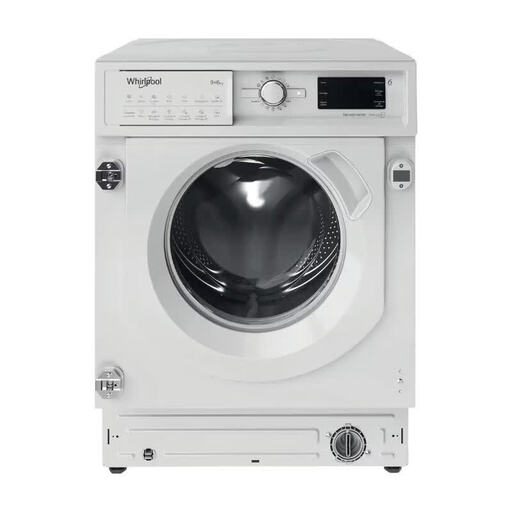 Image unavailable
Its integrated design could suit a space made for this type of appliance.
Check the model’s drying capacity and dimensions before planning a complete cycle or confirming that it will fit.
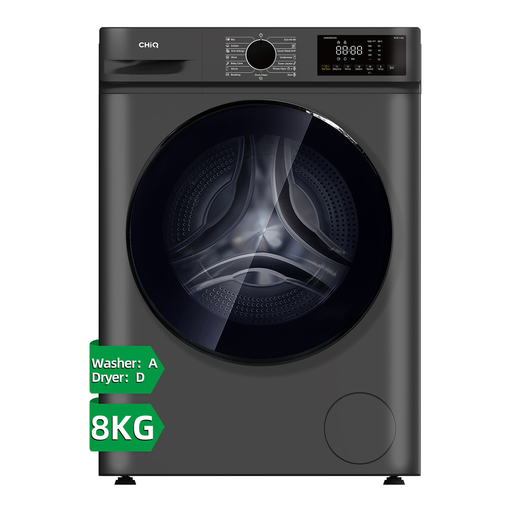 Image unavailable
This washer-dryer is worth considering if you want to combine washing and drying in a single appliance.
Its listed width is 465 mm; check the other dimensions and drying capacity before confirming it will fit your space and suit your laundry routine.
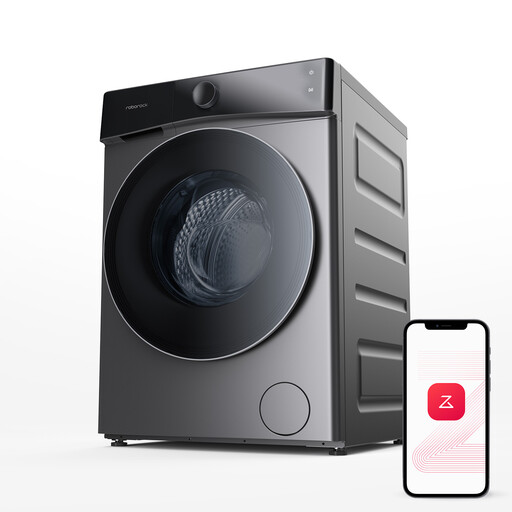 Image unavailable
This freestanding model could suit you if you want to wash and dry clothes in a single appliance.
Its listed capacity is 10 kg for washing and 6 kg for drying. Check the dimensions and full-cycle figures before planning to dry clothes frequently.
Only if the load doesn’t exceed the drying capacity of the programme you’ve chosen. For a Bosch WNA14401FR listed as 9/5 kg, that means 9 kg for washing and 5 kg for drying. If needed, reduce the load or take some clothes out before drying.
Compare the figures for the specific models you’re considering, both for washing alone and for a complete cycle: kWh per 100 cycles, litres per cycle, rating and duration. The European Commission says this information appears on washer-dryer labels. Don’t try to work out the energy use of drying alone by subtracting the figures for the two cycles.
Measure the height, width, overall depth, route to the installation space and door clearance, then compare these measurements with the instructions for your chosen model. If you’re stacking the appliances, also check that the kit is compatible with both. The depth requirement for the Bosch kit we looked at applies to that particular kit.
Check the figures for both washing alone and a wash-and-dry cycle for the specific model. The European Commission says labels include information such as electricity use per 100 cycles, water use per cycle and cycle duration.
The statutory guarantee of conformity is compulsory for goods sold by a business to an individual. The French Ministry of the Economy and Finance says it covers new, second-hand and refurbished goods; it is separate from a paid commercial warranty extension.