Studio or small-flat residents
A washer-dryer can make sense when there is only one space for laundry appliances, provided you check the depth, door clearance and drying capacity.


Choose a washer-dryer if you only have room for one appliance and your usual load for drying remains within the stated drying capacity, which is often lower than the washing capacity. For frequent large loads or several consecutive washes, two separate appliances are usually more suitable when space and installation allow; also measure the total depth, door clearance and connections before ordering.
A washer-dryer can make sense when there is only one space for laundry appliances, provided you check the depth, door clearance and drying capacity.
A washer-dryer can suit moderate loads if the amount of laundry to be dried fits within the stated capacity and the cycle length works with your routine.
For bedding, towels or consecutive loads, the difference between washing and drying capacities can become restrictive. Two separate appliances are then worth considering when your layout allows.
Consider it when: only one large appliance will fit in your home and the load to be dried is moderate.
Bear in mind: the drying capacity is separate from the washing capacity, and the complete cycle can be long.
Consider it when: the depth of the space is the main constraint and another drying method is still possible.
Bear in mind: the laundry will not automatically move from washing to drying in the same drum.
Consider it when: you often dry loads close to your washing capacity or need to run consecutive washes.
Bear in mind: you need a suitable space, and stacking requires compatible appliances and a compatible stacking kit.
| Priority | What to check | Your needs |
|---|---|---|
| Drying capacity | Compare the washing kg and the wash-and-dry cycle kg separately. Check the capacity specified for the programme and fabrics concerned. | I want to dry a load without removing some of the laundry. The load to be dried must remain within the stated drying capacity, expressed in kg of dry laundry. |
| Actual dimensions | Measure the height, width, total depth, connections and clearance with the door open. Compare these with the finished recess, not just the cabinet. | I need to be able to install the appliance, connect the water supply and waste, then open the door without blocking the walkway. |
| Complete cycle | Check the duration, water use, energy consumption and capacity of the wash-and-dry cycle. Compare models on the same basis, separately from washing alone. | The laundry needs to be ready before it is next needed. I therefore check the complete cycle rather than only the washing mode’s class. |
| Bathroom installation | Check the appropriate circuit, earthing, residual-current protection and the appliance’s position in relation to a shower or bath. | I want to install the machine without creating an electrical risk or choosing a position that is unsuitable for the room. |
Wet laundry needs room to dry. A load run at the maximum washing capacity may mean removing some laundry before drying or splitting the process into separate loads.
Base your choice on the drying capacity of the programme you intend to use, rather than the first figure shown in the model name.
A few extra centimetres, hoses or an open door can prevent an appliance installed under a worktop from being used normally.
Measure the finished internal space, clearance in front of the appliance, sockets and connections, then compare them with the specifications and instructions for the exact model.
Washing data and wash-and-dry data describe different uses. A washing class alone does not tell you the water use, energy consumption or duration of the complete cycle.
Consult the energy label and EPREL to compare the capacity, water use, energy consumption and duration of the wash-and-dry cycle on an identical basis.
The appliance’s position, earthing, residual-current protection and safety zones may determine whether it can be installed in a bathroom or cupboard.
If the appliance is near a shower or bath, or in a bathroom cupboard, have the proposed installation confirmed by a qualified professional before buying.
Bosch offers front-loading washer-dryers, including the WNG24402FR, listed with a 9 kg washing capacity and 6 kg wash-and-dry capacity.
LG offers models with a large washing capacity, including the F164R51WRS, listed with 11 kg for washing and 6 kg for drying.
Haier also offers built-in washer-dryers when the project requires installation under a unit or behind a cabinet front.
These Joybuy options are for a single-appliance solution: front-loading washer-dryers for homes where there is not enough space to install two machines.
 Image unavailable
For a single installation space, this model clearly separates its 11 kg washing capacity from its 6 kg drying capacity.
Stated dimensions: 60 × 85 × 60 cm. The stated wash-and-dry cycle lasts 7 h 32, using 90 L per cycle and 308 kWh/100 cycles.
An 11 kg full load cannot be dried immediately afterwards; also check the total depth including connections and the clearance with the door open in the instructions.
 Image unavailable
This washer-dryer suits a single installation space if your load for drying does not exceed 6 kg.
Stated dimensions: 600 × 850 × 590 mm. The model is listed in class D.
For installation under a worktop, check the total depth, door clearance and the complete-cycle data in the model documentation.
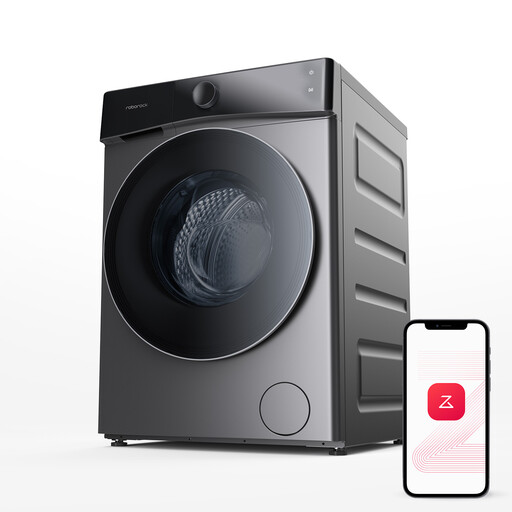 Image unavailable
This two-in-one option offers 10 kg for washing and 6 kg for drying in homes without room for two appliances.
The product lists 27 programmes, automatic dosing, automatic filter cleaning and low-temperature Zeo-Cycle drying.
Check the dimensions, door clearance, complete-cycle duration and the capacities applicable to your chosen fabric and programme.
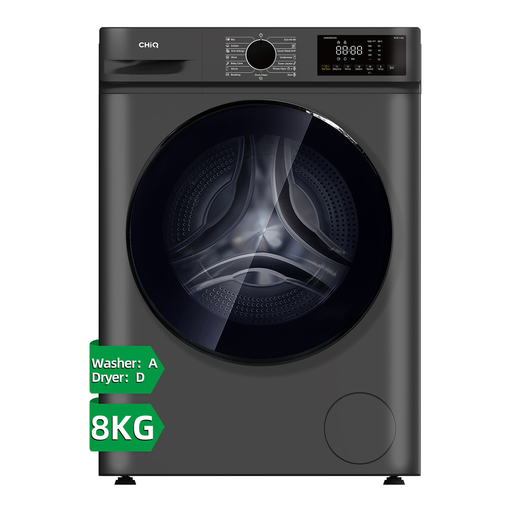 Image unavailable
This model offers 8 kg for washing and 5 kg for drying, combining both functions in one appliance.
The stated depth is 520 mm, with a 1 400 rpm motor, a steam function and a 15-minute quick programme.
Confirm the width before finalising the recess: the title states 465 mm, while the stated dimensions are 600 × 520 × 847 mm.
No, not in a consecutive 9 kg wash-and-dry cycle. On a 9/6 kg model, the load for drying must be limited to 6 kg according to the programme conditions, so some laundry will need to be removed or processed in another cycle.
Measure the internal height, width and depth, then check the total depth, protruding parts and clearance with the door open. Also allow for the delivery route, water inlet, waste outlet and access to the connections.
Yes, but only if the applicable electrical and positioning requirements are met. Promotelec specifically recommends earthing, 30 mA residual-current protection and positioning outside the safety zones; for a recess or cupboard, seek qualified approval if in doubt.
Compare both if you use both functions. The European Commission distinguishes between washing-cycle and wash-and-dry-cycle data in EPREL: capacity, water, energy and duration should all be assessed for the complete cycle.
Check the applicable warranty, access to the instructions and spare parts, and the durability index where displayed. ADEME states that this index takes into account factors including parts availability and price, dismantlability, documentation, reliability, maintenance and warranty.