Who is this option for?

Anyone with room for just one appliance

You want to wash and dry your clothes at home without installing two appliances. Measure the depth of the space and allow room to open the door: having room for just one appliance doesn’t necessarily mean a particular model will fit.

Households that often dry all their laundry

If you do several loads in a row or dry large loads, start by comparing the drying capacity and the full cycle time. UFC-Que Choisir points out that a washer-dryer’s drying capacity is lower than its washing capacity.

Anyone keeping an eye on running costs and lifespan

You’re happy with a two-in-one appliance, but want to consider how it will perform over time. Compare the figures for the wash-and-dry cycle on the energy label and the model’s specification sheet. Also look for the durability index, if one is shown for the appliance.

How do the options compare?

Washer-dryer

Consider this if: you only have room for one appliance and your drying loads stay within the stated limit for the full cycle.

Bear in mind: the drying capacity is lower than the washing capacity. UFC-Que Choisir also recommends looking separately at cycle time, energy and water use, and drying results.

Two stacked appliances

Consider this if: you need to keep the same floor space free but have enough height, and want to be able to start a wash while another load is drying.

Check: that the appliances can be stacked safely, that they can be delivered through your access routes and that you have the necessary connections for both.

Airer or laundrette

Consider this if: you only use a tumble dryer occasionally and can dry clothes in a suitable room or take occasional large loads to a laundrette.

Bear in mind: an airer needs a well-ventilated space, as indoor drying releases moisture, according to ADEME. A laundrette won’t let you dry everything at home.

CriteriaWhat to checkRelevant considerations
Space Measure the depth, door clearance and delivery access routes. For two stacked appliances, also check the height and that the models can be stacked together. When every centimetre counts, I want to wash and dry at home without blocking access to the room; around 28% of consumers prioritise this space constraint.
Laundry load Compare washing and drying capacities in kg, then check the full cycle time for the load you actually want to dry. If I do several loads in a row, having to remove some laundry before drying makes it harder to plan my day; around 28% of consumers put load size and laundry frequency first.
Energy and water use On the energy label, compare kWh per 100 cycles and litres per cycle in the same sections, distinguishing between washing only and washing and drying. I plan to use the full cycle regularly and want to know how much water and electricity it uses; this is the top concern for around 22% of consumers.
Drying results Check the programmes available and, for the model you’re considering, any test results for different loads and fabrics. If I want to put my laundry away without usually relying on an airer or laundrette, drying performance will decide my choice; around 22% of consumers prioritise this need.

Mistakes to avoid

  • Confusing washing capacity with drying capacity

    A washer-dryer can wash more laundry than it can dry in a full cycle. For example, the Bosch WDU8H500FF is listed as having a 10 kg washing capacity and a 6 kg capacity for the wash-and-dry cycle.

    Choose based on the load you want to wash and dry without removing any laundry, and check both capacities in kg.

    If a load exceeds the drying limit, you may need to handle it again and run an extra drying cycle.

  • Looking only at the washing energy rating

    The washing-only and wash-and-dry sections cover different types of use. The energy label shown by the European Commission distinguishes between their energy and water use, as well as their cycle times.

    To compare two models, check the figures for the same mode: water per cycle, electricity per 100 cycles and the duration of the relevant programme.

  • Measuring only the width of the space

    The depth, door clearance and access routes to the space can all prevent an appliance from being installed or used properly.

    Measure the appliance and its delivery route, then allow the clearances specified in the instructions for the door and connections.

  • Planning to use an indoor airer without considering humidity

    According to ADEME, drying laundry indoors is a major source of indoor humidity.

    If an airer will replace machine drying, choose a large, well-ventilated room or one with suitable ventilation.

Brands to consider

The features below apply to the models mentioned, not to every appliance made by each brand.

Bosch

The WDU8H500FF is an example of a washer-dryer with separate figures for washing and drying capacity.

  • Bosch Electroménager France lists the WDU8H500FF as having a 10 kg washing capacity and a 6 kg capacity for the wash-and-dry cycle.
  • Check its depth and the clearance it needs against the space you have available.

LG

LG offers washer-dryers as well as a solution with two stacked appliances. Check which layout best suits the space you have available.

  • LG France lists the F174V72BSTA as having a 10.5 kg washing capacity and a 7 kg drying capacity.
  • For this model, check the figures in the separate washing-only and wash-and-dry sections. Don’t assume they apply to other LG models.

Samsung

The WD11DG5B15BEEF provides a useful reference for comparing the capacity and dimensions of a washer-dryer.

  • Samsung France lists this model as having an 11 kg washing capacity and a 6 kg drying capacity.
  • Check the dimensions and energy label for the specific model before comparing it with another appliance. The WD11DG5B15BEEF’s specifications don’t represent the whole Samsung range.

Washer-dryers on Joybuy

These appliances combine washing and drying in one machine. To compare models, start with the load you want to dry, then check the dimensions and the figures for the full cycle.

Samsung WD11DG6B85BEU3 washer-dryer

Samsung WD11DG6B85BEU3 — 11/6 kg washer-dryer

Combines both functions in one appliance, as long as you limit the load to 6 kg for a full wash-and-dry cycle.

Stated capacities: 11 kg for washing and 6 kg for drying. Check the space needed for connections and to open the door.

View on Joybuy

Samsung WD10HG6U34BEU3 washer-dryer

Samsung WD10HG6U34BEU3 — 10/6 kg washer-dryer

Worth considering if a 6 kg drying capacity suits the loads you want to wash and dry without transferring laundry.

Stated capacities: 10 kg for washing and 6 kg for drying; stated dimensions: 600 × 850 × 590 mm. Also compare the water and energy use and the wash-and-dry cycle time, and allow enough clearance in front of the door.

View on Joybuy
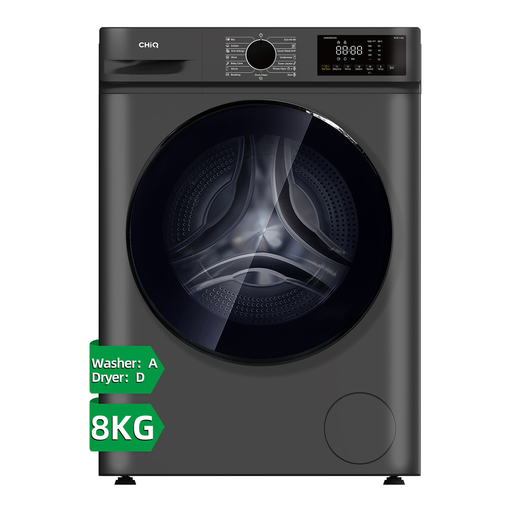
CHiQ JW85882HG washer-dryer

CHiQ JW85882HG — 8/5 kg washer-dryer

For washing and drying in one appliance, with a drying load no greater than the stated 5 kg capacity.

Stated capacities: 8 kg for washing and 5 kg for drying. The width shown in the title and description doesn’t match, so confirm the exact dimensions before planning the installation. Also check the figures for the full cycle.

View on Joybuy
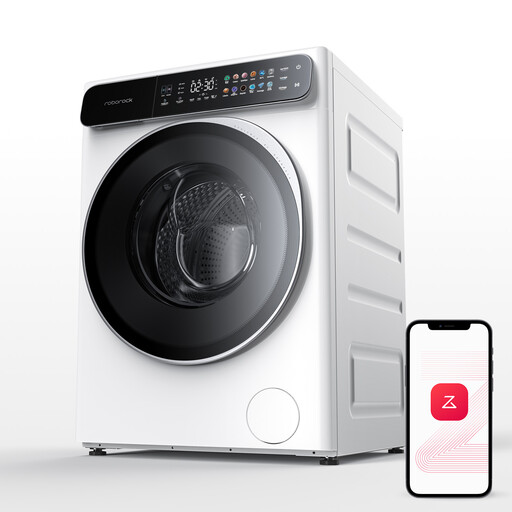
White Roborock Zeo One washer-dryer

White Roborock Zeo One — 10/6 kg washer-dryer

Wash and dry in the same appliance, as long as the load for drying stays within the stated limit.

Stated capacities: 10 kg for washing and 6 kg for drying. Check the dimensions, clearances, water and energy use, and full cycle time to make sure it suits your installation and laundry routine.

View on Joybuy
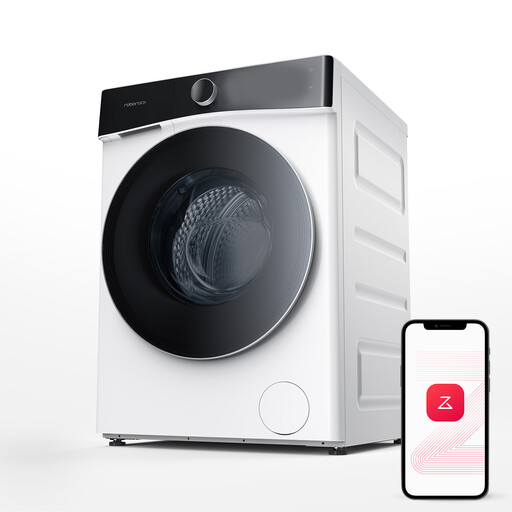
White Roborock Zeo Lite washer-dryer

White Roborock Zeo Lite — 10/6 kg washer-dryer

Get washing and drying in one machine if a 6 kg drying capacity meets your needs.

Stated capacities: 10 kg for washing and 6 kg for drying. Before choosing between models with the same capacity, compare the installation dimensions and the water and energy use and full cycle time.

View on Joybuy

Frequently asked questions

Can you wash 10 kg and then dry it all in a 10/6 kg model?

No, not in a single full cycle with a 10 kg load: the model is rated to dry 6 kg. UFC-Que Choisir distinguishes between the two capacities. Reduce or split the load before drying if it exceeds the stated limit.

What should you compare on a washer-dryer’s energy label?

Compare the washing-only and wash-and-dry sections separately. The European Commission lists, among other figures, electricity use per 100 cycles and water use per cycle. Also check the duration and any other figures shown for the mode you’ll use.

Can an indoor airer replace machine drying?

Yes, if you have a suitable place to dry your laundry. ADEME warns that drying clothes indoors releases a lot of moisture, so choose a large, well-ventilated room or one with ventilation.

What should you consider when installing an appliance in a bathroom?

Have the location and electrical circuit checked before installation. In France, Promotelec recommends, among other things, keeping the appliance outside zones 0, 1 and 2, earthing it and providing 30 mA residual-current protection. A qualified professional can assess your bathroom’s layout.

How can you factor lifespan into your decision?

Look for the durability index on the appliance’s product page, if one is shown. The French ministries responsible for ecology present it as a score out of 10. Check the rating for the specific model rather than assuming it is available for every washer-dryer.