Households without room for two appliances
A washer-dryer combines both functions in one appliance. However, you’ll need to plan your laundry around its drying capacity, which differs from its washing capacity, as UFC-Que Choisir points out.


A washer-dryer is a good choice if you only have room for one appliance and can keep consecutive loads within its drying capacity, which is usually lower than its washing capacity. If you often dry large loads, consider a separate solution if you have room to install one. And if you use an indoor airer, bear the spin cycle and the room’s ventilation in mind.
A washer-dryer combines both functions in one appliance. However, you’ll need to plan your laundry around its drying capacity, which differs from its washing capacity, as UFC-Que Choisir points out.
A wash-and-dry cycle means you don’t need to transfer laundry between two machines, provided the load stays within the drying capacity.
If you only use a tumble dryer for certain loads, the spin cycle and ventilation in the room where you air-dry clothes matter too. ADEME highlights that air-drying laundry releases a lot of moisture indoors.
Consider this if: you can only install one appliance and your drying loads stay within the stated capacity.
The trade-off: you may need to remove some laundry before drying a full wash load. Also compare the duration and energy and water use of the complete cycle.
Consider this if: you regularly dry large loads and can genuinely fit a second appliance.
The trade-off: it needs space and a suitable installation. If you plan to stack the appliances, make sure they’re compatible.
Consider this if: you can use a sufficiently well-ventilated room for drying clothes.
The trade-off: your laundry takes up space as it dries and releases moisture into your home, a point highlighted by ADEME.
| Factor | What to check | Who is it for? |
|---|---|---|
| Available space | Measure the width, height and installed depth, as well as the clearance needed for the door. | I can’t install two machines and need to keep the walkway clear; around 42% of consumers in this situation would put floor space at the top of their list. |
| Load dried without intervention | Compare the washing and drying capacities in kg, then check the maximum load for a wash-and-dry cycle. | I want to start a wash and come back to dry laundry without removing part of the load. This would be the main requirement for around 33% of consumers in this situation. |
| Practical considerations | Check the wash-and-dry cycle details for duration, water and electricity use, then read the care instructions. | If I use the drying function often, I want to be able to plan for its duration, energy and water use, and maintenance. Around 25% of consumers in this situation would prioritise these factors. |
An appliance may be able to wash more laundry than it can dry in one go. So, if you wash a full load, you may need to remove some items before drying.
Choose a drying capacity that suits the amount you want to dry in each cycle, then check the washing capacity separately.
If you regularly use both functions, the duration and energy and water use of the complete cycle matter. UFC-Que Choisir’s testing also looks at noise and creasing.
On the energy label and in the model information, look for the figures for the cycle you’ll use. Don’t confuse them with figures for the wash cycle alone.
An appliance may fit between two cabinets but still get in the way when you open the door, or leave too little room for its connections.
Compare the dimensions of the model you’ve chosen with the full space available, including the clearances specified in its instructions.
ADEME notes that air-drying laundry releases a lot of moisture indoors.
If you plan to use an airer, make sure the room can be ventilated properly or has suitable extractor ventilation.
Bosch’s French range includes freestanding and integrated washer-dryers.
LG France lists the LG F964R35WR washer-dryer with a 9 kg washing capacity and a 6 kg drying capacity.
Electrolux lists the PerfectCare 900 EW9W1166RA with a 10 kg washing capacity, a 6 kg drying capacity and a heat pump.
Haier’s range includes the Mini Washer Dryer HWD50-BP12307U1, listed as 70 cm high and 51 cm wide.
These appliances combine washing and drying in one machine. Compare their drying capacity with your usual loads, then check the installation dimensions and details of the complete cycle.
 Image unavailable
Worth considering if you want to wash and dry in one appliance. The title lists an 11 kg washing capacity and a 6 kg drying capacity, so keep loads intended for a wash-and-dry cycle within the relevant limit. Check the specifications for the exact model, its dimensions and the details of the complete cycle before you decide.
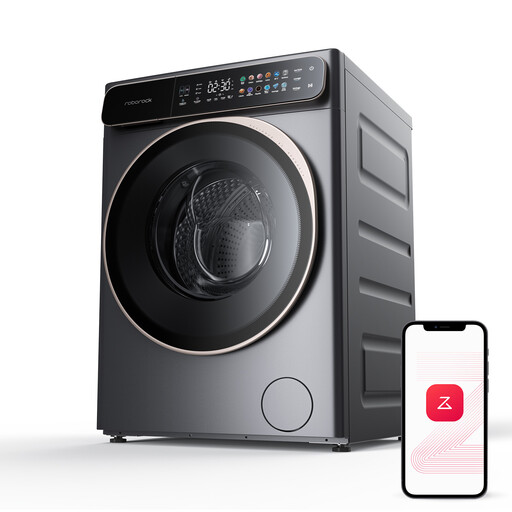 Image unavailable
A way to combine both functions in one appliance, with a stated washing capacity of 10 kg and drying capacity of 6 kg. Roborock lists a self-cleaning LintClear system and automatic dosing. Check the instructions for other maintenance tasks, and confirm the dimensions and details of the complete cycle.
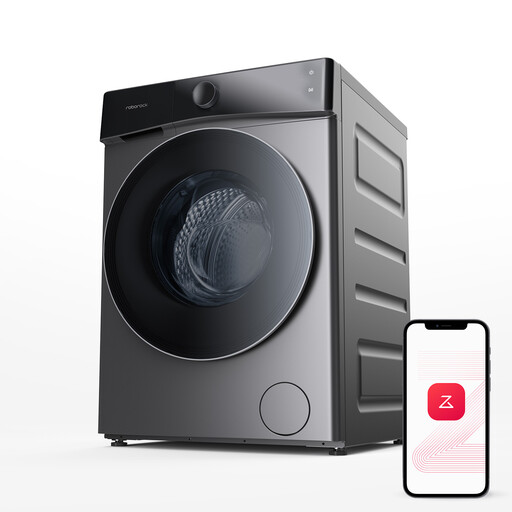 Image unavailable
Another combination option, listed with a 10 kg washing capacity and a 6 kg drying capacity. The product details mention a LintClear system, automatic dosing and app control. Check the instructions for maintenance tasks, then confirm the dimensions and details of the complete cycle.
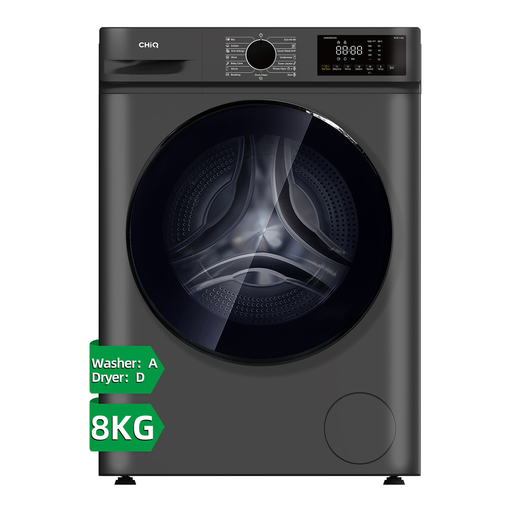 Image unavailable
A single appliance for washing and drying, with a stated washing capacity of 8 kg and drying capacity of 5 kg. The product details mention a steam programme. Before deciding where to put it, confirm the exact dimensions of this model and check the details of the complete cycle.
No. 9 kg is the washing capacity and 6 kg is the drying capacity. To run both functions consecutively without removing laundry, stick to the capacity stated for the complete cycle on the model you’ve chosen.
Compare the figures for the cycle you’ll use, particularly energy and water use and the duration of the wash-and-dry cycle if you plan to run it consecutively. Noise information and the QR code linking to the model’s data can help you make a fuller comparison, as the European Commission explains.
Yes, if you have enough room to hang your laundry and can ventilate the room properly while it dries. ADEME highlights that air-dried laundry releases a lot of moisture into the indoor air.
Check the instructions for the model you’re considering to find out which parts need cleaning and how easy they are to access, including the filters, detergent drawer and door seal. Follow the maintenance tasks and schedule specified for that model rather than assuming that a system described as self-cleaning means no maintenance is needed.