What should you look for?
If your home doesn't have space for two appliances, start with your main constraint: space, how often you do laundry, moisture or whether the appliance can be installed.
Washer-dryer
Consider it if: you only have space for one appliance and can limit the load you put in to dry.
Bear in mind: its drying capacity is lower than its washing capacity and, according to UFC-Que Choisir, combined cycles can be long.
Separate tumble dryer
Consider it if: a suitable second space is genuinely available and you often have laundry to dry.
Bear in mind: it's an additional appliance, and its connection requirements depend on its technology and instructions.
Air-drying
Consider it if: you have a place to dry your laundry that you can air or ventilate, and a longer drying time works for you.
Bear in mind: you'll need to manage the moisture released by your laundry, as ADEME highlights.
| Consideration |
What to check |
Who is it for? |
| Available space |
Measure the space, access route and door opening; compare them with the model's dimensions and instructions. |
When there's room for only one machine, combining washing and drying becomes the priority. Around 33% of consumers would put this space-saving benefit first. |
| Load size and frequency |
Compare washing and drying capacities in kg, as well as the length of the wash-and-dry cycle. |
If you do load after load, having to remove laundry before drying can make it harder to manage your routine; around 27% of consumers would prioritise how much dry laundry they can get through. |
| Moisture and energy use |
Compare water and energy use, and cycle duration, for the wash-and-dry cycle; if you use an indoor airer, check the airflow and ventilation. |
In a home prone to condensation, air-drying means paying particular attention to moisture. Around 20% of consumers would prioritise controlling moisture or energy use. |
| Installation |
Check the instructions for connections and clearances; if you're choosing a separate tumble dryer, find out how it dries and what it needs for ventilation. |
When space is tight or the connections are uncertain, making sure the appliance can be installed comes before choosing a model; around 20% of consumers would make this their top priority. |
Washer-dryers on Joybuy
These models combine washing and drying in a single appliance. First, choose one based on the load you want to dry, then check the installation requirements for that model.
 Image unavailable
Samsung WD11DG6B85BEU3, 11 kg washing and 6 kg drying capacity
Combines both functions in one freestanding appliance. Plan to dry a smaller load than the maximum washing capacity.
Stated capacities: 11 kg for washing and 6 kg for drying. The stated wash-and-dry cycle takes 7 h 32, so bear this in mind if you need to run loads back to back. Check the clearances and connections in the instructions for this model.
View on Joybuy
 Image unavailable
Samsung WD10HG6U34BEU3, 10 kg washing and 6 kg drying capacity
For a single space, if a drying load limited to 6 kg suits the way you do your laundry.
Stated capacities: 10 kg for washing and 6 kg for drying. Before comparing it with another model, check the label for the duration and energy and water use of the wash-and-dry cycle; also make sure the instructions suit your space.
View on Joybuy
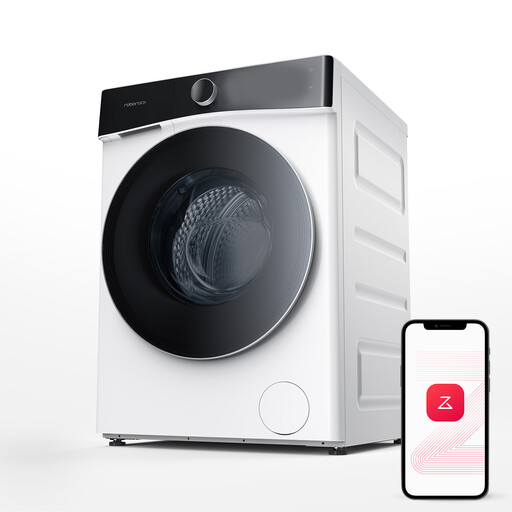 Image unavailable
White Roborock Zeo Lite, 10 kg washing and 6 kg drying capacity
Wash and dry your laundry in one appliance, adjusting the load to suit its drying capacity.
Stated capacities: 10 kg for washing and 6 kg for drying. Before choosing a space for it, check the dimensions, combined-cycle duration and energy and water use, as well as the connections required for this model.
View on Joybuy
Frequently asked questions
How should I read washing and drying capacities?
Read the two figures in kg separately: the first is for washing, the second for drying. The Electrolux EW8W3816BI product details list an 8 kg washing capacity and a 4 kg drying capacity. To dry a larger load you've washed, you'll need to remove some of it first.
Which figures should I compare on a washer-dryer's label?
Compare the figures for the wash-and-dry cycle, particularly energy use, water use and duration, rather than looking at washing alone. The European regulation on appliance labelling distinguishes between the information for each cycle, so use the same basis when comparing all the models you're considering.
What connections do I need?
For a washer-dryer, check its instructions for the water supply, waste-water outlet, electrical supply and required clearances. For a separate tumble dryer, the way it vents depends on its technology: Bosch provides information on collecting or draining condensate water on some models, as well as on air ducts for vented appliances.
Can I regularly dry laundry on an indoor airer?
Yes, as long as you can manage the moisture the laundry releases into the room. ADEME highlights the importance of removing it to reduce the risk of mould. Check your home's ventilation and whether you can air the room, particularly if you already get condensation.


