
Livraison le jour même ou le lendemain

Qualité garantie

Débloquez vos offres de bienvenue: Livraison GRATUITE | Jusqu'à -80 % | 30 jours d'essai gratuits à JoyPlus
Téléchargez l'application
A washer dryer combines washing and drying in a single appliance. It's a particularly practical solution for flats, small utility rooms, or households that want to avoid moving laundry between two cycles. However, you need to compare models carefully: the wash capacity isn't always the same as the drying capacity, and so-called smart features aren't all useful in daily life.
Before placing an order, three common pitfalls keep cropping up:
For a couple or a two-person household, a 6 kg washer dryer can be sufficient if you do laundry frequently. Families of four to five people would be better off choosing a large-capacity washer dryer, with 8 to 11 kg for washing. The drying capacity is generally lower, around 5 to 7 kg depending on the model.
Measure the width, depth and height of the space, not forgetting the room needed to open the door and access the connections. The Samsung WD11DG6B85BEU3 measures 60 × 85 × 60 cm, while some appliances with a comparable capacity have a slightly shallower depth. Also remember to check the machine's weight, the sturdiness of the floor and the door's opening direction.
The product specification should show the electricity and water consumption for washing alone, as well as for the combined cycle. For example, the Samsung WD11DG6B85BEU3 is rated class A for washing and class D for wash-dry, with 48 kWh/100 cycles for washing and 308 kWh/100 cycles for the full programme.
An energy-efficient washer dryer doesn't therefore mean that every drying cycle will be cheap. In particular, compare:
A full cycle can last several hours. Quick programmes are useful for lightly soiled laundry, but they don't always replace a longer cycle for towels, bed linen or heavily soiled clothes.
A smart washer dryer typically lets you track the programme's progress, receive a notification or adjust certain settings from an app. Before buying, check the Wi-Fi compatibility and which app is used.
Automatic dosing reduces handling and limits the risk of over-dosing. However, you need to check which detergents are compatible, the capacity of the reservoirs and whether you can use a different product. For delicate fabrics, choose models that offer wool, silk, low-temperature or steam programmes. These features indicate how the appliance operates, but they don't guarantee perfect results on all fabrics by themselves.
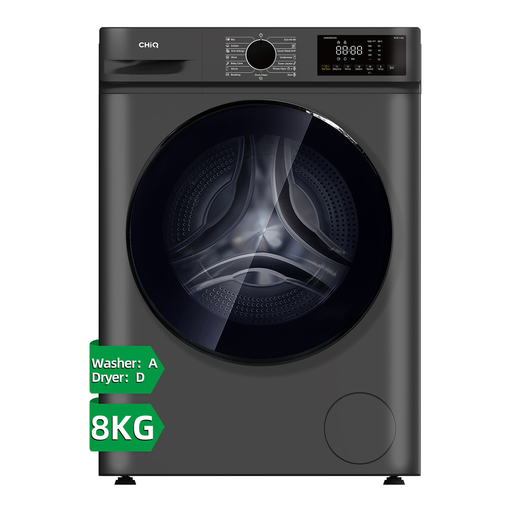
Why this choice suits this profile: its reportedly shallow design is ideal for homes where every centimetre counts, while still offering a capacity suitable for a couple or small family.
The 8 kg wash and 5 kg dry capacities are clearly distinguished. Its stated depth of 52 cm should, however, be checked against the space taken up by the connections.
BLDC motor, steam function, 15-minute quick programme and a stated spin speed of 1,400 rpm.
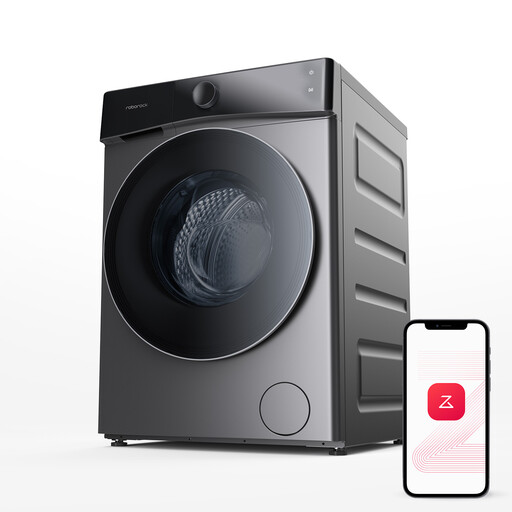
Why this choice suits this profile: it combines a large capacity, app control and features designed to reduce daily intervention.
The 6 kg drying capacity is clearly separate from the 10 kg available for washing. The automatic dosing and LintClear filter also make maintenance easier, especially in homes with pets.
27 programmes, Zeo-Cycle low-temperature drying, Roborock app and a direct-drive motor described as quiet.
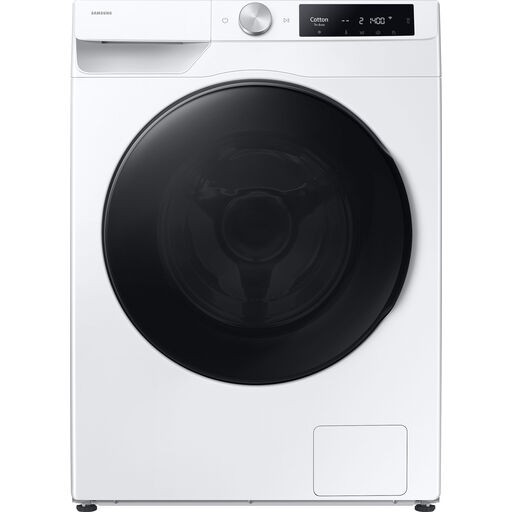
Why this choice suits this profile: its 11 kg capacity suits households that build up a lot of laundry, while Wi-Fi and automatic dosing simplify managing frequent cycles.
The energy consumption for washing and for the full cycle are listed separately. The anti-vibration system and stated noise level of 72 dB also help you assess its suitability for flat living.
Class A for washing, 11 kg capacity, SmartThings app, automatic dosing and a steam programme as stated by the manufacturer.

Why this choice suits this profile: its 7 kg drying capacity is appealing for households that want to process more laundry without multiple transfers.
With 7 kg for drying and 10 kg for washing, it reduces the amount of laundry you need to remove before the second cycle. It's still essential to check its dimensions and energy rating on the product page before installation.
BLDC motor, steam function, a wool programme with claimed Woolmark certification and a 15-minute quick cycle.
We've put together a comprehensive, real-time updated list of products that fully meet these strict selection criteria and European safety regulations.
Install the appliance on a flat, stable and sufficiently sturdy floor. The inlet and drain hoses must not be bent or pinched. Avoid using extension leads and make sure not to block the ventilation openings.
To keep it performing well over time:
Automatic cleaning systems, such as LintClear on certain Roborock models, can reduce the need for manual intervention. However, they don't replace the checks recommended in the manual.
It all depends on how often you use the drying function, the load size, the temperature and the programme you select. Always check the kWh values for 100 wash cycles, then for 100 full wash-dry cycles. Low-temperature drying or using an automatic programme can change the energy consumption, but results vary depending on the fabric and its moisture level.
A wash capacity of between 8 and 10 kg is generally suitable for a household of four. For larger laundry loads, a 10 or 11 kg model will give you more leeway. However, keep an eye on the drying capacity: a 10 kg machine may be limited to 6 or 7 kg in that mode.
Its lifespan depends on how often it's used, whether you stick to the load limits, how well it's maintained and the quality of the installation. Regular cleaning, a properly levelled machine and using detergents suitable for washer dryers all help prevent problems. Before buying, also check the warranty terms and the availability of spare parts.