
Livraison le jour même ou le lendemain

Qualité garantie

Débloquez vos offres de bienvenue: Livraison GRATUITE | Jusqu'à -80 % | 30 jours d'essai gratuits à JoyPlus
Téléchargez l'application
A washer dryer saves space, eliminates the need to transfer laundry between two machines, and simplifies the chore of doing the washing. However, this convenience depends on several factors: drying capacity, dimensions, and available programmes. A machine marketed as "large capacity" doesn't necessarily dry as much laundry as it washes.
Before comparing models, here are the main pitfalls to avoid and the criteria that really matter for a home in the UK.
An appliance showing 10 kg wash and 6 kg dry cannot dry 10 kg of laundry in one go. If the drum is filled to its maximum for washing, you'll generally need to remove some of the laundry before starting the drying cycle.
For a couple, a 6 kg washer dryer can be sufficient, provided you stick to reasonable load sizes. For a family, a model with 10 or 11 kg wash capacity offers more flexibility, but you must check the drying capacity.
The European energy label distinguishes between the wash cycle and the combined wash-dry cycle. An appliance can therefore display a class A rating for washing, while achieving a different class for the complete cycle.
Check the kWh consumption for 100 cycles, the amount of water used, and the duration of the combined programme. A full cycle can be particularly long when the drum is loaded close to its drying limit.
Even a 2-in-1 appliance requires a water supply, a suitable drainage point, a compliant power socket, and a stable floor. You also need to leave the recommended space around the machine, regularly check the door seal, and clean the filters according to the instructions in the manual.
Households with pets may look for a system that collects fluff and pet hair, but check what is actually automated. A feature described as self-cleaning doesn't always eliminate the need for periodic maintenance.
A model offering programmes for cotton, synthetics, delicates, wool, and sportswear will cover most needs. Low-temperature drying can limit exposure to high heat, but check the manual for cycle duration and compatible fabrics.
A steam programme can refresh laundry or reduce creases, depending on the appliance's design. It doesn't necessarily replace a full wash. For wool, look for a reliable indicator, such as a certification or a dedicated programme, rather than assuming all delicate fabrics can be tumble dried automatically.
The noise level during the spin cycle is given in decibels. In a flat, a quiet washer dryer is first and foremost an appliance whose stated noise level and emission class suit your environment. A machine that is properly levelled will also reduce vibrations.
Automatic detergent dosing can simplify cycles and prevent overuse. However, check whether the reservoir only accepts liquid detergent, as is the case with some models.
Finally, a smart washer dryer typically lets you monitor a cycle, receive a notification, or select certain programmes from an app. This feature can be handy if you actually use remote monitoring, but it shouldn't distract you from the machine's essential specifications.
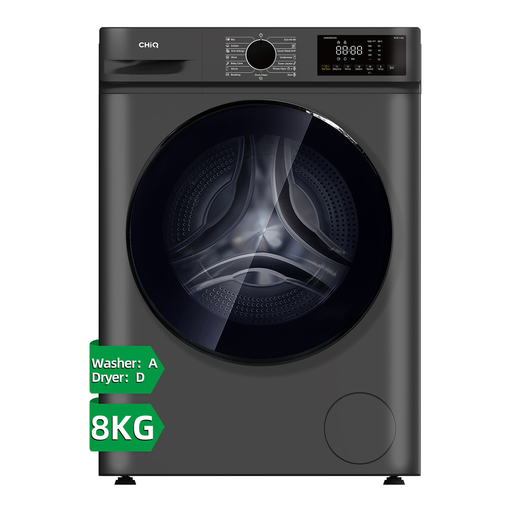
Why this choice suits this profile: Its advertised shallow design and 8 kg wash / 5 kg dry capacity make it a good fit for couples and small households who want two functions in a single appliance.
Both capacities are clearly stated, which avoids confusing the wash load with the drying load.
BLDC motor, spin speed up to 1,400 rpm, steam function, drum light, and a quick wash programme advertised at 15 minutes.
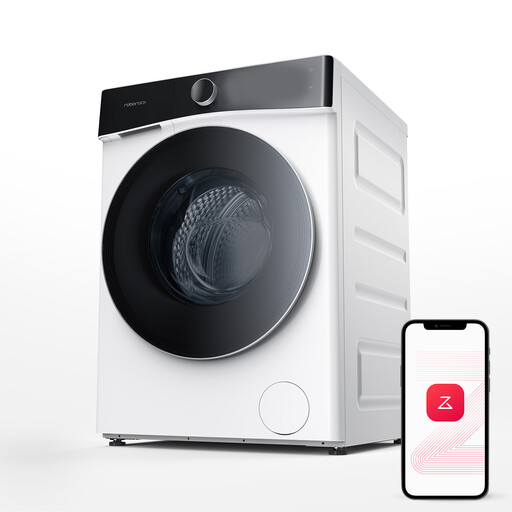
Why this choice suits this profile: Users who prioritise app control and simplified maintenance benefit from 27 programmes, automatic dosing, and monitoring from their smartphone.
The 6 kg drying capacity is stated separately from the 10 kg wash capacity, while the LintClear system targets fluff and pet hair.
Zeo-Cycle low-temperature drying technology, direct drive motor, and the Roborock app for iOS and Android.
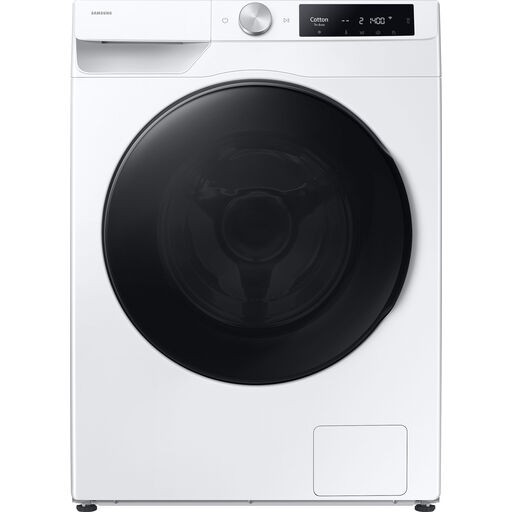
Why this choice suits this profile: Its 11 kg wash capacity suits households that do multiple loads, with smart features and programmes tailored to different needs.
The spec sheet separates the consumption for washing and the combined cycle, showing 48 kWh/100 cycles for washing and 308 kWh/100 cycles for wash-dry.
Wi-Fi SmartThings, automatic dosing, steam programme, Digital Inverter motor, and a spin noise level rated at 72 dB.
We've put together a comprehensive, real-time updated selection of products that meet these demanding criteria and European safety standards.
Consumption varies depending on the machine's capacity, the programme selected, and how often you use the drying function. Check the energy label data to compare washing alone with the full cycle. To keep your bills down, fill the drum without overloading it, choose eco programmes, and only use the drying function when necessary.
A large-capacity washer dryer with 10 or 11 kg wash can suit a family, especially for sheets and towels. However, the drying capacity, which is often between 5 and 7 kg, means you'll need to split some loads.
The lifespan depends on how intensively it's used, the quality of installation, maintenance, and whether you stick to the maximum load sizes. Clean the door seal, filters, and detergent drawer regularly, check pockets before washing, and make sure the ventilation openings aren't blocked. A stable installation also reduces vibrations and mechanical stress.