If you can only install one appliance, a washer-dryer lets you wash and then dry your clothes without transferring them, provided the load is within its drying capacity, which is lower than its washing capacity, according to UFC-Que Choisir. If your only constraint is floor space, it’s also worth considering a stacked pair of appliances, if you have enough height and the models are compatible. A washing machine with a separate drying solution may suit you if you don’t need the cycle to run straight through automatically. When comparing washer-dryers, check the figures for the full wash-and-dry cycle, not just for washing.
Who are these solutions for?
Households with room for just one appliance
In a kitchen or small home where there’s no room to install a second appliance, a washer-dryer combines both functions. However, make sure loads intended for a full wash-and-dry cycle are sized according to the drying capacity, which is usually lower than the washing capacity, as UFC-Que Choisir points out.
Households looking to avoid transferring laundry
A continuous wash-and-dry cycle means you don’t have to move your laundry between two appliances. Just make sure you stay within the machine’s stated drying capacity.
Households that often dry large loads
If you regularly need to dry bedding, towels or large loads, compare a washer-dryer’s drying limit with the option of installing a stacked pair. Stacking requires enough height and a kit that’s compatible with both appliances.
What should you check before choosing?
Washer-dryer
Worth considering: when there’s room for only one appliance and your usual load fits within its drying capacity.
The trade-off: UFC-Que Choisir highlights the lower drying capacity, longer drying time and water consumption.
Washing machine with separate drying
Worth considering: if you can dry your laundry separately without needing a second machine on the floor.
The trade-off: you’ll need to transfer your laundry after washing, and how you dry it depends on the solution you choose.
Two stacked appliances
Worth considering: if floor space is your only limitation and there’s enough height for two compatible appliances.
The trade-off: stacking requires a suitable fixing kit. Bosch advises checking that its kit is compatible with each appliance.
| Factor |
What to check |
What I need |
| Available space |
Measure the width, height and depth of the space, as well as the clearance needed to open the door. For a stacked installation, check that the appliances and kit are compatible. |
I only have room for one appliance on the floor: does that mean I can fit just one, or could I use the height to stack two? |
| Load to be dried |
Compare the rated washing and drying capacities in kg. According to Bosch and LG France’s product specifications, the WNA13400FF and F964V52IRSA models offer capacities of 8/5 kg and 9/6 kg respectively. |
If I want to leave the laundry in the drum until the cycle ends, my usual load needs to fit within the drying capacity, not just the washing capacity. |
| Full cycle |
Check the figures for wash-and-dry cycles separately from washing-only cycles: electricity per 100 cycles, water per cycle and cycle duration. The European Commission says these figures are shown on the label for relevant appliances. |
If I often run a wash-and-dry cycle, the duration and consumption of the full cycle are important factors in my choice. |
| Maintenance |
Check the manual to find out how to access the filter, detergent drawer and door seal, and make sure they’ll still be accessible once the appliance is installed. |
I want to be able to carry out routine maintenance, even with limited space around the machine. |
What mistakes should you avoid?
-
Assuming the whole wash load can be dried
For the Bosch WNA13400FF, Bosch lists an 8 kg washing capacity, but a 5 kg capacity for a continuous wash-and-dry cycle. Any load above this limit can’t be dried fully in the same cycle.
Think about the loads you need to dry and choose based on the stated drying capacity, not just the washing capacity.
-
Comparing washing figures alone
A full cycle has its own water, electricity and duration figures. For the F964V52IRSA’s wash-and-dry cycle, LG France lists 359 kWh per 100 cycles, 90 L per cycle and a duration of 7 h 50 at full load.
Compare full-cycle figures across models with a drying capacity that meets your needs.
-
Measuring only the front of the space
An appliance may fit the width of the space but still be difficult to install or use if you haven’t accounted for its depth, the door opening or access for maintenance.
Measure the space in full and check the clearance requirements in the product specifications and manual for the model you’re considering.
-
Assuming stacking is straightforward
A stacked installation takes up just one footprint, but it requires two appliances, enough height and a compatible fixing system. Bosch advises checking that its kit is compatible before ordering.
Before choosing this solution, confirm the model numbers of both appliances, the right kit and any installation requirements.
You may need to budget for a compatible stacking kit as an additional accessory.
Which brand models should you compare?
Bosch
The French range includes the WNA13400FF, a front-loading washer-dryer with an 8 kg washing capacity and a 5 kg capacity for a continuous cycle, according to Bosch Électroménager France.
- The product specifications clearly distinguish between the two capacities for this model.
- If you’re stacking two Bosch appliances, you’ll need to check that the kit is compatible with each model.
LG
LG France lists the F964V52IRSA with a washing capacity of 9 kg and a drying capacity of 6 kg.
- For this model’s wash-and-dry cycle, the product specifications also list 359 kWh per 100 cycles, 90 L per cycle and a duration of 7 h 50 at full load.
- These capacities and figures apply to the F964V52IRSA; they don’t represent the whole LG range.
Haier
Haier France lists the HWD80-B14939 from the I-Pro Series 3 range as a freestanding model with an 8 kg washing capacity and a 5 kg drying capacity.
- The product specifications list a spin speed of 1 400 rpm and a D rating for this model’s combined cycle.
- To compare it with other models, also check its dimensions and the detailed figures for the full cycle.
Washer-dryers to explore on Joybuy
These appliances combine washing and drying in one machine. Compare their drying capacity with your usual loads, and check the dimensions of the model you choose.
 Image unavailable
Samsung WD11DG6B85BEU3, 11 kg washing and 6 kg drying capacity
For a continuous cycle without transferring laundry, keep the load within the stated drying capacity of 6 kg. Check the full model number on the product label before comparing its cycle figures.
View on Joybuy
 Image unavailable
Samsung WD10HG6U34BEU3, 10 kg washing and 6 kg drying capacity
This model combines both functions in one appliance, but don’t assume a 10 kg wash load can be dried in one cycle: its stated drying capacity is 6 kg. Check the full-cycle figures for the model you’re considering.
View on Joybuy
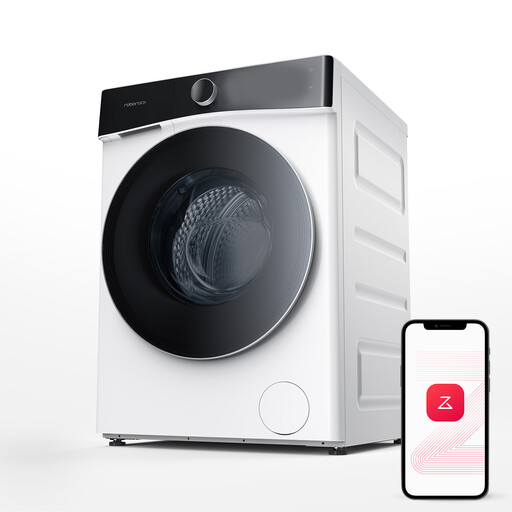 Image unavailable
Roborock Zeo Lite, 10 kg washing and 6 kg drying capacity
The stated capacities show the difference between the load you can wash and the load you can dry without taking any laundry out. If space is tight, check the installation dimensions and full-cycle figures for this model.
View on Joybuy
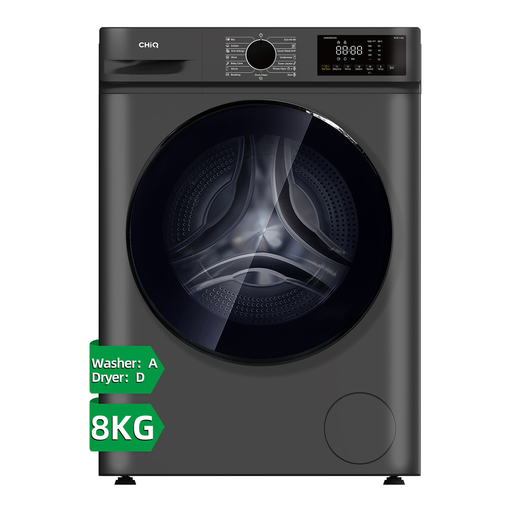 Image unavailable
CHiQ JW85882HG, 8 kg washing and 5 kg drying capacity
If you want to wash and then dry without emptying the drum, keep the load within the stated drying capacity of 5 kg. Check the exact dimensions of this model before choosing it for a narrow recess.
View on Joybuy
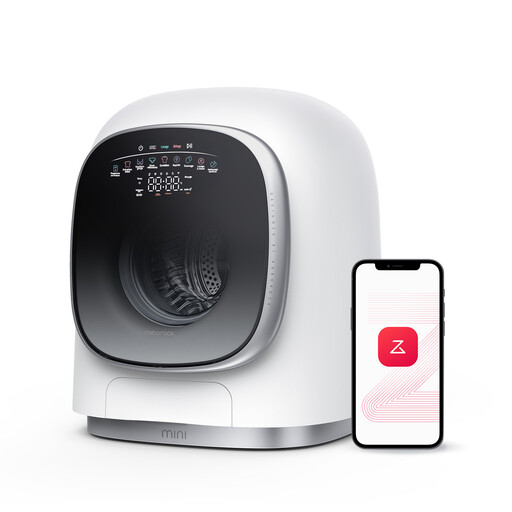 Image unavailable
Roborock Marshmallow Zeo Mini, 1 kg washing and 0.5 kg drying capacity
With a stated drying capacity of 0.5 kg, its continuous cycle is suited to very small loads rather than a family wash. Check its dimensions and full-cycle figures for the way you plan to use it.
View on Joybuy
Frequently asked questions
Why does a washer-dryer have two capacity ratings?
The washing capacity shows the maximum load for a wash-only cycle; the drying capacity is the limit for drying laundry in the appliance. If you want to run both stages without taking any laundry out, load the machine according to its drying capacity.
What should I compare on the energy label?
Compare the figures for the full wash-and-dry cycle separately from those for washing alone. The European Commission lists details including the energy rating, electricity used per 100 cycles, water per cycle and cycle duration. Make sure you’re comparing the same type of cycle across two models.
Can an 8 or 9 kg load be dried in one go?
Only if its weight is within the model’s drying capacity. Bosch lists an 8 kg washing capacity but a 5 kg capacity for the WNA13400FF’s continuous cycle; LG lists a 9 kg washing capacity and a 6 kg drying capacity for the F964V52IRSA. If your load exceeds the drying limit, take some laundry out or dry it separately.
Can you stack a washing machine and tumble dryer?
Yes, as long as both models, their dimensions and the stacking kit are compatible. Bosch says that one of its kits is designed for a washing machine with a depth of more than 55 cm, and advises checking compatibility before installation.
What should I check about maintenance before buying?
Check the manual to see how to access the filter, detergent drawer and door seal, then make sure there’s enough room to carry out these tasks. UFC-Que Choisir includes these maintenance checks in its washer-dryer assessment process.


